
Baked Potato Wedges
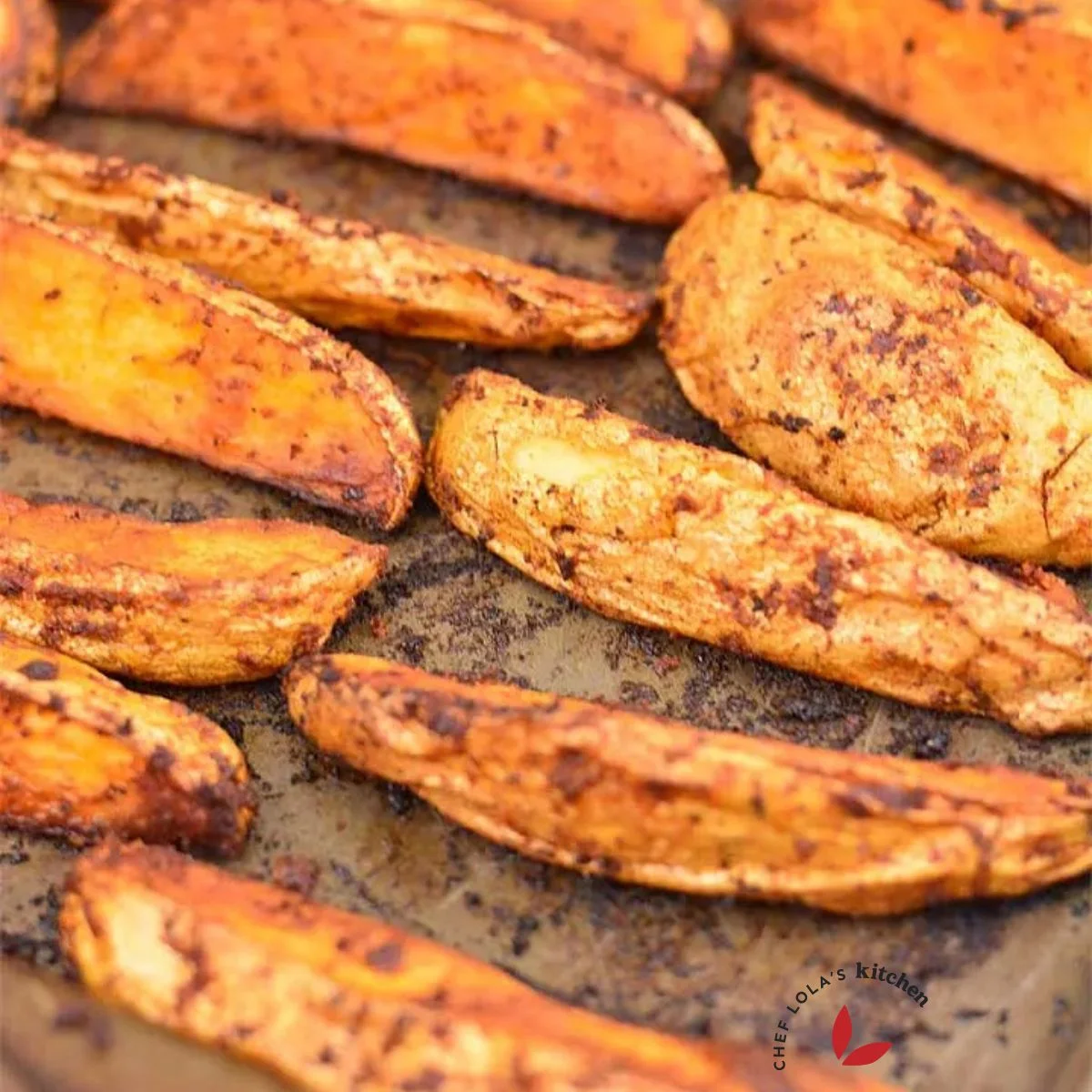
These American-style baked potato wedges are seasoned, oven-cooked until crisp at the edges and soft inside. They make an easy side when you want the flavour and texture of wedges without deep-frying.
Ingredients
- 1.36 kg (3 lb)Russet potatoes
- 45 ml (3 tbsp)olive oil
- 5 ml (1 tsp)paprika
- 5 ml (1 tsp)garlic powder
- 2.5 ml (1/2 tsp)onion powder
- 5 ml (1 tsp, to taste)salt
- 2.5 ml (1/2 tsp, to taste)black pepper
- Optional, to tastecayenne pepper
Instructions
- 1
Heat the oven
Preheat the oven to 220°C (425°F).
- 2
Mix the seasoning
In a small bowl, combine the paprika, garlic powder, onion powder, salt, black pepper and optional cayenne pepper. Mix well and set aside.
- 3
Cut the potatoes
Halve each potato lengthways, then cut each half into 3–4 wedges. Depending on the size of the potatoes, aim for 6–8 wedges per potato, keeping them a similar thickness and size.
- 4
Coat the wedges
Put the wedges on baking sheets, add the seasoning mixture and olive oil, and toss until evenly coated.
- 5
Bake until crisp
Arrange the wedges in a single layer on a large baking tray. Bake for 35–45 minutes, turning them halfway through, until golden and crisp.
- 6
Serve straight away
Serve the wedges immediately.
What are baked potato wedges?
Wedges are thick cuts of potato, commonly served as a side in American-style cooking. This version skips deep-frying and uses the oven to brown the outside while the potato softens inside.
Russet potatoes, a little olive oil and a savoury spice mix give this simple recipe its appeal. Cutting the wedges evenly helps them cook at a similar pace.
Nutrition and macros by portion
The nutrition label shows one serving as written: 189 calories, 5g protein, 42g carbs, 1g fat.
| Portion | Adjustment | kcal | Protein | Carbs | Fat |
|---|---|---|---|---|---|
| Lighter | Use less olive oil | 132 kcal | 4g | 29g | 1g |
| This serving | As written | 189 kcal | 5g | 42g | 1g |
| Hungry | Serve a larger portion | 284 kcal | 8g | 63g | 1g |
The potatoes provide most of the carbohydrates, while the olive oil supplies most of the fat. There is some protein in the potatoes; serve the wedges with a protein-rich main and vegetables for a more balanced plate.
Choosing and cutting the potatoes
Russets: their starchy texture works well for a fluffy centre and browned edges. The recipe leaves the peel on, so cut away any damaged areas before slicing if needed.
Even wedges: aim for similar thickness and size rather than worrying about exact shapes. Smaller or thinner wedges may cook sooner than larger ones.
Getting an even coating
Seasoning: combining the spices and salt before adding them makes it easier to distribute the mix over the potatoes. Add cayenne only if you want a chilli kick.
Oil: toss the wedges until the oil and seasoning coat them evenly. This helps the surfaces brown in the oven.
Crisping in the oven
Single layer: give the wedges room on the tray so their surfaces can brown rather than crowding them together. Use more than one baking sheet if they do not fit in one layer.
Turning: turn the wedges halfway through the 35–45-minute bake so they brown on more than one side. They are ready when golden and crisp on the outside.
Seasoning to suit your table
Paprika, garlic powder and onion powder bring a warm, savoury flavour without making the wedges hot. The black pepper and salt can be adjusted to taste.
For a mild batch, leave out the optional cayenne. Serve the wedges hot alongside a main dish or with a dip.
Serving ideas
These wedges work as a side with burgers, sandwiches or a vegetable-based main. A fresh salad or steamed vegetables can add colour and variety to the plate.
Serve them as soon as they come out of the oven for the best contrast between crisp edges and soft centres.
Recipe notes & tips
- Cut the potatoes into similarly sized wedges so they cook more evenly.
- Mix the seasoning in a bowl before tossing it with the potatoes.
- Arrange the wedges in a single layer rather than piling them up.
- Turn the wedges halfway through the baking time.
- Check for golden, crisp surfaces within the stated 35–45-minute bake.
- Serve immediately while the outside is still crisp.
Variations
- Add cayenne: include the optional pepper for a spicier batch.
- Adjust the salt: season to taste, keeping in mind what you plan to serve alongside.
- Change the paprika: use smoked paprika for a smokier flavour.
- Serve with a dip: offer a favourite dip alongside the hot wedges.
- Add fresh herbs: scatter chopped herbs over the wedges just before serving.
Common mistakes to avoid
- Uneven cuts: wedges of different thicknesses cook at different speeds; aim for similar sizes.
- Crowded tray: wedges packed together may not crisp well; arrange them in a single layer.
- Skipping the turn: the wedges may brown unevenly; turn them halfway through baking.
- Uneven seasoning: spices can collect in one spot; mix them together first and toss the potatoes thoroughly.
- Leaving them to cool: the edges lose crispness as they sit; serve the wedges straight away.
How to store
Refrigerate leftover wedges in a covered container for up to 3 days. Reheat them in an oven until hot and crisp again; they may soften if reheated in a microwave.
Frequently asked questions
Do I need to peel the potatoes?
The method does not call for peeling, so you can leave the skins on. Scrub the potatoes before cutting if they need cleaning.
How many wedges should I cut from each potato?
Cut each potato into about 6–8 wedges, depending on its size. Keep the pieces as similar in thickness as you can.
How long do the wedges take to bake?
Bake them for 35–45 minutes at 220°C (425°F), turning them halfway through. Look for golden, crisp surfaces.
Can I leave out the cayenne pepper?
Yes. It is optional, so omit it for a milder flavour.
Why aren't my wedges crisp?
A crowded tray can limit browning. Spread the wedges in a single layer, using another baking sheet if needed.
Can I prepare the wedges ahead?
They are best served immediately after baking for the crispiest texture. If you have leftovers, refrigerate them and reheat in the oven.
Cook it from the original
This recipe comes from cheflolaskitchen.com. Their page has the author’s own photos, notes and tips — the best place to cook it from.
Open the recipe on cheflolaskitchen.com