
Shrimp Stock
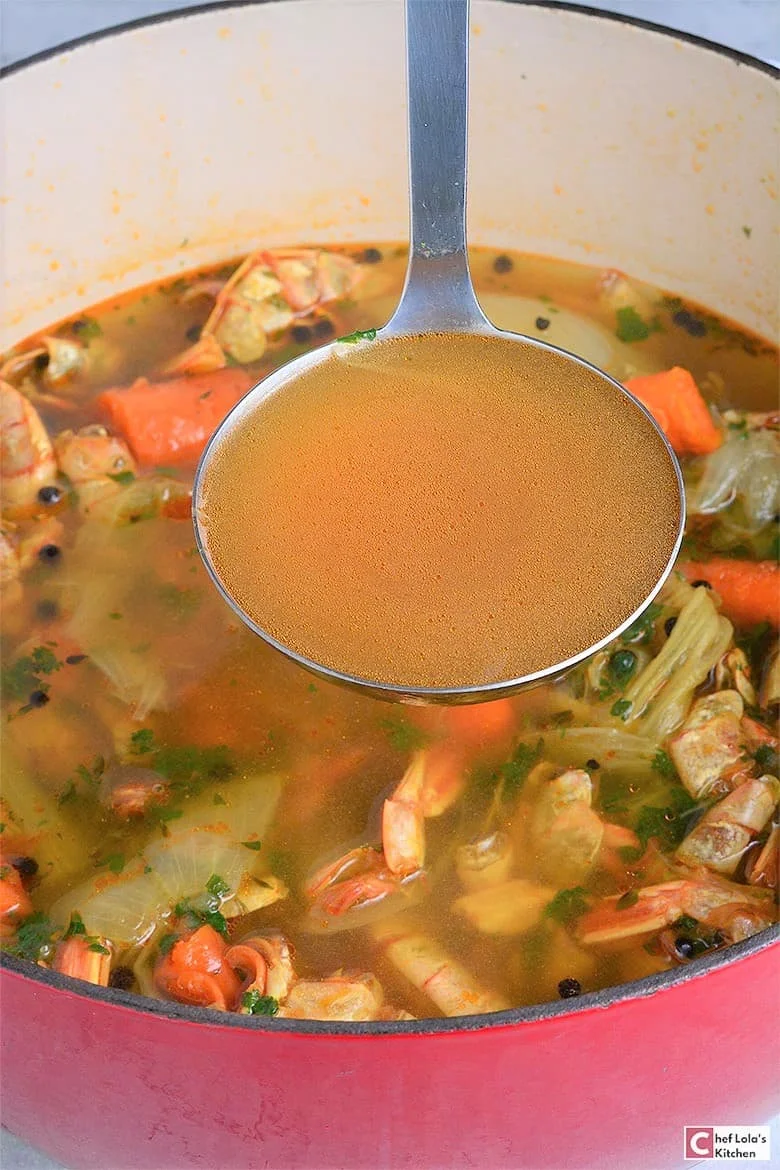
This homemade shrimp stock is simmered with shells, vegetables, herbs and peppercorns for a savoury base to use in soups, sauces and seafood dishes. It is a straightforward way to make use of shrimp shells and keep a flavourful stock ready in the freezer.
Ingredients
- 450–900 g (1–2 lb)shrimp shells and heads
- 10 ml (2 tsp)olive oil
- 1onion, peeled and quartered
- 2carrots, chopped into large pieces
- 2celery stalks with leaves, chopped into large pieces
- 3 clovesgarlic, peeled and smashed
- 4 sprigsfresh thyme
- 2bay leaves
- 10 g (⅓ cup)fresh parsley
- 5 ml (1 tsp)whole peppercorns
- 5 ml (1 tsp)salt
- 1.42 litres (6 cups)water
Instructions
- 1
Rinse the shells
Rinse the shrimp shells under cold running water, then drain them in a large colander.
- 2
Cook the shells
Heat the olive oil in a large stockpot. Add the shrimp shells and cook for about 2–3 minutes, stirring constantly, until pink and fragrant.
- 3
Add the vegetables
Stir in the onion, celery and carrots. Cook for about 4–5 minutes.
- 4
Add the seasonings
Add the garlic, thyme, bay leaves, peppercorns, salt and water.
- 5
Simmer the stock
Bring to a rolling boil over high heat, then lower the heat to medium-low and simmer for 45 minutes to 1 hour. Skim off any foam that rises to the surface from time to time.
- 6
Strain the stock
Turn off the heat and strain the stock through a fine-mesh sieve into a bowl.
- 7
Cool before storing
Leave the stock to cool completely before refrigerating or freezing.
- 8
Refrigerate or freeze
Keep the shrimp stock in the refrigerator for up to 3 days, or freeze it in an airtight container for up to 2 months.
What is shrimp stock?
Shrimp stock is a seafood-flavoured cooking liquid made by simmering shrimp shells with vegetables and aromatics. It is used as a base for soups, sauces, risotto and other dishes where a savoury seafood note is welcome.
This American-style version combines shells and heads with onion, carrot, celery, herbs and peppercorns. Briefly cooking the shells in oil first helps bring out their colour and aroma before they simmer.
Nutrition and macros by portion
The nutrition label shows one serving as written: 90 calories, 16g protein, 6g carbs, 1g fat.
| Portion | Adjustment | kcal | Protein | Carbs | Fat |
|---|---|---|---|---|---|
| Lighter | Use less olive oil | 63 kcal | 11g | 4g | 1g |
| This serving | As written | 90 kcal | 16g | 6g | 1g |
| Hungry | Make a double batch | 135 kcal | 24g | 8g | 1g |
The stock’s carbohydrates mainly come from the vegetables, while the shrimp shells contribute the protein; the olive oil supplies most of the fat. Use it as a flavourful base and pair the finished dish with vegetables and a suitable source of carbohydrate, such as rice or potatoes.
Make the most of the shells
Shells and heads: these are the main source of the stock’s shrimp flavour. Rinsing them first removes loose grit, while cooking them until pink and fragrant gives them a head start before the water goes in.
Vegetables: onion, carrot and celery provide a savoury, gently sweet base. Chop them into large pieces so they are easy to strain out after simmering.
Build the flavour gently
Herbs and spices: thyme, bay leaves, parsley and whole peppercorns add fragrance without requiring much preparation. Keep the peppercorns whole so they can be strained out with the other solids.
Garlic: smashing the cloves releases their aroma while leaving them large enough to remove easily. The method lists garlic twice in the addition step; use the three cloves in the ingredient list.
Watch the simmer
Initial heat: bring the pot to a rolling boil over high heat, then reduce it to medium-low for the long simmer. A gentler simmer gives the ingredients time to flavour the water without keeping the pot at a vigorous boil.
Surface foam: skim it off occasionally as directed. This keeps the stock clearer and avoids stirring the foam back into the liquid.
Strain and cool safely
Fine mesh: strain the stock through a fine-mesh sieve into a bowl to separate the liquid from the shells, vegetables and herbs. Avoid pressing the solids if you want to keep the strained stock clear.
Cooling: let the stock cool completely before refrigerating or freezing, as the recipe directs. Divide it between suitable containers if you want smaller amounts for later cooking.
Ways to use it
Soups and sauces: use the stock in place of water or another stock when making seafood soups, sauces or stews. Add it to the recipe in the amount the dish calls for.
Rice and grains: it can also provide the cooking liquid for rice or other grains served with seafood. Pair those dishes with vegetables for a more rounded plate.
Recipe notes & tips
- Use fresh shrimp shells and heads, or collect and freeze them until you have enough to make stock.
- Stir the shells regularly while they cook so they become pink and fragrant evenly.
- Keep the stock at a gentle simmer after bringing it to the boil.
- Skim foam from the surface occasionally during simmering.
- Strain through a fine-mesh sieve to catch small pieces of shell and herbs.
- Label frozen containers with the date so you can keep track of the storage time.
Variations
- More herbs: Add extra parsley or thyme for a more pronounced herbal flavour.
- Milder seasoning: Reduce the peppercorns for a less peppery stock.
- No added salt: Leave out the salt and season the finished dish to taste.
- Citrus note: Add a strip of lemon peel while simmering, then strain it out with the other solids.
- Smaller batch: Scale down the ingredients while keeping the same method and simmering time.
Common mistakes to avoid
- Skipping the rinse: Grit can carry into the stock; rinse the shells under cold running water and drain them well.
- Not cooking the shells first: They miss the recipe’s initial flavour-building step; cook them in the oil until pink and fragrant.
- Boiling throughout: A vigorous boil can disturb the solids; lower the heat to medium-low after the initial boil.
- Leaving foam in the pot: Skim foam from the surface occasionally as the stock simmers.
- Using a coarse sieve: Small shell fragments may pass through; strain with a fine-mesh sieve.
- Storing it warm: Let the stock cool completely before refrigerating or freezing.
How to store
Refrigerate the cooled stock for up to 3 days. For longer storage, freeze it in an airtight container for up to 2 months.
Frequently asked questions
Can I make shrimp stock with shells only?
Yes. The recipe calls for shrimp shells and heads, so use whichever you have available, within the stated 450–900 g range.
How long should I simmer shrimp stock?
After bringing it to a rolling boil, reduce the heat to medium-low and simmer for 45 minutes to 1 hour.
Why do I need to skim the stock?
Foam can rise to the surface as the stock simmers. Skim it off occasionally, as directed in the method.
How can I tell when the stock is ready?
The recipe gives a simmering time of 45 minutes to 1 hour after the initial boil. Strain it when that time is complete.
Can I freeze shrimp stock?
Yes. Cool it completely, then freeze it in an airtight container for up to 2 months.
What can I use shrimp stock for?
Use it as a cooking liquid or base for soups, sauces, stews, rice and other seafood dishes.
Cook it from the original
This recipe comes from cheflolaskitchen.com. Their page has the author’s own photos, notes and tips — the best place to cook it from.
Open the recipe on cheflolaskitchen.com