
Seafood Paella (Paella de Marisco)
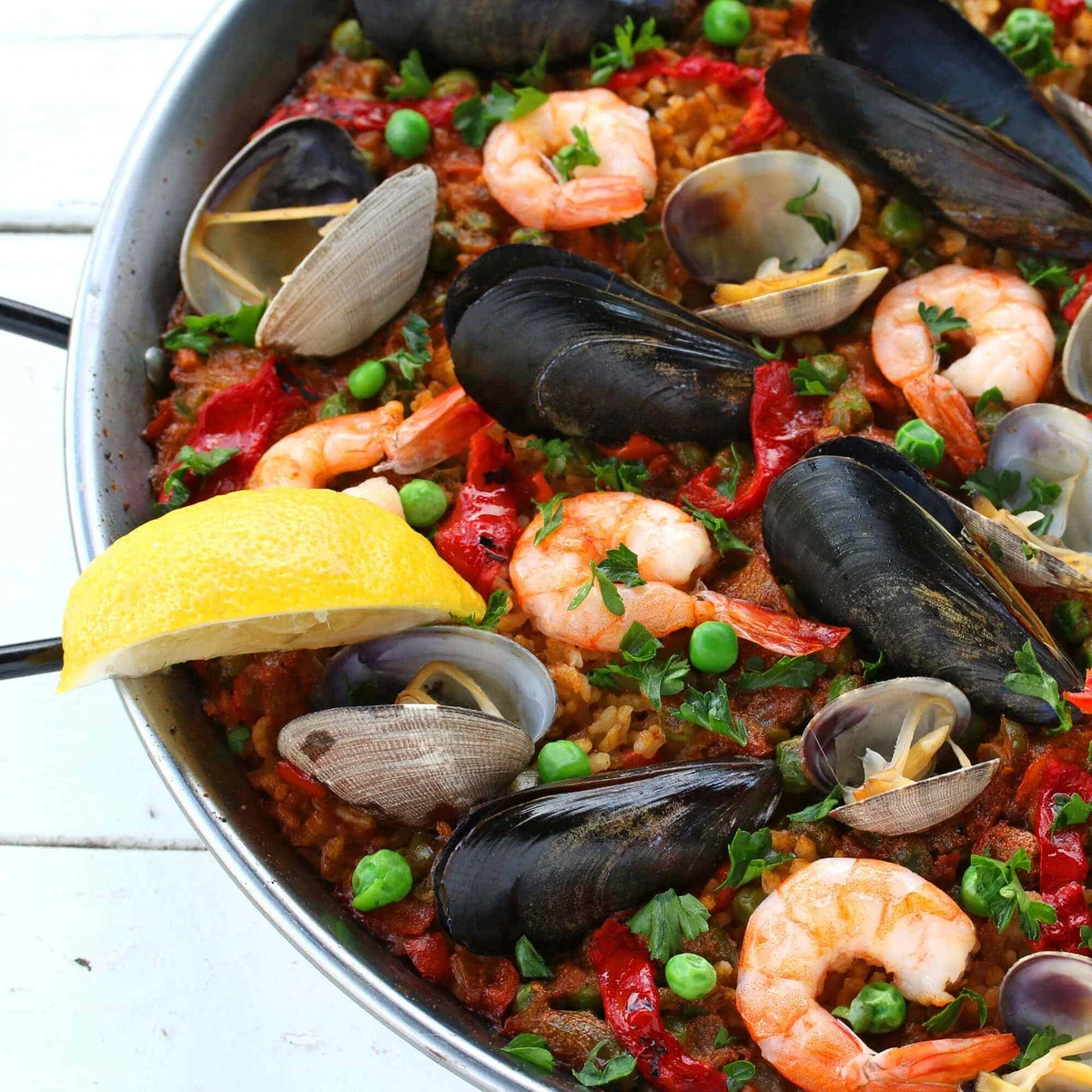
Seafood paella is a one-pan rice dish cooked with a savoury seafood base, prawns, mussels and clams. This version is made in about 40 minutes and finishes with the crisp rice layer known as socarrat.
Ingredients
- 30 ml (2 tablespoons)olive oil
- 75 g (½ cup), finely choppedonion
- 1 medium, seeds and membranes removed, dicedgreen pepper
- 1 small, seeds and membranes removed, dicedred pepper
- 3 cloves, mincedgarlic
- 300 g (1½ cups)Spanish bomba rice
- 60 ml (¼ cup)white wine
- 110 g (¾ cup)fresh or frozen peas
- 1 carton, about 1 litre (34 fluid ounces)Aneto Seafood Paella Cooking Base
- 3.75 ml (¾ teaspoon)smoked paprika
- 3.75 ml (¾ teaspoon)salt
- 10 largeprawns
- 10, scrubbedmussels
- 10, scrubbedlittleneck clams
- 55 g (⅓ cup), grilled and cut into thin stripspiquillo peppers
- To taste, for servingchopped parsley and lemon wedges
Instructions
- 1
Soften the vegetables
Heat the olive oil in a paella pan, about 38 cm across. Cook the onion for 3–4 minutes, until soft and translucent. Add both peppers and cook for a further 3 minutes, then add the garlic and cook for 1 minute.
- 2
Coat the rice
Stir in the rice until the grains are coated in oil. Add the white wine and bring it to the boil; let it boil for 1 minute.
- 3
Add the base
Stir in the peas and smoked paprika. Spread the rice mixture evenly over the bottom of the pan, then pour in the seafood paella cooking base.
- 4
Simmer the rice
Simmer over medium-low heat until about half of the liquid has been absorbed.
- 5
Arrange the seafood
Arrange the prawns, mussels and clams on top as you would like them to appear when served. Add the piquillo pepper strips.
- 6
Cook until done
Continue simmering over medium-low heat for about 20 minutes, until the seafood is cooked through. Turn the pan every few minutes so different parts sit over the flame and the rice can form a crisp socarrat on the bottom.
- 7
Rest and serve
Take the pan off the heat and cover it loosely with aluminium foil for about 10 minutes. Remove the foil and serve straight away, garnished with parsley and lemon wedges.
What is seafood paella?
Paella comes from Valencia, where the best-known traditional versions are associated with rice cooked in a wide, shallow pan. Seafood paella is a coastal-style variation, built around shellfish and other seafood rather than the meat found in some inland versions.
This recipe uses bomba rice and a prepared seafood cooking base, with peppers, peas and wine adding flavour. Cooking everything in one pan makes it a practical centrepiece to bring straight to the table.
Nutrition and macros by portion
The nutrition label shows one serving as written: 431 calories, 13g protein, 71g carbs, 8g fat.
| Portion | Adjustment | kcal | Protein | Carbs | Fat |
|---|---|---|---|---|---|
| Lighter | Use less rice | 302 kcal | 9g | 50g | 6g |
| This serving | As written | 431 kcal | 13g | 71g | 8g |
| Hungry | Serve a larger portion | 647 kcal | 20g | 107g | 12g |
The rice supplies most of the carbohydrates, while the olive oil contributes much of the fat. The prawns, mussels and clams provide protein, alongside the seafood base. Pair a serving with a green salad or extra vegetables for a more balanced plate.
Choosing the rice and base
Bomba rice is a short-grain Spanish variety suited to absorbing cooking liquid while holding its shape. Keep the grains in an even layer after adding the base so they cook consistently.
Seafood base: the recipe calls for a carton of Aneto Seafood Paella Cooking Base. If using a different product, follow the recipe quantity and check its seasoning before adding extra salt.
Build the flavour first
Softening the onion and peppers before adding the rice gives them time to mellow in the oil. Add the garlic later, as directed, so it has only a minute to cook before the rice goes in.
Wine: boiling it for a minute after adding it lets the wine cook briefly before the larger amount of cooking base is poured in. Stir the rice through the oil until the grains are coated.
Keep the rice in an even layer
Once the cooking base is in the pan, spread the rice evenly across the bottom. This gives the grains a consistent depth of liquid and helps avoid patches that cook at different rates.
After the seafood is arranged on top, avoid stirring the rice. Turn the pan every few minutes as the recipe directs, rather than mixing the contents.
Watch the liquid and doneness
The first simmer continues until about half of the liquid has been absorbed; then the seafood is added and cooking continues for about 20 minutes. Keep the heat at medium-low and use the recipe’s timing as a guide.
Seafood: the stated cue is that it is cooked through. Mussels and clams should open during cooking; discard any that remain closed. The rice at the bottom should develop a crisp layer without burning.
The crisp socarrat
Socarrat is the toasted, crisp layer of rice that forms on the bottom of the pan. Turning the pan helps move different sections over the flame, which supports more even browning.
Listen and look near the end of cooking: aim for a lightly crisp base, not a scorched one. If the pan seems to be catching too quickly, shift it away from the strongest part of the flame.
Resting and serving
A brief rest under foil, about 10 minutes off the heat, gives the paella time to settle before serving. Garnish with chopped parsley and lemon wedges just before it reaches the table.
Serve it straight from the pan, with a simple green salad or extra lemon alongside. These fresh accompaniments complement the rich, savoury rice without adding another cooked dish.
Recipe notes & tips
- Use a wide, shallow pan so the rice can spread into an even layer.
- Prepare and scrub the shellfish before starting to cook.
- Keep the heat at medium-low once the cooking base has been added.
- Turn the pan periodically to help the base brown across different areas.
- Add the parsley and lemon only when the paella is ready to serve.
- Discard mussels or clams that remain closed after cooking.
Variations
- Add squid: arrange cleaned squid pieces with the other seafood.
- Change the shellfish: use a similar quantity of another scrubbed shellfish in place of mussels or clams.
- Make it milder: reduce the smoked paprika to suit your taste.
- Use frozen peas: add them straight from frozen with the paprika.
- Add extra lemon: offer additional wedges at the table for a brighter finish.
Common mistakes to avoid
- Uneven rice layer: spread it across the pan base before simmering so it cooks more consistently.
- Stirring after adding the base: leave the rice undisturbed once spread, apart from turning the pan.
- High heat: keep the paella at medium-low to avoid scorching the rice before the seafood cooks.
- Garlic cooked too long: add it after the peppers and cook for just 1 minute.
- Skipping the rest: cover the pan with foil off the heat for about 10 minutes before serving.
- Closed shellfish: discard any mussels or clams that have not opened after cooking.
How to store
Refrigerate leftovers promptly in a covered container and eat within 1–2 days. Reheat thoroughly in a covered pan over a low heat, adding a small splash of water if the rice has dried out; avoid reheating more than once.
Frequently asked questions
Can I use another type of rice?
Bomba rice is the variety specified for this recipe. Another short-grain paella rice may work, but its liquid absorption and cooking time can differ.
Can I use frozen peas?
Yes. The recipe allows fresh or frozen peas; stir them in with the smoked paprika.
How do I know the seafood is cooked?
Follow the recipe’s cue that the seafood should be cooked through. Mussels and clams should open; discard any that stay closed.
Should I stir the paella while it simmers?
After spreading the rice and adding the cooking base, leave it unstirred. Turn the pan every few minutes as directed to help the rice brown across the base.
What is socarrat?
Socarrat is the crisp, toasted layer of rice at the bottom of the paella. Turning the pan during the final simmer helps different areas sit over the flame.
Can I prepare paella ahead?
It is best served immediately after its 10-minute rest. You can prepare and measure the ingredients beforehand, but cooking and serving the paella fresh gives the best texture.
Cook it from the original
This recipe comes from daringgourmet.com. Their page has the author’s own photos, notes and tips — the best place to cook it from.
Open the recipe on daringgourmet.com