
Whole Wheat Coconut Almond Scones
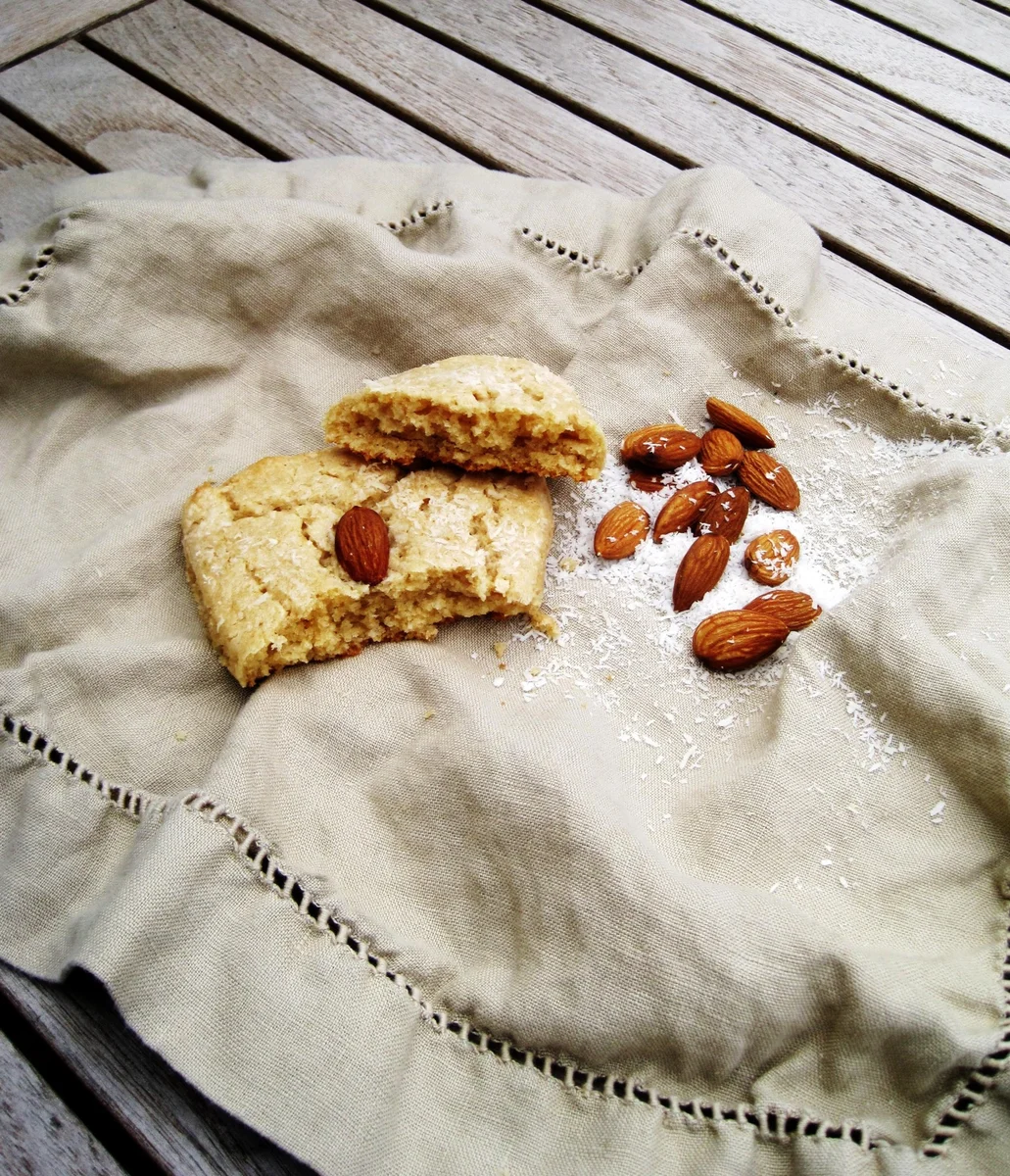
These whole wheat coconut almond scones combine a tender, buttery crumb with coconut and almond flavour. The dough comes together quickly in a food processor, making them a handy bake for breakfast or an afternoon treat.
Ingredients
- 180 g (1½ cups)wholemeal pastry flour
- 28 g (¼ cup)coconut flour
- 64 g (⅔ cup)almond flour
- 50 g (¼ cup)granulated sugar
- 38 g (3 tablespoons)turbinado sugar
- 170 g (¾ cup; 1½ sticks), cold and cut into small piecesbutter
- 40 g (½ cup)unsweetened flaked coconut
- 10 g (2½ teaspoons)baking powder
- 2.5 g (½ teaspoon)bicarbonate of soda
- 3 g (½ teaspoon)salt
- 170 g (1 × 6 oz container)plain Greek yoghurt
- 80 ml (⅓ cup)double cream
- 5 ml (1 teaspoon)coconut extract
- 5 ml (1 teaspoon)vanilla extract
- 8whole almonds
- To tasteunsweetened flaked coconut, for sprinkling
Instructions
- 1
Mix and chill
Heat the oven to 220°C (425°F). Put the wholemeal flour, almond flour, coconut flour, both sugars, coconut, bicarbonate of soda, baking powder and salt in a food processor and pulse to combine. Add the butter and pulse until the mixture resembles coarse crumbs. Freeze for 15 minutes, or until chilled throughout. Stir together the double cream, Greek yoghurt, coconut extract and vanilla extract. With the processor running, slowly pour in the cream mixture. Turn the dough onto a lightly floured surface and knead gently until combined; it will be wet.
- 2
Shape the scones
On a generously floured surface, pat the dough into one large round, or two rounds for smaller scones, then cut into 8 triangles. Arrange on a lined baking sheet. Brush with a little double cream, sprinkle with coconut and place one almond on each scone.
- 3
Bake and cool
Bake at 220°C (425°F) for 12–14 minutes. Remove from the oven and leave to cool.
What are whole wheat coconut almond scones?
Scones are a British bake, usually shaped as rounds or wedges and served with tea. This version gives the familiar buttery dough a nutty flavour with wholemeal flour, almond flour and coconut.
The combination of several flours, yoghurt and cream makes a rich, soft dough. Chilling the butter mixture before adding the wet ingredients helps keep the scones tender.
Nutrition and macros by portion
The nutrition label shows one serving as written: 340 calories, 8g protein, 34g carbs, 22g fat.
| Portion | Adjustment | kcal | Protein | Carbs | Fat |
|---|---|---|---|---|---|
| Lighter | Smaller scone, fruit alongside | 238 kcal | 6g | 24g | 15g |
| This serving | As written | 340 kcal | 8g | 34g | 22g |
| Hungry | Two scones per portion | 510 kcal | 12g | 51g | 33g |
The flour and sugars supply most of the carbohydrates, while butter and cream contribute much of the fat. Almond flour, yoghurt and whole almonds provide some protein, though these scones are also rich in fat. Pair one with fruit and extra Greek yoghurt for a more balanced plate.
Why use several flours?
Wholemeal pastry flour: it provides the main structure while keeping the crumb less refined in texture than one made with plain white flour.
Coconut and almond flour: both bring their own flavour and absorb moisture differently, so follow the listed amounts rather than swapping either one cup for cup.
Keep the butter cold
Cold butter: pulse it into the flour mixture until you have coarse crumbs, rather than blending until smooth. The brief freezer rest chills the mixture again before the cream and yoghurt go in.
Gentle handling: the dough is meant to be wet, and the method calls for only a light knead. Flour the surface generously so you can shape it without working in much extra flour.
Shaping and topping
One round: pat the dough into a large disc and cut it into 8 triangles for the stated serving size. For smaller scones, divide it into two rounds before cutting.
Finishing: brush the tops with a little cream, then add the coconut and one almond per scone. The toppings give the wedges a clear visual cue as well as extra flavour.
When are they done?
Timing: bake at 220°C (425°F) for 12–14 minutes, as directed. Check them at the shorter end of the range, since ovens can vary.
Doneness: the scones should look set and lightly coloured when you take them out. Let them cool before serving so the crumb can settle.
Serving ideas
Serve the scones warm or at room temperature with tea or coffee. Their coconut and almond flavours also pair well with fresh fruit or a spoonful of yoghurt.
For a more substantial breakfast, add fruit and a protein-rich side such as extra Greek yoghurt. The scones are also easy to share as an afternoon snack.
Recipe notes & tips
- Keep the butter cold right up to the point when you pulse it into the flour.
- Scrape down the food processor if flour or butter gathers around the sides.
- Use plenty of flour on the work surface because the dough is wet.
- Knead only until the dough comes together to avoid making the scones tough.
- Check the scones at 12 minutes and bake longer only if they need it.
Variations
- More coconut: add a little extra flaked coconut to the topping.
- Citrus note: add finely grated lemon zest to the dry ingredients.
- Spiced version: mix a pinch of cinnamon into the flour mixture.
- Smaller wedges: shape two rounds before cutting the dough.
- Without coconut extract: leave it out for a milder coconut flavour.
Common mistakes to avoid
- Soft butter: chill it before mixing so it can be cut into the flour rather than turning greasy.
- Overworking the dough: knead only until combined to help keep the crumb tender.
- Too little flour on the surface: flour it generously so the wet dough is easier to shape.
- Skipping the chill: freeze the flour and butter mixture for 15 minutes or until chilled throughout.
- Overbaking: start checking at 12 minutes and remove the scones once set and lightly coloured.
How to store
Once cool, store the scones in an airtight container at room temperature for up to 2 days. Rewarm briefly in a low oven, or freeze them for longer storage and thaw before reheating.
Frequently asked questions
Can I make the dough without a food processor?
Yes. Combine the dry ingredients in a bowl and rub in the cold butter until the mixture resembles coarse crumbs. Stir in the cream mixture gradually, then gently bring the dough together.
Why is the dough so wet?
The method describes a wet dough, so avoid adding a large amount of extra flour. Flour the work surface well and handle the dough gently while shaping.
Can I make smaller scones?
Yes. Shape the dough into two rounds instead of one, then cut into smaller wedges. Keep an eye on them as they bake, since smaller pieces may finish sooner.
Can I prepare the mixture ahead?
You can complete the flour-and-butter step and chill the mixture for the stated 15 minutes before proceeding. For the best result, shape and bake the dough without letting it sit for a long time after adding the wet ingredients.
How can I tell when the scones are baked?
Bake for 12–14 minutes at 220°C (425°F). They should look set and lightly coloured; allow them to cool before serving.
Cook it from the original
This recipe comes from bakerita.com. Their page has the author’s own photos, notes and tips — the best place to cook it from.
Open the recipe on bakerita.com