
Baked Salmon
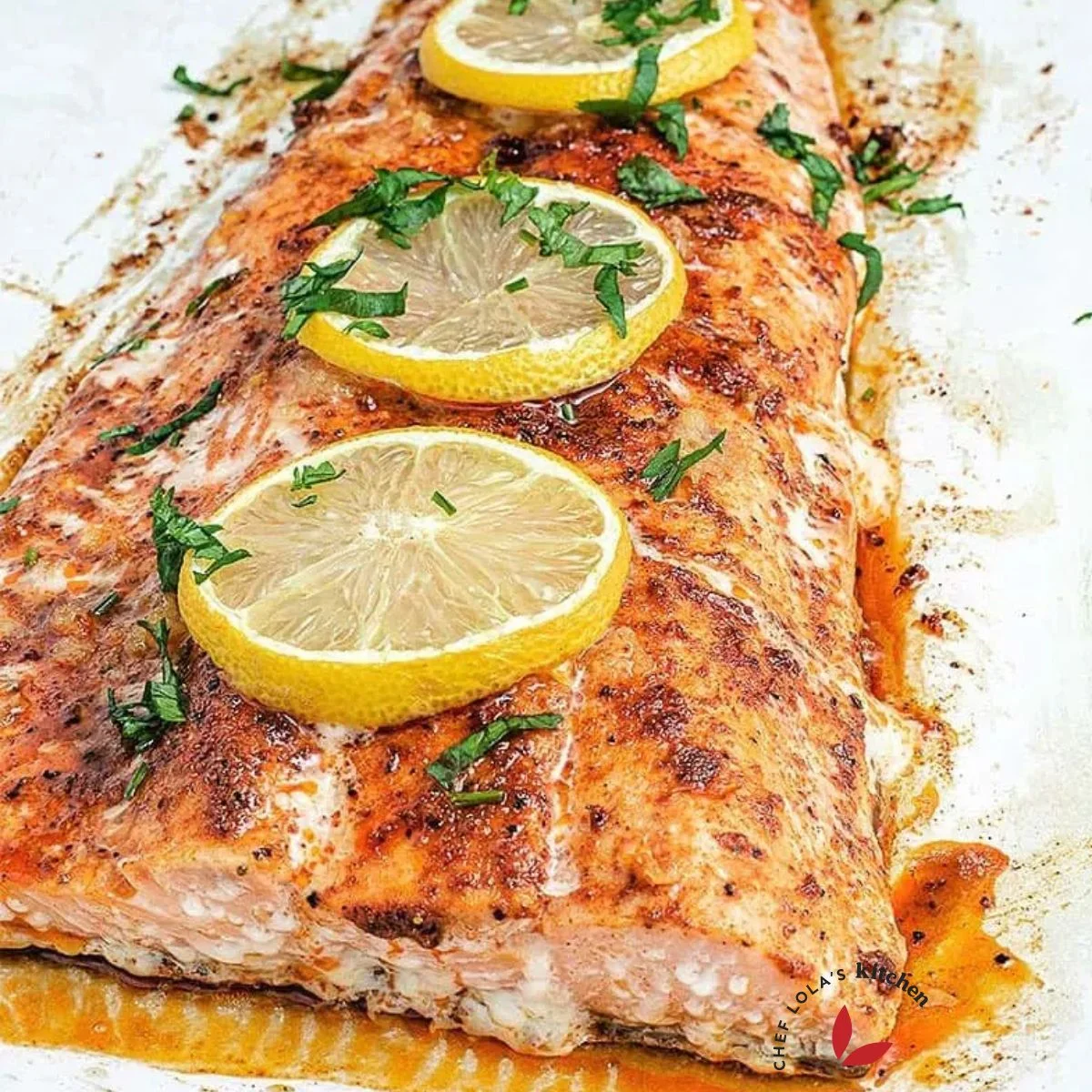
This American-style baked salmon pairs skin-on fillets with olive oil, paprika, garlic, onion and a touch of cayenne, finished with lemon and parsley. It is a quick oven-cooked main with a juicy centre and a lightly spiced, citrusy flavour.
Ingredients
- 567 g (1.25 lb)salmon fillet, skin on
- 30 ml (2 tbsp)olive oil
- 1.25 ml (1/4 tsp)cayenne pepper
- 2.5 ml (1/2 tsp)black pepper
- 5 ml (1 tsp)paprika
- 2.5 ml (1/2 tsp)garlic powder
- 2.5 ml (1/2 tsp)onion powder
- 2.5 ml (1/2 tsp), or to tastesalt
- To garnishfresh parsley
- 15 ml (1 tbsp)lemon juice
- 1 wholefresh lemon
Instructions
- 1
Prepare the salmon
Choose fresh, moist pink salmon fillets and prepare them for cooking; wild-caught salmon is preferred.
- 2
Heat the oven
Preheat the oven to 200°C (400°F) and grease a baking pan.
- 3
Season the fish
Season the salmon with the salt, black pepper and cayenne pepper, then arrange it on the prepared pan.
- 4
Make the coating
Mix the olive oil, garlic powder, onion powder, lemon juice and paprika. Rub the mixture over the salmon, covering the surface.
- 5
Add lemon slices
Slice the fresh lemon and place the slices on top of the salmon.
- 6
Bake the salmon
Bake for 10–12 minutes, keeping an eye on the fish so it does not overcook. Check it with a meat thermometer or look for flaky flesh at the thick centre.
- 7
Garnish and serve
Scatter fresh parsley over the salmon and serve.
What is baked salmon?
Baked salmon is a simple oven-cooked fish dish, common in American home cooking and easy to adapt with different seasonings. This version coats the fillet with oil, spices and lemon, then bakes it briefly for a moist centre.
Skin-on salmon helps the fillet hold together as it cooks, while paprika, garlic and onion give it savoury depth. Lemon juice and fresh slices bring a bright citrus note.
Nutrition and macros by portion
The nutrition label shows one serving as written: 441 calories, 57g protein, 8g carbs, 20g fat.
| Portion | Adjustment | kcal | Protein | Carbs | Fat |
|---|---|---|---|---|---|
| Lighter | Use less olive oil | 309 kcal | 40g | 5g | 14g |
| This serving | As written | 441 kcal | 57g | 8g | 20g |
| Hungry | Add a larger fillet | 662 kcal | 86g | 12g | 29g |
The salmon provides most of the protein and also contributes much of the fat, while the olive oil adds further fat. The small amount of carbohydrate comes mainly from the seasonings and lemon; balance the plate with vegetables and, if you want a more filling meal, a portion of potatoes or rice.
Choosing and seasoning the fish
Fresh salmon: Look for a moist-looking fillet with an even pink colour and no strong fishy smell. Keep the skin on as directed; it helps support the fish on the pan.
Spice mix: Cayenne adds heat, while black pepper, paprika, garlic powder and onion powder provide the main seasoning. Rub the oil mixture over the whole surface so the flavour is spread evenly.
Getting the bake right
Pan preparation: Grease the baking pan before adding the salmon to help prevent sticking. Arrange the fillet on the pan after seasoning it with salt and the two peppers.
Oven timing: Bake at 200°C for 10–12 minutes, watching closely because the time needed can vary with the fillet's thickness. The recipe gives flakiness at the meaty centre or a meat thermometer as checks for doneness.
Keeping the salmon moist
Oil coating: The olive oil and seasonings form a thin coating over the fish, helping it cook with a savoury surface. Apply it all over rather than leaving bare patches.
Doneness cue: Check the thickest part of the fillet near the end of the stated baking time. Take care not to leave the fish in the oven longer than needed, as overcooking can make it dry.
Making the most of the lemon
Lemon juice: Stir it into the oil and spices so its flavour is distributed across the salmon. Fresh lemon slices go on top before baking for a more pronounced citrus aroma.
Finish: Parsley is added after baking as a fresh garnish. Serve the salmon soon after it comes out of the oven.
What to serve with it
Vegetables: Pair the salmon with steamed greens, roasted broccoli or a crisp salad for a fresh side. Choose a simple preparation so it does not compete with the lemon and spices.
Something filling: Rice, potatoes or bread can turn the fillet into a more substantial meal. A spoonful of the pan juices and an extra lemon wedge work well at the table.
Recipe notes & tips
- Pat the salmon dry before seasoning if its surface is especially wet.
- Grease the pan evenly to make it easier to lift the fish after baking.
- Spread the oil and spice mixture across the full top surface of the fillet.
- Begin checking the thickest part at 10 minutes to avoid overcooking.
- Slice the lemon evenly so the pieces sit neatly on the salmon.
Variations
- Milder seasoning: Leave out the cayenne for a less spicy fillet.
- More citrus: Serve with extra lemon wedges for squeezing at the table.
- Herby finish: Add chopped dill alongside the parsley after baking.
- Smoky note: Use smoked paprika in place of regular paprika.
- Garlic flavour: Add a little extra garlic powder to the oil mixture.
Common mistakes to avoid
- Overbaking the fillet: Start checking at 10 minutes and stop when the thick centre flakes.
- Uneven coating: Rub the oil and spice mixture over the whole top surface.
- Skipping pan grease: Grease the baking pan before placing the salmon on it.
- Adding lemon too late: Place the lemon slices on the fish before it goes into the oven.
- Guessing from the edges: Check the thickest, meaty centre rather than judging doneness by the thinner edges.
How to store
Refrigerate leftover salmon in an airtight container and eat within 2 days. Reheat gently in a low oven or microwave until warmed through; avoid prolonged heating, which can dry it out.
Frequently asked questions
How long should I bake the salmon?
Bake it at 200°C for 10–12 minutes, as directed. Check the thickest part towards the end of that time, since fillet thickness affects how quickly it cooks.
How can I tell when the salmon is done?
Check the thick centre with a meat thermometer or look for flesh that flakes. The recipe does not specify a target thermometer temperature.
Can I use salmon without the skin?
The recipe calls for skin-on salmon, but a skinless fillet can be used. Grease the pan well and handle the fish carefully, as it may be more delicate.
Can I prepare the seasoning ahead?
You can mix the olive oil, spices and lemon juice ahead and keep the mixture covered in the fridge. Coat the salmon shortly before baking.
What should I serve with baked salmon?
Serve it with vegetables or salad, and add rice, potatoes or bread if you would like a more substantial meal.
Cook it from the original
This recipe comes from cheflolaskitchen.com. Their page has the author’s own photos, notes and tips — the best place to cook it from.
Open the recipe on cheflolaskitchen.com