
Self-Rising Flour Substitute
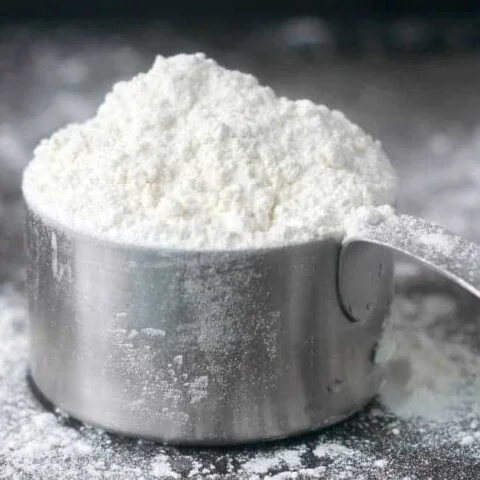
This quick pantry blend combines plain flour, baking powder and salt to make the equivalent of 1 cup of self-rising flour. Mix it when a recipe calls for self-rising flour but you only have ordinary flour on hand.
Ingredients
- 120 g (1 cup; 4.25 oz)plain flour (all-purpose flour)
- 7.5 g (1½ tsp; 0.3 oz)baking powder
- 1 g (¼ tsp; 0.05 oz)salt
Instructions
- 1
Use the ratio
Use this quantity of ingredients as a substitute for every 1 cup of self-rising flour required by your recipe.
- 2
Whisk together
Whisk the flour, baking powder and salt thoroughly so they are evenly combined.
- 3
Store the mixture
You can prepare a larger batch and keep it in an airtight container for later use. Whisk the flour thoroughly before each use to redistribute the ingredients.
What is self-rising flour?
Self-rising flour is plain flour combined with a raising agent and salt, making it a convenient baking staple. This homemade version follows the same simple idea, using familiar cupboard ingredients rather than a pre-mixed flour.
The method is a practical home-baking substitute: measure the ingredients, whisk them well and use the mixture in place of self-rising flour.
Nutrition and macros by portion
The nutrition label shows one serving as written: 440 calories, 13g protein, 92g carbs, 1g fat.
| Portion | Adjustment | kcal | Protein | Carbs | Fat |
|---|---|---|---|---|---|
| Lighter | Use a smaller amount | 308 kcal | 9g | 64g | 1g |
| This serving | As written | 440 kcal | 13g | 92g | 1g |
| Hungry | Scale up the batch | 660 kcal | 19g | 138g | 2g |
Most of the carbohydrates and protein come from the plain flour, while the baking powder and salt contribute most of the sodium. There is little fat in the mix; balance the finished baked item with a protein-rich topping or side if it is part of a meal.
The ingredients that matter
Plain flour: this is the base of the blend and supplies the structure for baked goods.
Baking powder: whisking it through the flour helps distribute the raising agent throughout the mixture.
Salt: the small amount seasons the flour blend; measure it carefully if the recipe also calls for salt.
Whisk for an even blend
The main technique is thorough mixing. Whisk across the whole bowl, including the edges, until no obvious pockets of baking powder or salt remain.
If you make a larger batch, give it another good whisk before measuring out each portion, as the ingredients can settle unevenly during storage.
Measure for the recipe
This quantity replaces 1 cup of self-rising flour. Scale the ingredients in the same ratio when a recipe calls for more, and mix the larger batch thoroughly before using it.
Follow the original recipe's instructions for any additional raising agents or salt; this substitute does not remove the need to account for other ingredients already listed.
Use it in baked goods
Use the blend in a recipe that specifically calls for self-rising flour, such as a simple quick bread or scone recipe. Its performance depends on the recipe and on the freshness of the baking powder.
It is a flour substitute rather than a finished dish, so serve the baked item made with it alongside whatever the recipe calls for.
Recipe notes & tips
- Measure the flour and raising agent accurately for a consistent blend.
- Use a dry bowl and whisk so the mixture stays free-flowing.
- Whisk thoroughly before measuring from a stored batch.
- Check that your baking powder is fresh before mixing a large quantity.
- Label a stored batch with its ingredients and the date you made it.
Variations
- Fine salt: use finely ground salt so it disperses easily through the flour.
- Double batch: double all three ingredients together to keep the same ratio.
- Small batch: halve each ingredient for a half-cup substitute.
- Gluten-free flour: use a plain gluten-free flour blend only when the recipe is suitable for that blend.
Common mistakes to avoid
- Uneven mixing: whisk thoroughly so each measure contains the raising agent and salt.
- Guessing the amounts: weigh the ingredients or use level measuring spoons for a reliable ratio.
- Using stale baking powder: check its freshness before relying on it to raise a bake.
- Forgetting other salt: check the recipe before adding extra salt to the finished mixture.
- Skipping the pre-use whisk: stir a stored batch again to redistribute settled ingredients.
How to store
Keep the mixture in an airtight container in a cool, dry cupboard. Whisk thoroughly before each use; for best results, make only as much as you expect to use while your baking powder is fresh.
Frequently asked questions
How much does this recipe make?
It makes the equivalent of 1 cup of self-rising flour. Scale all three ingredients together if you need more.
Can I use this in any recipe?
Use it where the recipe calls for self-rising flour. Recipes may differ in their other raising agents and salt, so follow their ingredient list.
Should I add more salt?
Not automatically. Check whether the recipe already includes salt and follow its directions.
Can I make a larger batch?
Yes. Keep the ingredient ratio the same, mix very thoroughly and whisk again before measuring each portion.
How do I know if the baking powder is still usable?
Check the package date and storage guidance. If you are unsure, use a fresh supply for a bake where reliable rising matters.
Cook it from the original
This recipe comes from bakerbettie.com. Their page has the author’s own photos, notes and tips — the best place to cook it from.
Open the recipe on bakerbettie.com