
Easy Spatchcock Chicken
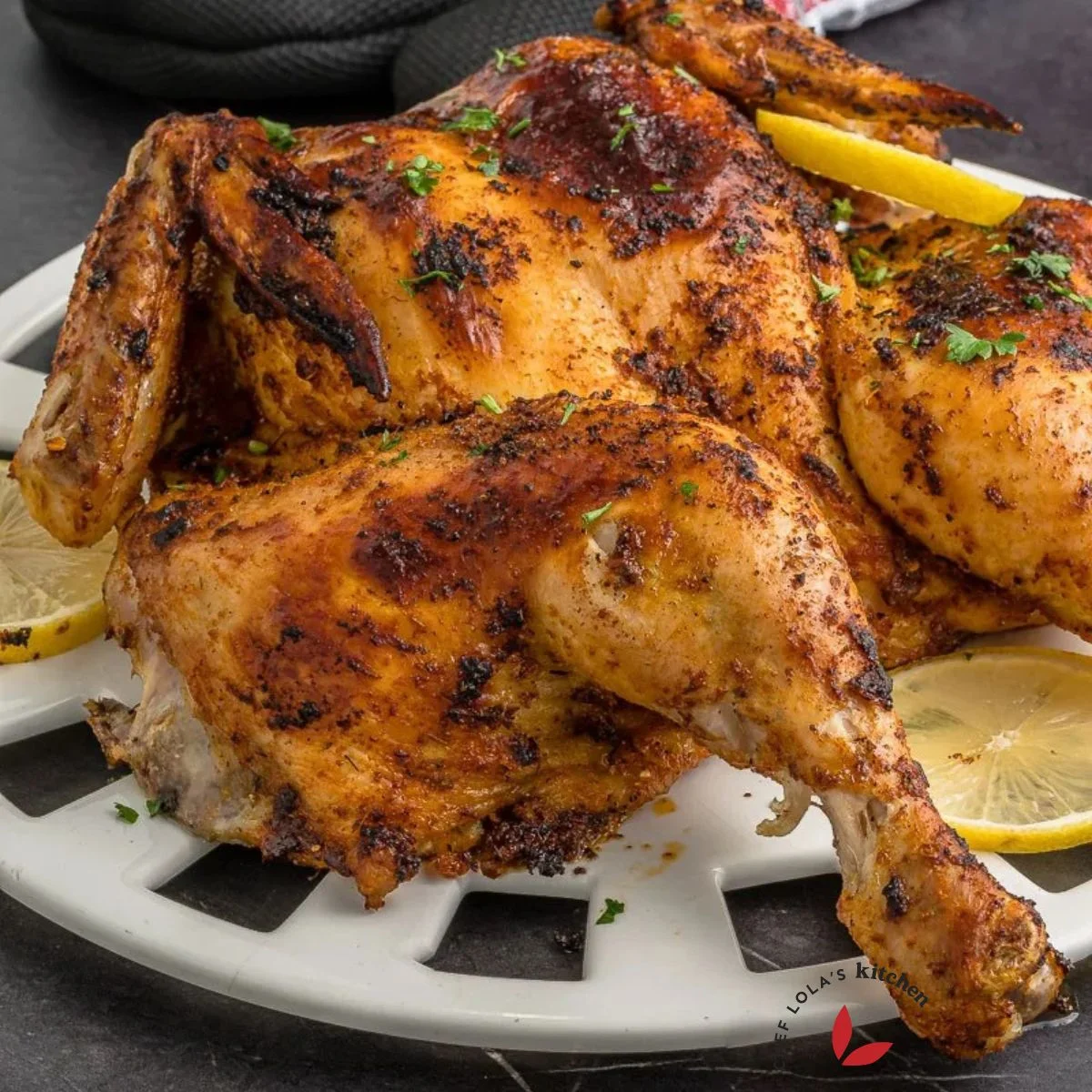
This American-style spatchcock chicken is flattened before roasting, helping it cook evenly while the spice rub flavours the skin and meat. It makes a straightforward centrepiece for a weeknight dinner or a relaxed Sunday meal.
Ingredients
- 1.8–2 kg (4–4½ lb)whole chicken
- 15 ml (1 tablespoon)olive oil
- 5 ml (1 teaspoon)onion powder
- 5 ml (1 teaspoon)garlic powder
- 7.5 ml (1½ teaspoons)smoked paprika
- 5 ml (1 teaspoon)thyme
- 1.25 ml (¼ teaspoon)cumin
- 2.5 ml (½ teaspoon)black pepper
- 1.25 ml (¼ teaspoon)ground ginger
- 1.25 ml (¼ teaspoon)red chilli flakes
- 5 ml (1 teaspoon), or to tastesalt
Instructions
- 1
Heat the oven
Preheat the oven to 220°C (425°F). Mix the oil with all the seasonings.
- 2
Remove the backbone
Pat the chicken dry with kitchen paper and set it breast-side down on a chopping board. Using kitchen shears or a sharp knife, cut down both sides of the backbone, from the tail end to the neck, and remove it.
- 3
Flatten the chicken
Turn the chicken over and press down on the breastbone until it pops out of its socket, leaving the bird flat.
- 4
Clean the cavity
Turn the chicken over again and open the cavity. Use your hand or a spoon to remove any remaining bits inside.
- 5
Rinse and dry
Rinse the chicken under cold water, then pat both sides dry with kitchen paper.
- 6
Season the bird
Set a rack over a foil-lined baking sheet and place the chicken on the rack. Apply the seasoning mixture generously to both sides, including beneath the skin.
- 7
Roast the chicken
Roast uncovered for 45 minutes, or until an instant-read thermometer inserted into the thickest part of the breast reads 71°C (160°F).
- 8
Rest and carve
Leave the chicken to rest at room temperature for about 15 minutes before carving and serving.
What is spatchcock chicken?
Spatchcocking means removing the backbone and flattening the bird so it can roast in a single layer. The technique is used in many cuisines; this version pairs it with a simple American-style blend of paprika, herbs and spices.
Even shape: Flattening the chicken gives the legs and breast more even exposure to the oven. The oil-based rub adds flavour across the skin and beneath it.
Nutrition and macros by portion
The nutrition label shows one serving as written: 244 calories, 21g protein, 2g carbs, 17g fat.
| Portion | Adjustment | kcal | Protein | Carbs | Fat |
|---|---|---|---|---|---|
| Lighter | Smaller chicken portion | 171 kcal | 14g | 1g | 12g |
| This serving | As written | 244 kcal | 21g | 2g | 17g |
| Hungry | Add potatoes and vegetables | 366 kcal | 31g | 2g | 25g |
Most of the protein comes from the chicken, while its fat and the olive oil contribute most of the fat. The seasonings provide very little carbohydrate; serve it with vegetables and a suitable starchy side to make a more balanced plate.
The spice rub
Smoked paprika: It brings a warm, smoky note, while onion and garlic powders make the seasoning easy to distribute.
Herbs and spices: Thyme, cumin, ginger and chilli flakes add depth and a little heat. Adjust the salt to suit your taste.
Spatchcocking safely
Cutting the backbone: Use sturdy kitchen shears if you have them, and keep the chicken stable on a chopping board while cutting down both sides.
Flattening: Press firmly on the breastbone until the chicken lies level. Handle raw poultry carefully, wash your hands and clean any surfaces or utensils that touch it.
Getting the seasoning under the skin
Dry surface: Patting the chicken dry helps the oil-and-spice mixture cling rather than slide off.
Even coverage: Rub the seasoning over both sides and gently work some beneath the skin, taking care not to tear it. The recipe calls for a generous coating.
Roasting and checking doneness
Rack and tray: The rack holds the chicken above the foil-lined baking sheet while it roasts uncovered. This setup also catches drips.
Temperature cue: Begin checking around the stated 45-minute mark, inserting the thermometer into the thickest part of the breast without touching bone. The recipe gives 71°C (160°F) as its breast-temperature cue; follow current food-safety guidance for verifying poultry is fully cooked.
Resting and serving
Rest time: Leave the chicken for about 15 minutes before carving so it is easier to handle and serve.
On the plate: Serve with potatoes, bread or rice for a more filling meal, and add a green vegetable or salad for contrast.
Recipe notes & tips
- Choose kitchen shears if they make cutting through the backbone easier to control.
- Keep the chicken flat on the rack so the breast and legs roast in an even layer.
- Rub seasoning beneath the skin gently to avoid tearing it.
- Use an instant-read thermometer rather than relying on colour alone.
- Let the chicken rest for the full 15 minutes before carving.
Variations
- More heat: Increase the red chilli flakes to taste.
- Fresh herbs: Use fresh thyme for a more herbal note.
- Citrus finish: Serve with lemon wedges for a bright, tart contrast.
- Extra garlic: Add more garlic powder to the seasoning mix.
- Milder rub: Leave out the chilli flakes for less heat.
Common mistakes to avoid
- Uneven flattening: Press the breastbone until the chicken lies flat so it roasts more evenly.
- Torn skin: Work the seasoning beneath the skin gently rather than forcing it.
- Wet surface: Pat the chicken dry before applying the rub so the mixture adheres better.
- Guessing doneness: Check the thickest part of the breast with an instant-read thermometer.
- Carving too soon: Rest the chicken for about 15 minutes before cutting into it.
How to store
Refrigerate leftover chicken in a covered container within 2 hours of cooking and use within 3–4 days. Reheat portions until steaming hot, or serve the leftovers cold.
Frequently asked questions
What does spatchcocking mean?
It means removing the backbone and flattening the chicken before cooking. This gives the bird a more even shape for roasting.
Can I prepare the chicken ahead?
You can flatten and season it in advance, then keep it covered in the fridge. Handle it as raw poultry and clean any equipment or surfaces that come into contact with it.
How do I know when the chicken is done?
Use an instant-read thermometer in the thickest part of the breast, as the method directs, and check that the poultry meets current food-safety guidance.
Can I use dried thyme?
Yes. The ingredient list does not specify fresh thyme, so dried thyme works for the seasoning mix.
Why does the recipe use a rack?
The rack holds the chicken above the foil-lined tray during roasting and lets the tray catch drips.
What can I serve with spatchcock chicken?
Try it with potatoes, rice or bread, alongside a green vegetable or salad.
Cook it from the original
This recipe comes from cheflolaskitchen.com. Their page has the author’s own photos, notes and tips — the best place to cook it from.
Open the recipe on cheflolaskitchen.com