
Canning Baked Beans or Pork and Beans
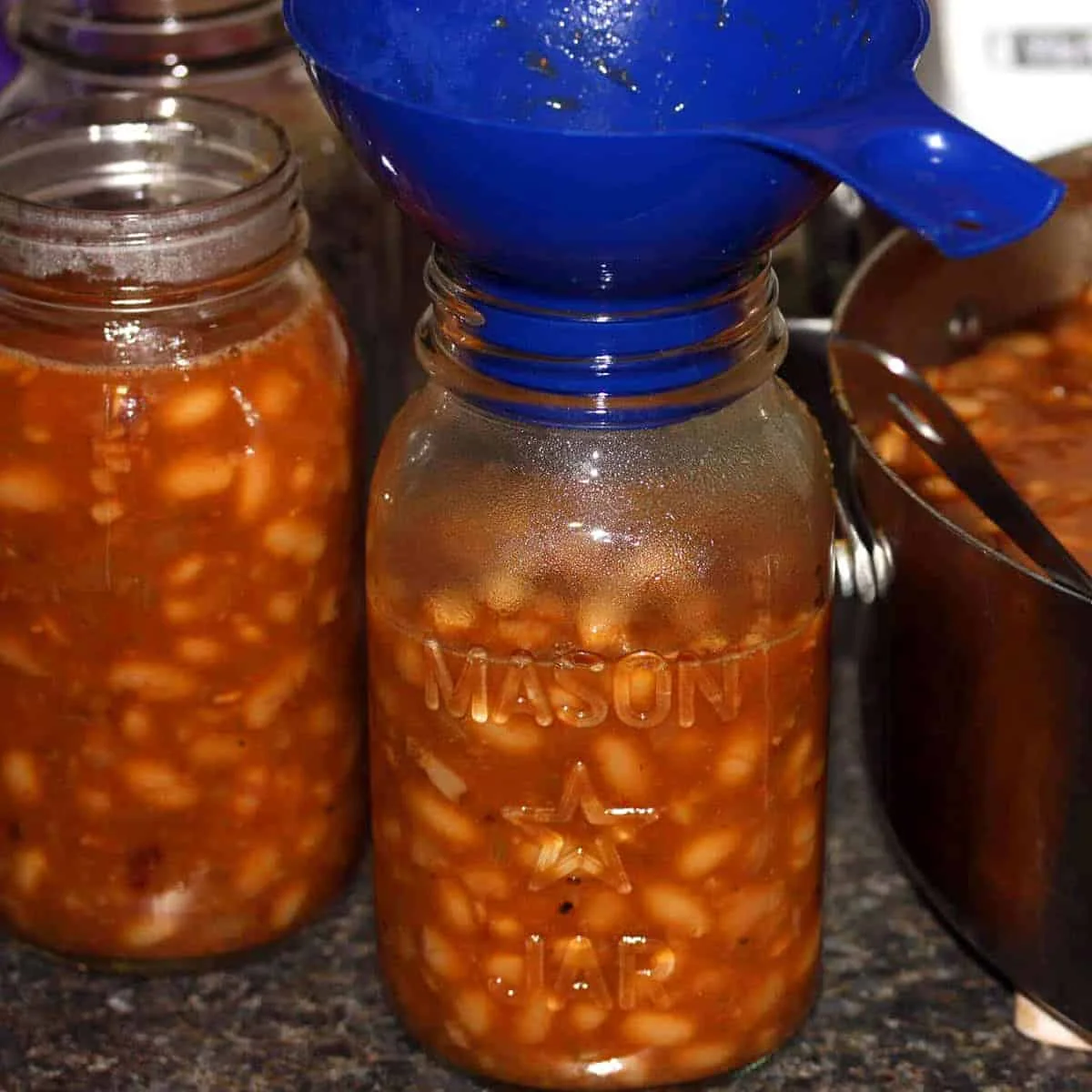
These baked beans combine navy or white beans with bacon, molasses, brown sugar and a savoury mix of onion, garlic and spices. Pressure-canned in jars, they can be stored for later and reheated when you want a hearty side or meal.
Ingredients
- 1.36 kg (3 pounds)dried navy or white beans
- 180 ml (3/4 cup)molasses
- 60 ml (1/4 cup)cider vinegar
- 45 ml (3 tablespoons)kosher salt
- 30 ml (2 tablespoons)ground dry mustard
- 120 ml (1/2 cup)ketchup
- 200 g (1 cup)brown sugar
- 3 largeyellow onions, chopped
- 30 ml (2 tablespoons)Worcestershire sauce
- 5 ml (1 teaspoon)black pepper
- 680 g (1 1/2 pounds)bacon, diced
- 3bay leaves
- 5 clovesgarlic, minced
- 2.5 ml (1/2 teaspoon)ground cloves
Instructions
- 1
Soak the beans
Rinse the beans and boil them rapidly in unsalted water for 2 minutes. Turn off the heat, cover the pot and leave the beans to soak for 1 hour. Drain and discard the soaking liquid. Return the beans to the pot with 6.4 litres (6.75 quarts) of water and bring to a boil, then drain straight away, reserving the liquid. Set the beans and liquid aside.
- 2
Cook the bacon
In a very large stockpot of at least 9.5 litres (10 quarts), fry the bacon until crisp, then drain off the fat. Add the onions and cook until soft and translucent. Stir in the garlic and cook for a couple more minutes. Add all the remaining ingredients, including the beans and their reserved liquid.
- 3
Cook the beans
Choose one of two methods. For the oven method, cover and bake at 175°C (350°F) for 3–4 hours, stirring once or twice; add a little water if needed to keep the beans soupy, and use an oven-safe lid or cover tightly with foil. For the hob method, cover and simmer over low-medium heat for 60–90 minutes, or until the beans are soft; older beans may take longer. Avoid letting them turn mushy, as they will continue to cook in the pressure canner.
- 4
Fill and process
Pack the mixture into hot, sterilised canning jars, leaving 2.5 cm (1 inch) of headspace, then fit the seals and rims. Follow your pressure canner's instructions and process at 10 lb pressure: quart jars for 75 minutes or pint jars for 65 minutes. Adjust for altitude as needed. Following the canner's instructions, remove it from the heat and let the pressure release naturally. Take out the jars, set them on a kitchen towel on the worktop and leave undisturbed for 24 hours. The lids should be depressed when the jars are sealed. The beans may look soupy at first; they will absorb more liquid as they stand.
- 5
Store the jars
For best storage, keep the jars in a dark, relatively cool place, though room temperature is fine. The stated shelf life is at least 1 year. This recipe makes about 7.1 litres (7 1/2 quarts), or 15 pints.
What are baked beans?
Baked beans are beans cooked slowly in a sweet and savoury sauce. This version pairs molasses and brown sugar with bacon, onion, mustard and Worcestershire sauce for a rich, smoky flavour.
The recipe is designed for preserving as well as serving: the cooked mixture is packed into jars and processed in a pressure canner. The initial soak and staged cooking help prepare the beans before canning.
Nutrition and macros by portion
The nutrition label shows one serving as written: 156 calories, 7g protein, 22g carbs, 5g fat.
| Portion | Adjustment | kcal | Protein | Carbs | Fat |
|---|---|---|---|---|---|
| Lighter | Less bacon, more beans | 109 kcal | 5g | 15g | 4g |
| This serving | As written | 156 kcal | 7g | 22g | 5g |
| Hungry | Larger portion | 234 kcal | 11g | 33g | 8g |
The beans and brown sugar supply most of the carbohydrates, while bacon contributes much of the fat and some of the protein; the beans also provide protein. Balance a serving with vegetables or salad, and choose bread or another starch according to how substantial you want the meal to be.
Why soak and drain the beans?
Bean soak: a short boil followed by a covered 1-hour soak starts softening the dried beans before the longer cooking stage.
Reserved liquid: after the beans are brought back to a boil, drain them but keep that liquid. It goes into the pot with the other ingredients and helps maintain a saucy consistency.
Building the flavour
Sweet and tangy: molasses and brown sugar give the sauce its deep sweetness, while cider vinegar and ketchup add tang.
Savoury notes: bacon, onion, garlic, mustard, Worcestershire sauce, pepper, bay and ground cloves round out the flavour. Frying the bacon first also gives you a chance to drain away its fat, as the recipe specifies.
Choosing a cooking method
Oven: baking at 175°C (350°F) for 3–4 hours is the longer option. Stir once or twice, and add a little water if the mixture needs to stay soupy.
Hob: simmering over low-medium heat takes 60–90 minutes, though the age of the beans can affect the timing. Whichever route you choose, stop when the beans are soft but not mushy, as they continue cooking during pressure canning.
Getting the jars ready
Headspace: leave 2.5 cm (1 inch) at the top of each hot, sterilised jar, then fit the seals and rims. Use the jar size and processing time specified in the recipe.
Processing: follow the pressure canner manufacturer's instructions, including any altitude adjustment. Use pressure canning rather than a boiling-water bath for this recipe, and consult current tested canning guidance if you are unsure whether the stated pressure and timings apply to your equipment and location.
How to serve them
Warm a jar's contents before serving, since the recipe is intended to be heated after opening. These beans work as a side with grilled or roasted food, or as a filling meal alongside bread and a crisp salad.
The sauce may seem loose straight after processing; the beans take up more liquid as the jars sit. Give the contents a stir after reheating to distribute the sauce evenly.
Recipe notes & tips
- Use a stockpot with a capacity of at least 9.5 litres (10 quarts) so the mixture has room to simmer.
- Keep the reserved bean liquid to add back with the beans and sauce ingredients.
- Check the beans during cooking and add a little water if they are no longer soupy.
- Allow for longer hob cooking if the dried beans are older and still firm after 90 minutes.
- Leave the processed jars undisturbed for the full 24 hours before checking their seals.
Variations
- Use white beans: choose navy or another white bean as listed, keeping the soaking and cooking stages the same.
- Adjust the sweetness: reduce the brown sugar for a less sweet sauce, keeping in mind this changes the recipe.
- Add extra pepper: increase the black pepper slightly for a more pronounced peppery note.
- Serve as a side: warm the beans and spoon them alongside grilled or roasted food.
- Make it a meal: serve a generous portion with bread and a crisp salad.
Common mistakes to avoid
- Discarding the reserved liquid: keep the liquid from the second boil to add back with the beans.
- Leaving too little headspace: leave 2.5 cm (1 inch) at the top of each jar.
- Cooking until mushy: stop once the beans are soft, since they continue cooking during pressure canning.
- Skipping the fat drain: drain the bacon fat as directed before adding the onions.
- Guessing the canning process: follow the pressure canner instructions and make any required altitude adjustment.
How to store
The recipe states that sealed jars keep for at least 1 year in a dark, relatively cool place; room temperature is also suitable. After opening, refrigerate leftovers in a covered container and reheat thoroughly before serving.
Frequently asked questions
Can I cook the beans on the hob instead of in the oven?
Yes. Cover and simmer over low-medium heat for 60–90 minutes, or until soft. Older beans may need longer.
How do I know when the beans have cooked enough?
They should be soft but not mushy before canning, because they continue cooking in the pressure canner.
Why does the mixture look soupy in the jar?
The beans absorb more liquid as they stand, so the contents may thicken after processing.
Can I use a boiling-water bath to can these beans?
No. This recipe calls for a pressure canner. Follow its instructions and current tested canning guidance, including the appropriate processing pressure and altitude adjustments.
How many jars does the recipe make?
It makes about 7.1 litres (7 1/2 quarts), or 15 pint jars.
How long should I leave the jars before checking the seals?
Leave them undisturbed on a towel for 24 hours, then check that the lids are depressed.
Cook it from the original
This recipe comes from daringgourmet.com. Their page has the author’s own photos, notes and tips — the best place to cook it from.
Open the recipe on daringgourmet.com