
Arroz con Coco (Colombian Coconut Rice)
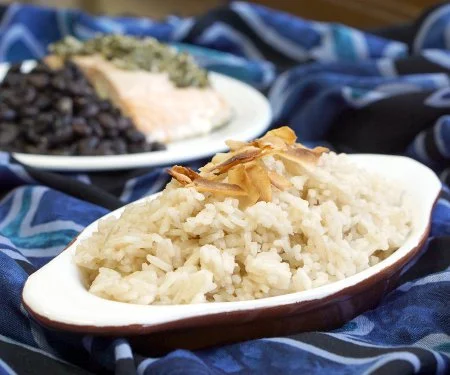
Arroz con coco is Colombian coconut rice, cooked with toasted coconut solids for a savoury-sweet flavour and fragrant finish. It makes a distinctive side for fish, seafood or other boldly seasoned dishes.
Ingredients
- 1 can (414 ml; 14 fl oz)full-fat coconut milk
- 2 tbsp (30 ml)coconut oil, or rapeseed oil if needed
- 370 g (2 cups)white rice, uncooked
- 2 tbsp (about 25 g)sugar
- 1½ tspsalt
- 710 ml (3 cups)water
- 40 g (½ cup)unsweetened coconut flakes, to top if desired
Instructions
- 1
Reduce the coconut
Heat the coconut milk in a wide saucepan until it simmers. Lower the heat to medium-low and simmer, stirring often, for 50–60 minutes, until it has reduced to a thick paste and the coconut solids begin to turn deep golden brown. Near the end, the mixture should separate into clear fat and white solids. If it does not separate once nearly reduced, the milk may contain stabilisers; add 2 tbsp vegetable oil, or preferably coconut oil, and continue cooking until the solids are golden brown.
- 2
Toast the rice
Add the rice, sugar and salt to the golden coconut paste. Raise the heat to medium-high and cook for 3–4 minutes, until the rice grains begin to turn golden brown.
- 3
Add the water
Take the pan off the heat and carefully pour in the water; the hot fat can sputter and release steam. Stir to combine.
- 4
Cook the rice
Return the pan to the heat and bring the mixture to a simmer. Turn the heat to low, cover and cook for 15 minutes.
- 5
Let it rest
Remove the pan from the heat and leave the rice covered for 10–15 minutes.
- 6
Fluff and serve
Fluff the rice with a fork before serving. Top with unsweetened coconut flakes if desired.
What is arroz con coco?
Arroz con coco means coconut rice in Spanish and is a familiar side dish in Colombia, particularly along the Caribbean coast. It is often served alongside fish and seafood, where its gentle sweetness contrasts with savoury or tangy flavours.
This version cooks down coconut milk until its solids toast, then uses that concentrated coconut base to coat and flavour the rice. Browning the solids gives the finished dish a deeper, more savoury character than simply cooking rice in coconut milk.
Nutrition and macros by portion
The nutrition label shows one serving as written: 420 calories, 6g protein, 59g carbs, 18g fat.
| Portion | Adjustment | kcal | Protein | Carbs | Fat |
|---|---|---|---|---|---|
| Lighter | Use less coconut oil | 294 kcal | 4g | 41g | 13g |
| This serving | As written | 420 kcal | 6g | 59g | 18g |
| Hungry | Serve a larger scoop | 630 kcal | 9g | 89g | 27g |
Most of the carbohydrates come from the white rice and sugar, while the coconut milk and added oil contribute most of the fat. The rice provides some protein, but this is mainly a carbohydrate-rich side; pair it with fish, beans or another protein and vegetables to make a more balanced plate.
The coconut milk matters
Full-fat coconut milk: it provides the coconut solids and fat that form the toasted paste. Stir regularly as it reduces, especially towards the end, when the mixture thickens and can catch on the pan.
Separation: the fat may become visibly clear as the milk reduces, leaving the coconut solids behind. If the mixture stays emulsified even when nearly reduced, follow the recipe’s instruction to add 2 tbsp vegetable oil or coconut oil.
Toast before adding water
Golden paste: wait until the coconut solids are a deep golden brown before adding the rice. This is the main flavour-building stage, so avoid rushing it or letting the solids become dark and scorched.
Rice grains: cooking them in the paste for 3–4 minutes helps coat them evenly and gives them a light golden colour. Stir as they toast so they colour without sticking in one spot.
Add water with care
Hot fat: take the pan off the heat before pouring in the water. The temperature difference can make the mixture sputter and steam, so add the water carefully and keep your hands and face away from the pan.
Covered cooking: once the mixture returns to a simmer, lower the heat and keep the lid on for the full 15 minutes. Avoid lifting it repeatedly, as that lets steam escape.
Check the texture
Resting: leave the covered rice off the heat for 10–15 minutes after cooking. This gives the grains time to finish absorbing moisture and settle before serving.
Fluffing: use a fork to separate the grains gently rather than stirring vigorously. The rice should be tender and distinct, with toasted coconut flavour throughout.
What to serve with it
Seafood: serve the rice with grilled or pan-fried fish, prawns or other seafood for a classic pairing. A squeeze of lime or a fresh, sharp accompaniment can balance the coconut’s sweetness.
A fuller plate: add beans, vegetables or a crisp salad alongside the rice. Its sweet-savoury flavour also works with simply seasoned chicken.
Recipe notes & tips
- Use a wide saucepan so the coconut milk reduces evenly and is easier to stir.
- Stir more frequently as the coconut milk thickens and approaches a paste.
- Keep the heat controlled during reduction so the coconut solids brown rather than burn.
- Measure the water before starting so it is ready to add carefully.
- Keep the lid on during the 15-minute cooking time and the resting period.
- Add the optional coconut flakes just before serving for a little extra texture.
Variations
- Citrus finish: add a little lime zest at the end for a bright contrast.
- Fresh herbs: scatter chopped coriander over the rice just before serving.
- More coconut: toast the optional coconut flakes lightly before using them as a topping.
- Gentle spice: add a pinch of ground cumin with the rice for a savoury variation.
- Rapeseed oil: use the stated rapeseed oil alternative if coconut oil is unavailable.
Common mistakes to avoid
- Rushing the reduction: the paste needs 50–60 minutes to develop; keep simmering until thick and golden.
- Leaving the paste unstirred: the solids can catch as the mixture thickens; stir often, especially near the end.
- Adding water over high heat: the hot fat can sputter; remove the pan from the heat and pour carefully.
- Lifting the lid repeatedly: escaping steam disrupts the covered cooking; leave the pan undisturbed for 15 minutes.
- Stirring hard after cooking: vigorous mixing can break up the grains; fluff gently with a fork.
How to store
Cool leftovers promptly and store them in a covered container in the fridge for up to 3 days. Reheat until steaming hot, adding a small splash of water if the rice seems dry; only reheat once.
Frequently asked questions
Why has my coconut milk not separated?
Some coconut milk contains stabilisers that keep the fat and solids emulsified. If it is nearly reduced and still has not separated, add 2 tbsp vegetable oil or coconut oil as directed and continue cooking until the solids brown.
Can I use light coconut milk?
The recipe is designed for full-fat coconut milk, which provides the fat and solids needed to make the toasted paste. Light coconut milk may not reduce or brown in the same way.
Can I make this rice ahead?
Yes. Cook it, cool it promptly and refrigerate it in a covered container for up to 3 days. Reheat it until steaming hot before serving.
How do I know when the coconut paste is ready?
It should be thick, with the coconut solids turning deep golden brown. Watch closely as the mixture nears this stage, since it can brown quickly.
What goes well with Colombian coconut rice?
Fish and seafood are natural pairings, and simply seasoned chicken also works well. Add vegetables, beans or salad to round out the meal.
Are the coconut flakes essential?
No. They are an optional topping and can be left out without changing the cooking method.
Cook it from the original
This recipe comes from curiouscuisiniere.com. Their page has the author’s own photos, notes and tips — the best place to cook it from.
Open the recipe on curiouscuisiniere.com