
Steak Au Poivre
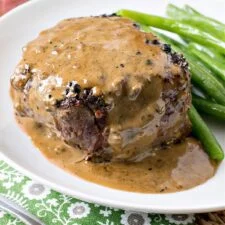
Steak au poivre pairs pepper-crusted beef tenderloin with a creamy Cognac and beef-stock sauce. It is a special-occasion dinner, but the sauce and quick sear make it achievable at home.
Ingredients
- 2 steaks, 227 g each (8 oz each), about 4–5 cm thick (1½–2 in)beef tenderloin steaks
- 1 teaspoonkosher salt
- 1 tablespoonwhole black peppercorns
- 2 teaspoonswhole pink peppercorns, or additional black peppercorns
- 42 g (3 tablespoons), dividedbutter
- 40 g (¼ cup; 1½ oz), finely mincedshallot
- 65 ml (¼ cup plus 1 teaspoon)good-quality Cognac
- 240 ml (1 cup)beef broth or stock
- 240 ml (1 cup)double cream
- To taste (the source recipe uses an additional ½ teaspoon)kosher salt
Instructions
- 1
Dry the steaks
Take the steaks out of the fridge, pat them dry with kitchen paper and set them on a rack over a plate.
- 2
Salt and rest
Pat 1 teaspoon of kosher salt over the tops and sides of both steaks. Leave them at room temperature for 30 minutes.
- 3
Crack peppercorns
Crush the black and pink peppercorns in a mortar with a pestle until coarse; do not use a grinder. Alternatively, crack them in a kitchen towel with a mallet or the base of a heavy pan. A few whole pieces are fine.
- 4
Prepare ingredients
Mince the shallot and measure out the remaining ingredients before cooking.
- 5
Coat with pepper
Set the steaks on a plate and press cracked peppercorns onto the top of each. Turn them over and coat the other sides, pressing any peppercorns left on the plate back onto the steaks.
- 6
Warm plates
Set the oven to its lowest warm setting, no higher than 120°C, and put two dinner plates inside. Keep them warm rather than hot.
- 7
Heat the pan
When ready to cook, turn the cooker fan to high and heat a cast-iron pan over high heat until smoking hot. Add 2 tablespoons of butter, taking care as the pan may smoke.
- 8
Sear first side
As the butter melts, foams and begins to brown, add both steaks. Leave them undisturbed for 4 minutes.
- 9
Cook second side
Turn the steaks and cook for 3–6 minutes more, depending on their thickness and how you like them cooked. Use the source recipe’s hand-poke test as a guide: a loosely closed fist feels like medium-rare, a tighter fist like medium, and an open hand like rare. A steak about 4 cm thick (1½ in) takes roughly 8–9 minutes in total; one about 5 cm thick (2 in) takes around 10 minutes or possibly longer. Account for carry-over cooking as the steaks rest. For steaks 5 cm (2 in) thick or more, sear the sides as well as the top and bottom.
- 10
Rest the steaks
Move the cooked steaks to the warm plates and cover each loosely with foil.
- 11
Cook the shallots
Lower the pan heat to medium and add the remaining 1 tablespoon of butter. Once it melts, add the shallots and cook, stirring, for 1 minute.
- 12
Flambé Cognac
Take care with this step. Turn off the heat, pour in 60 ml (¼ cup) of Cognac, then turn the heat to high. Using a long match, carefully ignite it; the flame should subside after a second or two. Cook for about 1–2 minutes, until most of the Cognac has cooked off.
- 13
Reduce the stock
Add the beef stock and boil until reduced to about one-third, roughly 5 minutes.
- 14
Thicken the sauce
Add the cream. When it begins to boil, lower the heat to a medium simmer and cook until the sauce coats the back of a spoon.
- 15
Season the sauce
Take the pan off the heat and stir in the remaining 1 teaspoon of Cognac. Taste and add kosher salt as needed; the source recipe uses an additional ½ teaspoon.
- 16
Coat and serve
Return the steaks to the sauce and turn to coat. Transfer them to the serving plates, then serve with the sauce alongside or poured over the steaks.
What is steak au poivre?
Steak au poivre is a French preparation of steak crusted with cracked pepper and served with a pan sauce. The name means “pepper steak”, and the dish is known for the contrast between the beef’s savoury sear and the pepper’s sharp warmth.
This version uses tenderloin, which cooks quickly, and finishes the sauce with Cognac and cream. Coarsely cracked peppercorns give the steaks a distinct crust without turning the coating into fine powder.
Nutrition and macros by portion
The nutrition label shows one serving as written: 736 calories, 54g protein, 9g carbs, 53g fat.
| Portion | Adjustment | kcal | Protein | Carbs | Fat |
|---|---|---|---|---|---|
| Lighter | Less cream and butter | 515 kcal | 38g | 6g | 37g |
| This serving | As written | 736 kcal | 54g | 9g | 53g |
| Hungry | Add potatoes or bread | 1104 kcal | 82g | 13g | 79g |
The tenderloin provides most of the protein, while the cream and butter account for much of the fat. The steaks and stock contribute some carbohydrates, with a smaller amount from the shallot. Balance the rich sauce with green vegetables or salad, and serve a modest potato portion if you would like a starchy side.
Choosing and cracking the pepper
Peppercorns: Black peppercorns provide the main pungent bite, while pink peppercorns add a gentler, aromatic note. If you cannot find pink peppercorns, use more black ones as directed.
Cracking: Use a mortar and pestle, or wrap the peppercorns in a tea towel and crack them with a mallet or heavy pan. Keep the pieces coarse; a grinder makes them too fine for the intended crust.
Getting a good sear
Dry surface: Pat the steaks thoroughly dry before seasoning so excess moisture does not interfere with browning. Letting them sit salted for 30 minutes also gives you time to prepare the pepper and sauce ingredients.
Hot pan: Heat the cast-iron pan until very hot before adding the butter and steaks. The butter will foam and brown quickly, so have the steaks ready to go as soon as it does.
Judging doneness
Timing: The recipe gives 4 minutes for the first side and 3–6 minutes for the second, with the final time depending on steak thickness and preferred doneness. Treat these times as a guide rather than a guarantee.
Resting: The steaks continue to cook a little after they leave the pan. Rest them loosely covered on warmed plates while you make the sauce, then return them briefly to coat.
Building the Cognac sauce
Flambé: Add the Cognac with the heat off, then ignite it with a long match as the method directs. Keep your face and hands back, use a clear space, and never pour Cognac straight from the bottle near a flame.
Reduction: Boil the stock down to about one-third before adding the cream. Simmer the cream until it coats the back of a spoon; this is the recipe’s cue that the sauce has thickened.
Serving the steaks
Sauce: Serve the steaks with the sauce poured over them or in a small jug alongside. The peppery crust and creamy sauce are rich, so something fresh or simply prepared makes a useful contrast.
Sides: Try the steak with steamed green beans, a crisp green salad or roasted vegetables. Potatoes or crusty bread also work well for catching any sauce left on the plate.
Recipe notes & tips
- Measure the sauce ingredients and mince the shallot before heating the pan, as the searing and sauce stages move quickly.
- Keep the peppercorns coarse so the steaks get a textured crust rather than a dusty coating.
- Use a pan large enough to sear both steaks without crowding them.
- Warm the plates gently; plates that are too hot can continue cooking the resting steaks.
- Keep the Cognac bottle away from the lit pan when flambéing.
- If the sauce thickens too much, serve it promptly rather than leaving it to reduce further.
Variations
- All black pepper: Replace the pink peppercorns with the same amount of extra black peppercorns, as suggested in the recipe.
- Different steak cut: Use another tender steak cut of similar thickness and adjust the cooking time to suit it.
- Extra shallot: Add a little more minced shallot for a more pronounced savoury note in the sauce.
- Peppercorn mix: Use a mix of black and pink peppercorns while keeping the total amount the same.
- Simple sides: Serve with green beans or a crisp salad to contrast with the creamy sauce.
Common mistakes to avoid
- Grinding the pepper finely: It can make the coating powdery; crack the peppercorns coarsely instead.
- Starting with a damp steak: Moisture gets in the way of browning; pat the steaks dry before seasoning.
- Moving the steaks too soon: Leave the first side untouched for 4 minutes so it can sear.
- Cooking by time alone: Thickness and preferred doneness vary; use the timing as a guide and account for carry-over cooking.
- Adding Cognac near an open flame: Turn off the heat before adding it, and ignite carefully with a long match.
- Reducing the sauce too far: Simmer only until it coats the back of a spoon, then take it off the heat.
How to store
Refrigerate leftover steak and sauce promptly in a covered container and use within 2 days. Reheat gently in a covered pan over low heat until hot, adding a splash of stock or water if the sauce has become too thick; avoid prolonged heating, which can overcook the steak.
Frequently asked questions
Can I make steak au poivre without a cast-iron pan?
Yes. Use a heavy frying pan that can withstand high heat. The important thing is to heat it thoroughly before adding the butter and steaks.
What if I cannot find pink peppercorns?
Use additional black peppercorns, as the recipe allows. The flavour will be more straightforwardly peppery.
Can I skip flambéing the Cognac?
The method uses a brief flambé to cook off much of the alcohol. If you choose not to ignite it, simmer the Cognac carefully in the pan before adding the stock, knowing the result may differ.
How do I know when the sauce is ready?
Dip a spoon into the sauce; it should coat the back of the spoon. Take the pan off the heat once it reaches that consistency.
Can I prepare anything ahead?
You can mince the shallot, measure the ingredients and crack the peppercorns ahead of time. Cook the steaks and finish the sauce just before serving.
Cook it from the original
This recipe comes from afamilyfeast.com. Their page has the author’s own photos, notes and tips — the best place to cook it from.
Open the recipe on afamilyfeast.com