
Veggie-Loaded Stuffed Bell Peppers
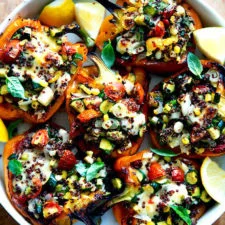
These American-style stuffed bell peppers are filled with quinoa, sweetcorn, courgette, tomatoes, herbs and cubes of Monterey Jack. Roast the peppers until blistered, then fill and bake them again for a colourful, substantial meal.
Ingredients
- 6 largebell peppers, halved and cored, stems left intact if you like
- 30 ml, plus extra for drizzlingolive oil
- to tastekosher salt
- 85 g (½ cup)quinoa
- 1onion, finely diced
- 1, optionalhot chilli, finely minced
- to tastekosher salt
- 1 or 2, about 300 g diced (to yield about 2 cups)small courgettes, diced
- 2 earssweetcorn, kernels removed
- 150 g (1 cup)cherry tomatoes, quartered
- 6spring onions, finely sliced
- 1 bunch, finely chopped to yield about 15 g (1 cup)coriander
- 340 g (12 oz)Monterey Jack cheese, cubed
- to taste, optionalfreshly ground black pepper
- to garnish, optionalbasil or chives, finely chopped
- to garnish, optionallemon
Instructions
- 1
Roast the peppers
Heat the oven to 246°C on convection roast. Arrange the peppers cut-side down on a parchment-lined baking tray, drizzle with oil and season with salt. Roast for 15–20 minutes, until they begin to blister. Remove the tray, turn the peppers over and set them aside.
- 2
Cook the quinoa
Meanwhile, bring a medium pan of water to a simmer and add a generous pinch of kosher salt. Cook the quinoa for 9–12 minutes, or until done, then drain it through a fine-mesh sieve and set aside.
- 3
Soften the onion
Meanwhile, heat 30 ml of olive oil in a large frying pan over high heat. When the oil shimmers, add the onion and chilli, if using, lower the heat to medium straight away, season with a pinch of salt and stir. Cook for about 5 minutes, stirring occasionally, until the onion softens and starts to turn translucent.
- 4
Cook the vegetables
Add the courgette and cook for 2 minutes, just until it loses its rawness while retaining some texture. Add the sweetcorn and cook for 1 minute more, then turn off the heat. Stir in the tomatoes, spring onions and coriander.
- 5
Finish the filling
Add the quinoa and stir everything together. Taste and season with salt and pepper until well seasoned, then fold in the cubed Monterey Jack.
- 6
Fill the peppers
Spoon the filling into the pepper cavities, packing it in generously; it can mound above the edges. There may be a little filling left over, which can be saved for another day or eaten on its own.
- 7
Bake until melted
Return the filled peppers to the oven and cook for about 10 minutes, until the cheese starts to melt and the vegetables begin to brown.
- 8
Garnish and serve
Remove the peppers from the oven. Garnish with fresh basil, if you like, and serve with a squeeze of lemon, if you like.
What are stuffed bell peppers?
Stuffed peppers are a familiar American home-cooking format: hollowed peppers hold a savoury filling and are baked until tender. This version takes inspiration from poblano peppers filled with corn and quinoa, using sweet bell peppers and a generous mix of vegetables.
Quinoa makes the filling hearty, while Monterey Jack melts through it and helps the vegetables feel cohesive. Roasting the peppers before stuffing gives them a head start and adds blistered edges.
Nutrition and macros by portion
The nutrition label shows one serving as written: 410 calories, 19g protein, 45g carbs, 23g fat.
| Portion | Adjustment | kcal | Protein | Carbs | Fat |
|---|---|---|---|---|---|
| Lighter | Use less cheese | 287 kcal | 13g | 31g | 16g |
| This serving | As written | 410 kcal | 19g | 45g | 23g |
| Hungry | Add extra filling | 615 kcal | 29g | 68g | 35g |
Quinoa and sweetcorn provide much of the carbohydrates, while Monterey Jack and olive oil contribute most of the fat; the cheese also supplies most of the protein. Balance a pepper half with a crisp salad or extra non-starchy vegetables, particularly if serving a generous mound of filling.
The pepper roast
Cut-side down: placing the peppers this way on the lined tray helps them roast evenly. Keep an eye on them as they blister; the aim is to soften them, not to make them collapse.
Room to roast: arrange the halves in a single layer. If the tray is crowded, the peppers may soften in their own steam rather than blister.
Building the filling
Quinoa: simmer it until tender, then drain it well so excess water does not make the filling loose. A fine-mesh sieve helps keep the small grains from escaping.
Vegetables: cook the onion first, then add the courgette and sweetcorn briefly. The courgette should lose its raw edge but keep a little bite; the tomatoes, spring onions and coriander go in off the heat to stay fresh.
Getting the texture right
Keep the courgette pieces small and stop cooking after 2 minutes. They continue to soften slightly when the filled peppers go back into the oven.
Fold in the cheese after seasoning the quinoa and vegetables. Cubes give you pockets of melted cheese, while generous mounds of filling make the pepper halves satisfying to eat.
Timing the two bakes
First bake: roast the pepper halves for 15–20 minutes, until they start to blister. Their size and the oven can affect how quickly they soften, so use the visual cue as well as the timer.
Second bake: about 10 minutes is enough to warm the filling, melt the cheese and start browning the vegetables. The filling is already cooked before it goes into the peppers.
What to serve alongside
A squeeze of lemon and fresh basil or chives bring brightness to the sweet peppers and rich cheese. A simple green salad makes an easy side without competing with the filling.
The recipe also works as a substantial standalone meal. Any extra quinoa mixture can be served alongside the peppers or kept for another meal.
Recipe notes & tips
- Use a large baking tray so the pepper halves can sit in a single layer.
- Drain the quinoa thoroughly before adding it to the vegetables.
- Cut the courgette into evenly sized pieces so it cooks at the same rate.
- Taste the filling before adding the cheese and adjust the seasoning then.
- Pack the filling firmly into the peppers, allowing it to mound above the rim.
- Save any extra filling to serve on the side or enjoy separately.
Variations
- Add black beans: fold them into the filling with the quinoa for another hearty element.
- Change the herbs: use basil or chives in place of coriander for a different fresh finish.
- Adjust the heat: leave out the chilli for a milder filling or use more for extra warmth.
- Use another cheese: swap Monterey Jack for a good melting cheese such as cheddar.
- Add cooked rice: replace the quinoa with an equal amount of cooked rice for a different grain.
Common mistakes to avoid
- Crowding the tray: the peppers are more likely to steam than blister; leave space between the halves.
- Overcooking the courgette: it can turn soft in the second bake; stop after 2 minutes in the pan.
- Skipping the quinoa drain: excess water can loosen the filling; let it drain well in a fine-mesh sieve.
- Underseasoning the filling: taste it before adding the cheese and adjust the salt and pepper.
- Filling too cautiously: the peppers are meant to be substantial; pack the cavities generously and mound the filling.
How to store
Store leftover cooked peppers and any extra filling in an airtight container in the fridge for up to 3 days. Reheat in an oven at 180°C until hot throughout, or microwave individual portions until steaming.
Frequently asked questions
Can I make the filling ahead?
Yes. Cook the quinoa and vegetable filling ahead, then refrigerate it in a covered container. Fill the roasted pepper halves when you are ready to bake them.
Can I use a different type of pepper?
Yes, but choose peppers large enough to hold the filling. Smaller peppers may need less filling and can cook more quickly.
How do I know when the peppers are ready?
After the first bake, look for blistering on the skins. After the final bake, the cheese should be starting to melt and the vegetables should show some browning.
Can I make these without chilli?
Yes. The chilli is optional, so leave it out for a mild filling.
What can I do with leftover filling?
Serve it on its own as the recipe suggests, or refrigerate it in a covered container and eat it another day.
Can I freeze the stuffed peppers?
The recipe does not specify freezing, and the vegetables may soften after thawing. For the best texture, refrigerate leftovers and eat them within 3 days.
Cook it from the original
This recipe comes from alexandracooks.com. Their page has the author’s own photos, notes and tips — the best place to cook it from.
Open the recipe on alexandracooks.com