
Sandwich de Jamón y Queso [Video+Recipe] Ham and Cheese Sandwich
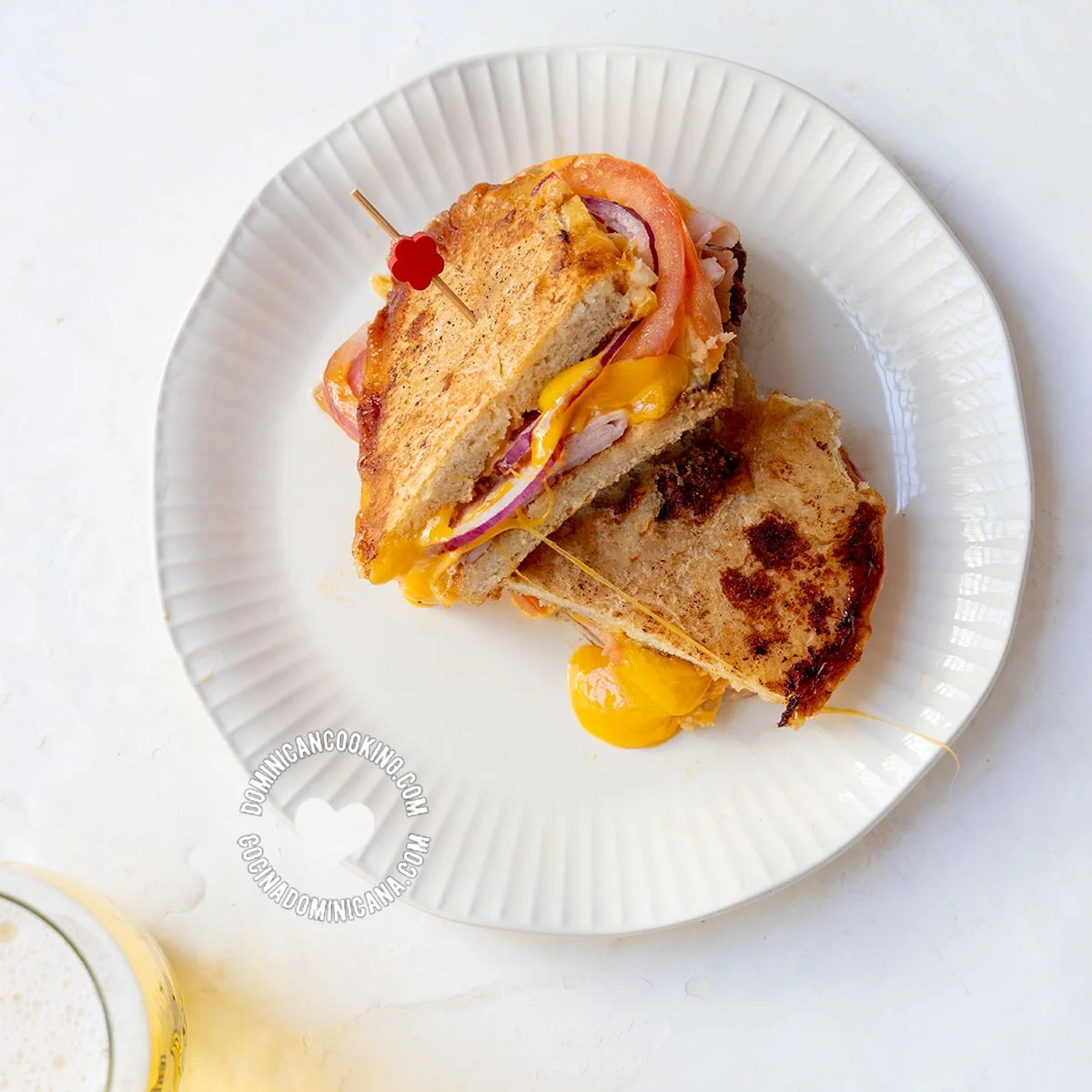
This Dominican ham and cheese sandwich pairs toasted bread with melted cheese, cooked ham and fresh tomato and onion. It makes a straightforward snack or light meal, ready in about 25 minutes.
Ingredients
- 8 slicessandwich bread (see recipe notes)
- 56 g (4 tablespoons)butter
- 8 slicescheddar or Gouda cheese (see recipe notes)
- 8 slicescooked ham, such as York ham (see recipe notes)
- 2 largetomatoes, thinly sliced
- 1 largered onion, thinly sliced
Instructions
- 1
Trim the crusts
Cut the crusts from the bread slices.
- 2
Assemble sandwiches
Spread butter on one side of each slice of bread. Put a slice of cheese on the buttered side of each slice. Top four slices with ham, tomato and onion, if using, then place the remaining slices on top, cheese-side down.
- 3
Toast the sandwiches
Toast in a sandwich press or frying pan, pressing the bread until it is browned and the cheese has melted.
- 4
Cut and serve
If you like, cut each sandwich into two triangles and serve.
What is a Dominican ham and cheese sandwich?
This is a simple, filling sandwich made with bread, cooked ham and cheese, with tomato and red onion for freshness. Ham-and-cheese sandwiches are familiar in many places; this version is presented as a popular Dominican snack or light dinner.
The method keeps the assembly uncomplicated and toasts the sandwich until the cheese melts. That contrast between crisp, browned bread and soft filling makes it satisfying without a long preparation.
Nutrition and macros by portion
The nutrition label shows one serving as written: 480 calories, 24g protein, 30g carbs, 29g fat.
| Portion | Adjustment | kcal | Protein | Carbs | Fat |
|---|---|---|---|---|---|
| Lighter | Less butter, extra tomato | 336 kcal | 17g | 21g | 20g |
| This serving | As written | 480 kcal | 24g | 30g | 29g |
| Hungry | Add another sandwich | 720 kcal | 36g | 45g | 44g |
The bread supplies most of the carbohydrates, while butter and cheese contribute much of the fat; the ham and cheese provide most of the protein. Pair a sandwich with salad or extra vegetables for a fresh side.
Choosing the ingredients
Bread: Use sandwich bread that can hold the filling without tearing. Removing the crusts is part of this recipe and also makes the finished triangles easier to bite.
Cheese: Cheddar or Gouda are both suggested. Choose slices that melt readily so they help hold the filling together.
Ham: Use cooked ham, such as York ham, sliced thinly enough to layer evenly. Thin slices make it easier to toast the sandwich through before the bread gets too dark.
Layer for even toasting
Butter: Spread it over one side of every slice, then place the cheese on the buttered sides. This puts butter in contact with the outside of the bread when the sandwich is closed.
Filling: Keep the ham, tomato and onion in a fairly even layer between the cheese-topped slices. Avoid piling the vegetables too high, which can make the sandwich harder to press.
Get the texture right
Heat: Toast over moderate heat in a frying pan, or use a sandwich press. Press gently and give the bread time to brown while the cheese melts.
Doneness: Look for golden-brown bread and softened, melted cheese. If the outside is colouring too quickly, lower the heat so the filling has more time to warm.
Tomato and onion options
Tomato: Slice it thinly so it sits neatly inside the sandwich. If the slices are particularly juicy, blotting them before assembly can help keep the bread from becoming soggy.
Red onion: The recipe lists it as optional in the assembly method. Use less or leave it out if you prefer a milder filling.
Serving ideas
Cutting each sandwich into triangles is optional, but makes the portions easy to serve as a snack. Serve them straight after toasting, while the bread is crisp and the cheese is still soft.
For a more rounded light meal, add a simple salad or some sliced vegetables on the side.
Recipe notes & tips
- Spread the butter right to the edges for more even browning.
- Use thin tomato and onion slices so the sandwich closes neatly.
- Arrange the cheese against the bread to help contain the other fillings.
- Toast over moderate heat rather than rushing the browning.
- Serve soon after toasting for the best contrast between crisp bread and melted cheese.
Variations
- Use Gouda: Swap it for the cheddar for a different melting cheese.
- Skip the onion: Leave it out for a milder sandwich.
- Add more tomato: Use extra thin slices for a fresher-tasting filling.
- Make smaller portions: Cut each toasted sandwich into four pieces for sharing.
- Change the bread: Use another sturdy sandwich loaf that holds the filling.
Common mistakes to avoid
- Too much filling: The sandwich may not press evenly; keep the layers fairly thin.
- Thick tomato slices: They can make the bread damp; slice the tomato thinly.
- Heat too high: The bread can brown before the cheese melts; lower the heat.
- Butter on the wrong side: The outside may not brown as intended; butter one side of each slice and close the sandwich with those sides facing out.
- Pressing too hard: The filling can squeeze out; press gently while toasting.
How to store
These sandwiches are best eaten straight after toasting. If needed, refrigerate leftovers in a covered container and reheat in a frying pan or sandwich press until hot, though the bread may lose some crispness.
Frequently asked questions
Can I make these without a sandwich press?
Yes. Toast them in a frying pan, pressing gently and turning as needed so both sides brown and the cheese melts.
Is the red onion essential?
No. The method describes it as optional, so you can leave it out or use less.
Can I use Gouda instead of cheddar?
Yes. The recipe suggests either cheddar or Gouda.
How do I stop the bread getting soggy?
Slice the tomato thinly and blot it if it is very juicy. Avoid overfilling the sandwich.
Do I have to remove the crusts?
The recipe includes trimming them before assembly. You can leave them on if you prefer.
Can I prepare the sandwiches ahead?
You can assemble them shortly before toasting, but they are best toasted and served straight away.
Cook it from the original
This recipe comes from dominicancooking.com. Their page has the author’s own photos, notes and tips — the best place to cook it from.
Open the recipe on dominicancooking.com