
Char Siu Bao-Baked Buns Recipe
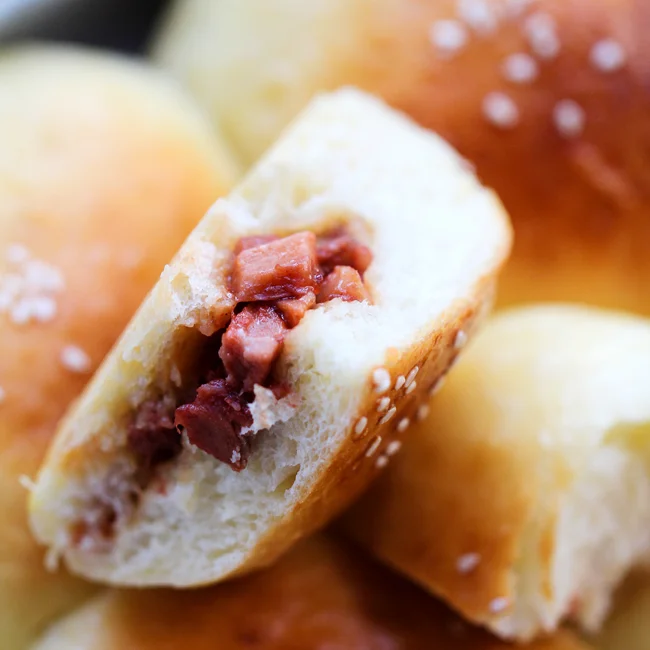
These soft, Tangzhong-enriched baked buns are filled with savoury-sweet Chinese char siu pork. They take a little advance planning for the starter to chill, but make a satisfying portable snack or light meal.
Ingredients
- 2 cupsleftover char siu pork, diced
- 100 mlwater
- 1 tbspcornflour
- 1 tbsplight soy sauce
- 1 tbspoyster sauce
- 1 tbsphoisin sauce
- 1 tbspsugar
- 20 gflour
- 100 gwater
- 195 gstrong bread flour
- 90 gcake flour
- 6 ginstant yeast
- 30 g (or 10 g for a saltier bun)sugar
- 3 g (or an extra 3 g for a saltier bun)salt
- 1 mediumegg
- 80 gmilk
- 45 gunsalted butter, softened
- 1 egg whisked with 1 tbsp wateregg wash
- 1 tsproasted sesame seeds
- 1 tbspunsalted butter, melted
Instructions
- 1
Cook the Tangzhong
In a small pan, stir the 20 g flour into 100 g water. Cook over low heat, stirring continuously, until the mixture thickens and the spatula leaves lines that do not immediately disappear. Take it off the heat and leave it to cool.
- 2
Chill the starter
Transfer the Tangzhong to a clean bowl, cover with cling film and refrigerate for at least overnight; it can be kept for around two days.
- 3
Mix the filling
Stir the cornflour into 100 ml water and leave it for a couple of minutes until combined. Put this mixture in a small saucepan with the oyster sauce, hoisin sauce, light soy sauce and sugar. Heat over the lowest heat until large bubbles appear, then stir in the diced char siu.
- 4
Chill the filling
Cover the filling and refrigerate it for 30 minutes.
- 5
Knead the dough
Bring the Tangzhong to room temperature for about 30 minutes. Add it to a bread maker or large mixing bowl with the milk and egg, then add the sugar, salt, flours and yeast. Knead on low speed for about 10 minutes, add the softened butter and knead at medium speed for another 10 minutes. Set the dough aside to prove until it is 2 to 2.5 times its original size; in cold weather this may take hours.
- 6
Divide the dough
Turn the dough out onto a clean, floured work surface and divide it into 8 equal portions. For smaller buns, divide it into 12 to 14 portions instead, then round each portion.
- 7
Fill the buns
Take one portion and press it into a round wrapper. Put about 1 tablespoon of char siu filling in the centre, seal the dough completely and turn the bun over. Repeat with the remaining portions.
- 8
Prove the buns
Set the assembled buns aside for a second prove, until they have doubled in size.
- 9
Bake until golden
Preheat the oven to 180°C. Brush the buns with egg wash and scatter over the sesame seeds. Bake for 18 to 20 minutes, until well browned.
- 10
Finish and serve
If using, brush the baked buns with melted butter and let them cool for several minutes before serving.
What are char siu bao?
Char siu bao are Chinese buns filled with char siu, the sweet-savoury barbecued pork. They are commonly steamed, while this version is baked and has a soft, enriched dough.
Tangzhong, a cooked flour-and-water starter, is mixed into the dough to give the buns their tender texture. The pork filling is coated in a glossy sauce before it is enclosed.
Nutrition and macros by portion
The nutrition label shows one serving as written: 246 calories, 6g protein, 37g carbs, 7g fat.
| Portion | Adjustment | kcal | Protein | Carbs | Fat |
|---|---|---|---|---|---|
| Lighter | Use less butter | 172 kcal | 4g | 26g | 5g |
| This serving | As written | 246 kcal | 6g | 37g | 7g |
| Hungry | Make 12 smaller buns | 369 kcal | 9g | 56g | 11g |
The dough supplies most of the carbohydrates, while the pork and egg contribute protein; the butter and sauces add fat. Serve a bun with vegetables or a light soup to round out the plate.
The Tangzhong starter
Cooked flour: stir the flour and water over low heat until thickened, watching for the spatula tracks to linger briefly on the surface.
Chilling: cool the starter before covering it and refrigerating it at least overnight. Let it come back to room temperature for about 30 minutes before making the dough.
A thick, savoury filling
Cornflour slurry: mix it thoroughly with the water before heating so it can thicken the sauces evenly.
Sauce: warm the slurry with the soy, oyster and hoisin sauces and sugar over very low heat until large bubbles form, then mix in the diced pork. Chilling the covered filling for 30 minutes makes it easier to handle when shaping.
Kneading and proving
Kneading: work the dough for about 10 minutes on low speed before adding the softened butter, then knead for a further 10 minutes at medium speed.
First prove: wait until the dough reaches 2 to 2.5 times its starting size. The method notes that this can take hours in winter, so use the rise rather than a fixed time as your cue.
Sealing and shaping
Filling: use about 1 tablespoon in the centre of each wrapper, keeping the edges clear so they can be sealed.
Sealing: close the dough completely around the pork and turn the bun over before setting it aside to prove again. The second prove is complete when the buns have doubled in size.
Baking and serving
Colour: bake at 180°C for 18 to 20 minutes, looking for a well-golden-brown finish.
Finish: the melted butter is optional and goes on after baking. Give the buns several minutes to cool before serving.
What to serve alongside
These buns can be served on their own as a snack or light meal. For a more substantial plate, pair them with a simple vegetable side or a light soup.
Recipe notes & tips
- Prepare the Tangzhong at least the night before you plan to make the dough.
- Bring the chilled Tangzhong to room temperature for about 30 minutes before mixing.
- Use the dough’s increase in size, rather than a set clock time, to judge the first prove.
- Keep the filling in the centre of each wrapper and seal the dough all the way around it.
- Allow the second prove to continue until the shaped buns have doubled in size.
- Brush with melted butter only after baking, and only if you want the optional finish.
Variations
- Saltier dough: use 10 g sugar and add an extra 3 g salt as suggested in the ingredient list.
- Smaller buns: divide the dough into 12 to 14 portions instead of 8.
- Sesame topping: scatter the roasted sesame seeds over the egg-washed buns before baking.
- Butter finish: brush the baked buns with melted unsalted butter for a richer finish.
Common mistakes to avoid
- Using hot Tangzhong: cool it first, then bring it to room temperature before mixing.
- Cooking the starter too briefly: keep stirring until it thickens and spatula lines linger.
- Rushing the first prove: wait until the dough is 2 to 2.5 times its starting size.
- Overfilling the wrappers: use about 1 tablespoon of filling per bun so the dough can seal around it.
- Leaving a gap in the seal: close the bun completely before turning it over.
- Baking by time alone: check for a well-golden-brown colour within the 18 to 20 minute bake.
How to store
The recipe specifies refrigerating the filling for 30 minutes before shaping but does not give storage guidance for baked buns. For any leftovers, refrigerate them in a covered container and reheat until hot throughout.
Frequently asked questions
Can I make the Tangzhong ahead?
Yes. Cover and refrigerate it for at least overnight; the method says it can be made around two days ahead. Bring it to room temperature for about 30 minutes before using.
How many buns does this recipe make?
It makes 8 equal-sized buns. For smaller ones, divide the dough into 12 to 14 portions.
How do I know when the dough has proved enough?
For the first prove, look for the dough to reach 2 to 2.5 times its original size. After shaping, prove the buns until they have doubled in size.
Can I use a bread maker?
Yes. The method allows you to knead the dough in a bread maker or a large mixing bowl. Follow the same kneading sequence, adding the butter after the first 10 minutes.
Can I make the dough less sweet?
The ingredient list suggests reducing the sugar from 30 g to 10 g and adding an extra 3 g of salt for a saltier bun.
Cook it from the original
This recipe comes from chinasichuanfood.com. Their page has the author’s own photos, notes and tips — the best place to cook it from.
Open the recipe on chinasichuanfood.com