
Curd Rice
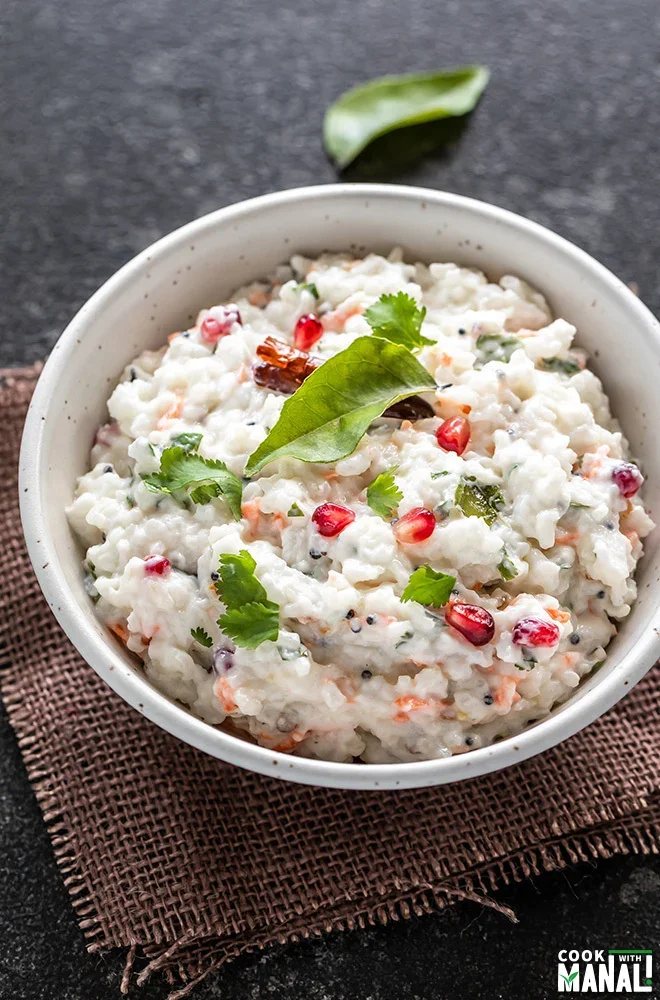
Curd rice is soft cooked rice mixed with yoghurt, milk and fresh additions, finished with a fragrant spiced oil. It makes a soothing, easy meal that is especially refreshing served chilled with pickle and papadum.
Ingredients
- 200 g (1 cup)rice (long-grain)
- 710 ml (3 cups; 24 fl oz)water
- ½ teaspoon, or to tastesalt
- 360–480 ml (1½–2 cups)plain yoghurt, whisked
- 120 ml (½ cup; 4 fl oz)milk
- ⅓ cup, grated (from 2 medium carrots)carrot
- 1–2 tablespoonsfresh coriander, chopped
- 1–2green chillies, finely chopped
- 22 ml (1½ tablespoons)oil (avocado oil in the original recipe)
- 1 teaspoonmustard seeds
- 1 teaspoonurad dal
- 1 teaspoonfresh ginger, finely chopped
- 8–10curry leaves
- 2dried red chillies
Instructions
- 1
Cook the rice
Rinse the rice and put it in a pressure cooker with the water and salt. Cook on high until you hear 2–3 whistles, then turn the heat down and cook for a further 2–3 minutes. Let the pressure release naturally.
- 2
Mash the rice
When cooked, mash the rice lightly with a masher, the back of a spoon or your hands. Leave it whole if you prefer a less mashed texture.
- 3
Cool completely
Transfer the rice to a large bowl and leave it until completely cool.
- 4
Mix in dairy
Add the whisked yoghurt and milk to the cooled rice and stir to combine. Use the amount of yoghurt that suits your preference, up to 480 ml (2 cups).
- 5
Add fresh ingredients
Stir in the grated carrot, chopped coriander and green chillies.
- 6
Heat the oil
For the tempering, warm the oil in a small pan over a medium heat.
- 7
Pop the seeds
When the oil is hot, add the mustard seeds and let them pop.
- 8
Cook the dal
Add the urad dal and cook until it begins to change colour. For softer dal in the tempering, soak it in water for 10 minutes before using.
- 9
Finish the tempering
Add the ginger, curry leaves and dried red chillies. Cook until the curry leaves are crisp.
- 10
Combine everything
Pour the tempering into the bowl of curd rice and mix it through.
- 11
Chill and serve
Cover and refrigerate for a few hours, until chilled. Add pomegranate arils on top if desired, and serve with pickle and papadum.
What is curd rice?
Curd rice, also called thayir sadam in Tamil, is a South Indian dish of rice combined with curd, or yoghurt. It is often eaten as a cooling, comforting finish to a meal.
This version uses milk as well as yoghurt for a creamy mix, with carrot, coriander and green chilli for freshness. A hot tempering of mustard seeds, urad dal, ginger and curry leaves brings fragrance and contrast.
Nutrition and macros by portion
The nutrition label shows one serving as written: 299 calories, 8g protein, 44g carbs, 9g fat.
| Portion | Adjustment | kcal | Protein | Carbs | Fat |
|---|---|---|---|---|---|
| Lighter | Use less tempering oil | 209 kcal | 6g | 31g | 6g |
| This serving | As written | 299 kcal | 8g | 44g | 9g |
| Hungry | Serve a larger portion | 449 kcal | 12g | 66g | 14g |
The rice supplies most of the carbohydrates, while the yoghurt and milk contribute protein and some fat. Oil in the tempering adds much of the dish’s fat; serve a moderate portion with vegetables or a fresh salad alongside for a more balanced plate.
Choose the rice texture
Soft rice: cooking the grains until very tender helps them blend readily with the yoghurt. Long-grain rice is used here, though the key is to cook it soft rather than keep it separate and fluffy.
Light mashing: break up the rice gently after cooking so it mixes smoothly but still has some texture. Mash it more thoroughly if you prefer a softer, more uniform bowl.
Cool before adding yoghurt
Cool the rice: let it come completely to room temperature before adding the yoghurt and milk. Mixing dairy into hot rice can make the finished dish overly loose and less fresh-tasting.
Adjust the yoghurt: begin with the lower amount if you like a firmer mixture, then add more to taste. The rice will continue to absorb some moisture as it chills.
Get the tempering right
Mustard seeds: give them time to pop in the hot oil before adding the dal. This releases their flavour and helps avoid bitter, unpopped seeds.
Urad dal: cook it until it starts to colour, keeping an eye on the pan so it does not burn. Soaking it for 10 minutes first makes the dal softer in the finished tempering.
Curry leaves: add them with the ginger and dried chillies, then cook until crisp. Take care when adding the leaves to hot oil, as they can splutter.
Chill for the best finish
Refrigerate the mixed rice for a few hours before serving, as the recipe suggests. Chilling lets the flavours settle and makes the dish especially refreshing.
If the rice thickens while resting, stir it well before serving. A little extra yoghurt or milk can loosen it if needed.
Serve it with something savoury
Pickle: a spoonful of Indian pickle brings a sharp, savoury contrast to the mild, creamy rice. Choose the type and amount to suit your taste.
Papadum: serve crisp papadum alongside for crunch against the soft rice. Pomegranate arils are an optional fresh, sweet-tart topping mentioned in the method.
Recipe notes & tips
- Use the natural pressure release specified in the method so the rice finishes cooking gently.
- Let the rice cool completely before mixing in the yoghurt and milk.
- Whisk the yoghurt first to make it easier to stir evenly through the rice.
- Add the green chilli gradually if you are unsure how much heat you want.
- Keep the tempering pan over medium heat and watch the dal closely as it colours.
- Stir the chilled rice before serving and loosen it with a little milk or yoghurt if it has thickened.
Variations
- Softer urad dal: soak it in water for 10 minutes before adding it to the tempering.
- More yoghurt: use up to 480 ml for a creamier, tangier mixture.
- Less chilli: use one green chilli or leave it out for a milder bowl.
- Pomegranate topping: scatter pomegranate arils over the chilled rice, as suggested in the method.
- Different oil: use another neutral cooking oil in place of avocado oil.
Common mistakes to avoid
- Adding yoghurt to hot rice: let the rice cool completely first.
- Undercooking the rice: cook it until very soft so it combines easily with the dairy.
- Over-mashing: mash lightly if you want to retain some texture.
- Burning the urad dal: add it after the mustard seeds pop and cook only until it starts to colour.
- Skipping the chill: refrigerate the rice for a few hours to serve it properly chilled.
- Leaving the mixture too thick: stir in a little milk or yoghurt before serving if needed.
How to store
Cover and refrigerate leftovers promptly, and eat within 2 days. Serve chilled or let a portion lose its fridge chill briefly; if you prefer it warm, reheat gently and stir in a little milk or yoghurt if it has become thick.
Frequently asked questions
Can I make curd rice without a pressure cooker?
Yes. Cook the rice in a saucepan using enough water to make it very soft, then drain any excess water if necessary. Continue with the method once the rice has cooled.
How much yoghurt should I use?
The recipe gives 360–480 ml (1½–2 cups). Use the lower amount for a firmer mixture or the higher amount for a creamier one.
Can I prepare it ahead?
Yes. Mix the rice and other ingredients, cover and refrigerate for a few hours before serving. Stir it before serving, as the rice may thicken while chilling.
Why should the rice cool before I add the yoghurt?
The method calls for the rice to cool completely first. This keeps the yoghurt mixture fresh and helps it hold a pleasant creamy texture.
What can I serve with curd rice?
Serve it with Indian pickle and papadum, as suggested in the recipe. Pomegranate arils can also be added on top if you like.
Can I make the tempering less crunchy?
Yes. Soak the urad dal in water for 10 minutes before using it, as noted in the method. Cook it until it begins to change colour.
Cook it from the original
This recipe comes from cookwithmanali.com. Their page has the author’s own photos, notes and tips — the best place to cook it from.
Open the recipe on cookwithmanali.com