
Small Batch Dinner Rolls
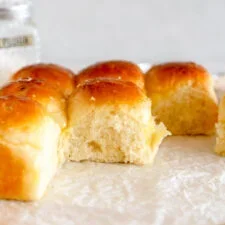
These soft, small-batch dinner rolls use a hand-kneaded Tangzhong dough and make nine rolls. They are a useful choice when you want fresh bread without making a full tray.
Ingredients
- 20 gbread flour
- 95 gwhole milk
- 130 gwhole milk, cold
- 270 gbread flour
- 20 gmilk powder
- 15 ggranulated sugar
- 5 ginstant yeast
- 3 gsalt
- 50 gunsalted butter, at room temperature, cut into pieces
Instructions
- 1
Cook the Tangzhong
Whisk the milk and 20 g bread flour together in a medium saucepan. Set over medium heat and stir continuously until the mixture thickens into a paste. Take it off the heat and transfer it to a medium bowl.
- 2
Mix the dough
Stir the cold milk into the Tangzhong. Check with a finger that the mixture is cool or lukewarm, not too hot. Add the remaining flour, milk powder, sugar, yeast and salt, then mix to make a shaggy dough. Cover with a tea towel or plate and leave for 5 minutes so the flour can begin to hydrate.
- 3
Knead in butter
Add the butter and mix until incorporated. Turn the dough onto a clean work surface and knead by hand for about 10 minutes, using a bench scraper if needed to gather the sticky dough. Continue until it is soft and smooth; a light press should leave an indentation that begins to spring back.
- 4
First rise
Shape the dough into a ball and place it in a buttered bowl. Cover with plastic wrap and leave in a warm spot for 1 to 1½ hours, until doubled in size.
- 5
Shape the rolls
Grease and line an 20 cm square pan. Turn the dough onto a lightly floured surface and divide it into 9 pieces of about 65 g each. Flatten each piece, tuck it into a ball, turn it seam-side down and roll it into a tight ball using your cupped hand and the tension of the work surface. Set each ball aside, cover lightly with plastic wrap and keep a little space between them.
- 6
Rest and arrange
Leave the dough balls to rest for 10 minutes, then briefly roll them again to tighten their shape. Arrange them evenly in the pan. Alternatively, space them individually on a sheet pan.
- 7
Proof the rolls
Cover with a lid, lightly greased plastic wrap or an upside-down second sheet pan. Leave for about 45 minutes to an hour, until puffy and doubled in size. A gentle press should leave a small indentation that does not quite spring back; follow the dough's appearance, as rising time varies with the environment.
- 8
Bake and cool
While the rolls rise, preheat the oven to 180°C. Brush the rolls with egg wash, or use milk instead. Bake for 18–20 minutes, until golden brown on top. Cool slightly in the pan, then move to a wire rack to cool completely.
What are Tangzhong dinner rolls?
Dinner rolls are small, soft breads commonly served alongside meals in the United States. This version uses Tangzhong, a paste made by heating flour with milk before mixing the dough.
The method has roots in Asian milk-bread baking. Here it helps make a tender roll, while the small batch yields nine portions rather than a large tray.
Nutrition and macros by portion
The nutrition label shows one serving as written: 190 calories, 6g protein, 27g carbs, 6g fat.
| Portion | Adjustment | kcal | Protein | Carbs | Fat |
|---|---|---|---|---|---|
| Lighter | Serve one roll | 133 kcal | 4g | 19g | 4g |
| This serving | As written | 190 kcal | 6g | 27g | 6g |
| Hungry | Serve two rolls | 285 kcal | 9g | 41g | 9g |
Most of the carbohydrates come from the bread flour, with additional sugars from the milk and granulated sugar. Butter, whole milk and milk powder contribute much of the fat, while the flour, milk and milk powder provide some protein. Serve a roll with a source of protein and vegetables to make a more balanced plate.
Why make the Tangzhong first?
Flour and milk: cook the small portion of flour with the milk, stirring constantly until it becomes a thick paste. Let it cool until no longer hot before adding the remaining ingredients.
Working with sticky dough
Butter: add it after the initial mix, then knead until the dough becomes smooth. The dough starts very soft and sticky, so use a bench scraper to gather it rather than adding extra flour.
Patience: kneading takes about 10 minutes by hand. Look for a soft, smooth dough that springs back gradually after a light press.
Shaping even rolls
Portioning: divide the dough into 9 pieces of about 65 g each so the rolls bake at a similar rate. Flatten, tuck the edges in and roll each piece against the counter to create surface tension.
Spacing: arrange the rolls evenly in the square pan, or bake them individually on a sheet pan. Keeping the shaped balls covered while you work helps stop their surfaces drying out.
How to judge the second rise
Timing: allow about 45 minutes to an hour, but use the dough as your guide because room temperature affects the rise. The rolls should look puffy and roughly doubled.
Press test: gently press one roll with a fingertip. A small indentation that remains rather than bouncing straight back is a useful sign that the dough is ready for the oven.
Baking and serving
Colour: bake at 180°C for 18–20 minutes, until the tops are golden brown. If the rolls are browning quickly, check them near the shorter end of the stated baking time.
Serving: these rolls work with soups, stews and savoury meals, or split and filled for a small sandwich. Let them cool on a wire rack so their bases do not become damp in the pan.
Recipe notes & tips
- Use a bench scraper to gather the sticky dough during kneading rather than working in extra flour.
- Keep the dough covered during rests and proofing so its surface does not dry out.
- Weigh the divided pieces if you want the nine rolls to bake evenly.
- Use the dough's puffiness and the press test to judge proofing instead of relying only on the clock.
- Cool the baked rolls on a wire rack to help prevent soggy bottoms.
Variations
- Milk finish: use milk instead of egg wash to brush the tops before baking.
- Individual rolls: space the shaped dough balls on a sheet pan instead of baking them together in the square pan.
- Dinner sandwiches: split cooled rolls and fill them with savoury sandwich fillings.
- Sweet serving: serve a roll with butter and jam for breakfast or a snack.
Common mistakes to avoid
- Adding flour to sticky dough: this can make the rolls denser; use a bench scraper and keep kneading.
- Adding cold milk to hot Tangzhong: check the mixture first and let it cool to lukewarm or cool before continuing.
- Under-proofing the shaped rolls: wait until they are puffy and a light press leaves a small indentation.
- Leaving dough uncovered: cover it during rests and rises so the surface does not dry out.
- Cutting the first rise short: wait for the dough to double rather than shaping it after a fixed time.
How to store
Keep leftover rolls in an airtight container at room temperature. Refresh them before eating; the recipe does not specify a storage duration.
Frequently asked questions
Can I make these rolls without a mixer?
Yes. The dough is kneaded by hand for about 10 minutes, with a bench scraper used as needed to gather it.
How do I know when the Tangzhong is ready?
It should thicken into a paste as you stir it over medium heat. Take it off the heat once it reaches that consistency.
Why is the dough so sticky at first?
The dough is very soft initially, especially before the butter is fully worked in and the gluten develops. Keep kneading and use a scraper to bring it together rather than adding flour.
Can I bake the rolls separately?
Yes. The method allows you to space them individually on a sheet pan instead of arranging them in the square pan.
Can I use milk instead of egg wash?
Yes. The method suggests brushing the rolls with milk if you do not want to use egg wash.
How long should the shaped rolls rise?
Allow about 45 minutes to an hour, until they are puffy and doubled in size. Use the appearance and press test as your guide because the rise depends on the environment.
Cook it from the original
This recipe comes from cloudykitchen.com. Their page has the author’s own photos, notes and tips — the best place to cook it from.
Open the recipe on cloudykitchen.com