
Chinese Style Cabbage Stir Fry
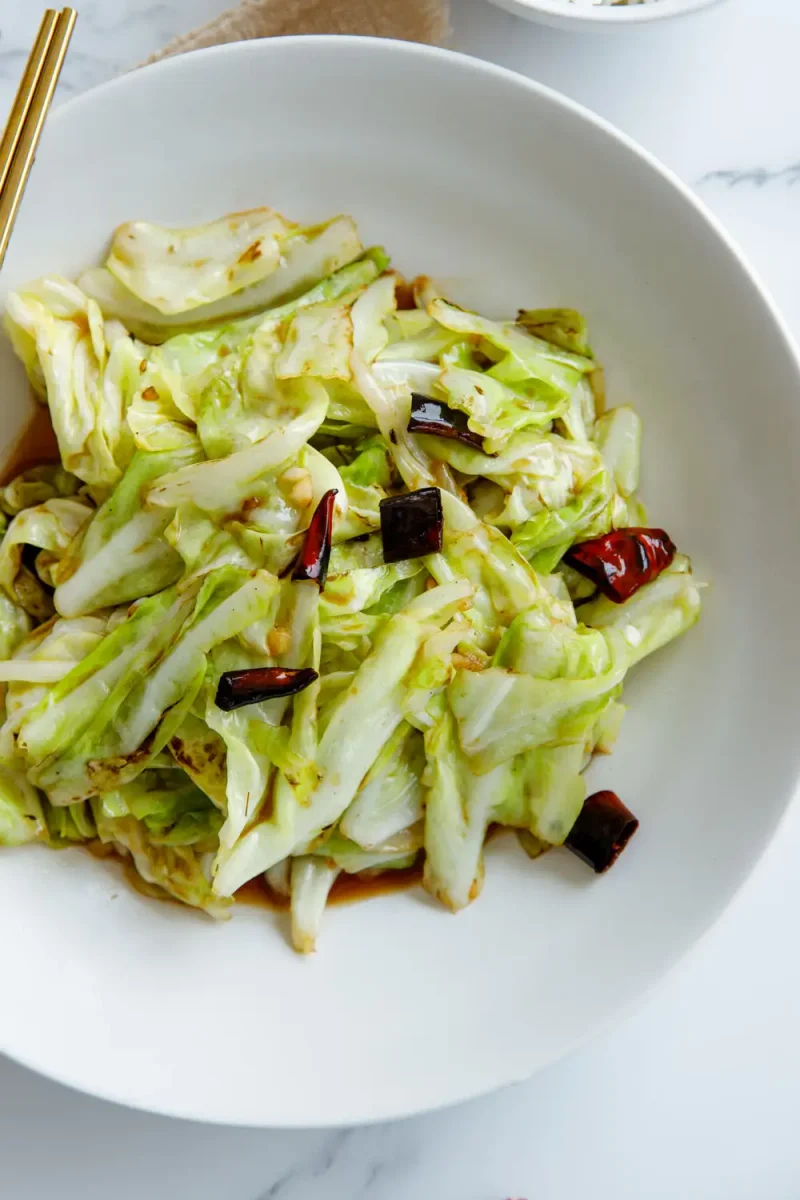
This quick Sichuan-style cabbage stir-fry pairs crisp, tender leaves with garlic, ginger, chilli and a hot-and-sour soy and black vinegar seasoning. It is a speedy side dish when you want plenty of flavour and crunch with minimal cooking.
Ingredients
- 1 mediumcabbage, hand-torn, tough parts removed
- 2garlic cloves, sliced
- 2.5 cm (1 inch)root ginger, minced
- 3–6dried chilli peppers, depending on how spicy you want it
- 1 tbsplight soy sauce
- ½ tbspblack vinegar
- ½ tsp, or as neededsalt
- 2 tbspvegetable oil
Instructions
- 1
Prepare the cabbage
Tear the cabbage by hand, keeping the tender green leaves and discarding the hard white parts. Wash it gently and drain it completely; this preparation is key to the dish.
- 2
Heat the aromatics
Heat a wok, then add the oil. Add the dried chillies and fry over a low heat until aromatic, then add the garlic and ginger.
- 3
Stir-fry the cabbage
Add the cabbage straight away and stir-fry quickly. Add the salt, light soy sauce and vinegar.
- 4
Finish quickly
Complete this cooking process within 30 seconds. The cabbage should be flavourful and crunchy.
What is Chinese-style cabbage stir-fry?
This is a quick Sichuan-inspired side dish built around cabbage, chilli and a sharp, savoury seasoning. Sichuan cooking is known for bold flavours, and this version balances black vinegar with soy sauce, garlic and ginger.
The method keeps the cabbage in larger hand-torn pieces and cooks it briefly over high heat. That helps the leaves stay crisp rather than turning soft.
Nutrition and macros by portion
The nutrition label shows one serving as written: 189 calories, 7g protein, 29g carbs, 7g fat.
| Portion | Adjustment | kcal | Protein | Carbs | Fat |
|---|---|---|---|---|---|
| Lighter | Use less vegetable oil | 132 kcal | 5g | 20g | 5g |
| This serving | As written | 189 kcal | 7g | 29g | 7g |
| Hungry | Serve with extra rice | 284 kcal | 11g | 44g | 11g |
The cabbage supplies most of the carbohydrates, while the vegetable oil contributes most of the fat; the soy sauce and cabbage contribute some protein. Serve it with rice and a protein-rich main, or pair it with tofu, to make a more rounded plate.
Choosing and preparing the cabbage
Tender leaves: the recipe calls for the green, tender parts and asks you to remove the hard white sections. Tear the leaves by hand, as directed, rather than chopping them.
Dry leaves: drain the washed cabbage completely before it goes into the wok. Excess water can dilute the seasoning and make the cabbage steam.
Build flavour in the wok
Chilli first: warm the dried chillies in the oil over a low heat until aromatic, as the method directs. Keep an eye on them so they flavour the oil without burning.
Garlic and ginger: add these after the chillies, then follow immediately with the cabbage. This keeps the aromatics from spending too long in the hot wok.
Keep the cooking brief
Fast stir-frying: once the cabbage is in, work quickly and add the salt, soy sauce and vinegar. The recipe specifies finishing this process within 30 seconds.
Doneness cue: aim for hot leaves that remain crunchy, not limp or waterlogged. Have the seasonings ready before you add the cabbage.
Balance the hot and sour seasoning
Black vinegar: its tang gives the dish its sour edge, while light soy sauce brings savoury depth. Add both with the salt near the end of cooking, as instructed.
Chilli level: use three dried chillies for a milder result or up to six for more heat. The recipe leaves the choice to your preference.
What to serve it with
Rice: serve the cabbage alongside steamed rice to make a simple meal, or use it as a vegetable side with other savoury dishes.
Keep the rest of the plate fairly mild if you want the cabbage's chilli and vinegar flavours to stand out.
Recipe notes & tips
- Drain the cabbage thoroughly after washing so it stays crisp in the wok.
- Tear the leaves by hand and remove the hard white sections, following the recipe.
- Measure the soy sauce and vinegar before you start stir-frying.
- Use a low heat for the dried chillies until they smell aromatic.
- Add the cabbage as soon as the garlic and ginger are in the wok.
- Choose three chillies for less heat or six for a spicier result.
Variations
- Adjust the heat: use three dried chillies for a gentler version or six for more bite.
- Add spring onions: stir in sliced spring onions alongside the garlic and ginger.
- Include mushrooms: add sliced mushrooms with the cabbage for another vegetable.
- Make it more sour: add a little extra black vinegar to taste.
- Serve as a bowl: pair the stir-fry with rice and tofu for a more substantial meal.
Common mistakes to avoid
- Wet cabbage: it can dilute the seasoning; drain the leaves completely before cooking.
- Hard cabbage pieces: they may stay tough; remove the firm white parts as directed.
- Burnt chillies: they can turn bitter; fry them over a low heat and watch closely.
- Slow stir-frying: the leaves may lose their crunch; have the seasonings ready and work quickly.
- Overcooking: limp cabbage loses the intended texture; finish within the stated 30 seconds.
How to store
Refrigerate leftovers in a covered container and use within 2 days. Reheat briefly in a hot wok or frying pan, just until warmed through, though the cabbage will be less crisp than when freshly cooked.
Frequently asked questions
Can I use a different kind of cabbage?
The recipe specifies cabbage with tender green leaves. Other cabbage varieties may work, but their leaves can differ in thickness and cooking time.
How can I make it less spicy?
Use three dried chillies, the lower end of the recipe's range. For a milder dish still, use fewer.
Why does the cabbage need to be completely drained?
Extra water can dilute the soy and vinegar and make the cabbage steam rather than stay crunchy.
Can I prepare the ingredients ahead?
You can tear and wash the cabbage and slice the garlic and ginger ahead. Keep the cabbage well drained and have everything ready before heating the wok.
What should the finished cabbage feel like?
It should be hot and coated with seasoning while still crunchy, rather than soft or limp.
Can I serve this as a main dish?
It is presented as a side dish. Serve it with rice and a protein-rich accompaniment such as tofu to make a more substantial meal.
Cook it from the original
This recipe comes from chinasichuanfood.com. Their page has the author’s own photos, notes and tips — the best place to cook it from.
Open the recipe on chinasichuanfood.com