
Garlic Butter Baked Salmon
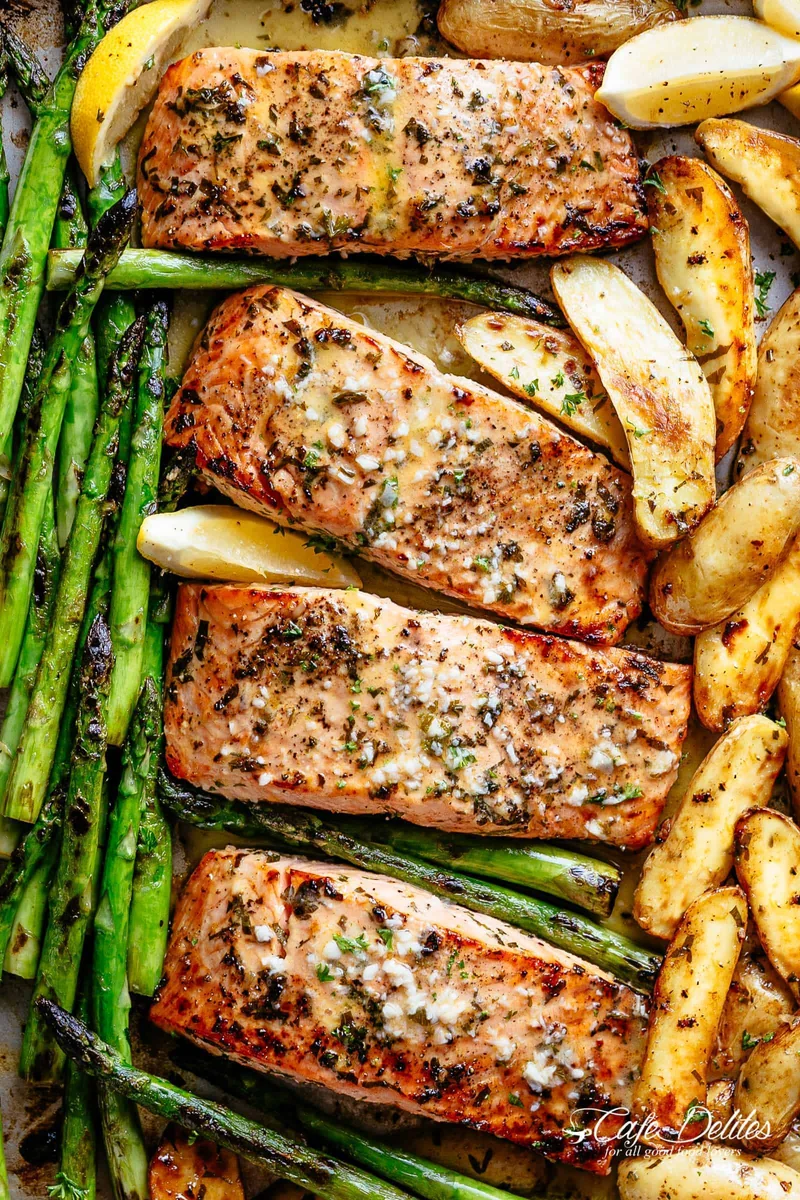
This one-tray salmon dinner pairs tender fish and asparagus with crisp-edged potatoes, all finished with a buttery garlic and lemon sauce. It is a practical choice when you want a complete meal with straightforward preparation and minimal washing-up.
Ingredients
- 454 gfingerling potatoes (or Yukon Gold potatoes or halved white or red baby potatoes)
- 30 mlolive oil
- 7.5 ml, dividedsalt
- 2.5 ml, dividedcracked black pepper
- 4skinless salmon fillets
- 37.5 ml, dividedminced garlic
- 30 mlchopped fresh parsley
- 80 mlfreshly squeezed lemon juice
- 113 gunsalted butter, melted
- 3 bunches (18 spears)asparagus, woody ends removed
- 30 mldry white wine (or 60 ml low-sodium chicken broth)
- 1lemon, sliced for garnish
Instructions
- 1
Roast the potatoes
Heat the oven to 200°C (400°F). Toss the potatoes on a large rimmed baking tray with the oil, 7.5 ml of the garlic, 2.5 ml of the salt and 1.25 ml of the pepper. Spread them in one layer and roast for 15 minutes, until beginning to soften and brown.
- 2
Arrange the tray
Move the potatoes to one side of the tray and place the salmon down the centre. Rub the salmon evenly with 22.5 ml of the minced garlic and 30 ml of the parsley. Arrange the asparagus on the other side.
- 3
Add garlic butter
Mix 60 ml of the lemon juice with 60 ml of the melted butter, then pour it over the salmon and asparagus. Season everything with the remaining salt and pepper.
- 4
Bake until done
Return the tray to the oven and bake for about 10 minutes, until the potatoes are golden and tender when pierced with a fork and the salmon is opaque throughout. If you like, grill for the final 2 minutes to char the edges.
- 5
Make the sauce
Meanwhile, combine the remaining butter, garlic and lemon juice with the wine, or chicken broth, in a small bowl. Serve with the salmon, vegetables and lemon slices.
What is garlic butter baked salmon?
It is a sheet-pan-style main course in which salmon, potatoes and asparagus cook together, then get a lemony garlic-butter finish. This version has an American-style home-cooking feel: familiar ingredients, a hot oven and a complete dinner from one tray.
The staggered cooking is what makes it work. Potatoes start roasting before the quicker-cooking fish and asparagus are added, so everything can finish around the same time.
Nutrition and macros by portion
The nutrition label shows one serving as written: 617 calories, 37g protein, 24g carbs, 41g fat.
| Portion | Adjustment | kcal | Protein | Carbs | Fat |
|---|---|---|---|---|---|
| Lighter | Less butter, more asparagus | 432 kcal | 26g | 17g | 29g |
| This serving | As written | 617 kcal | 37g | 24g | 41g |
| Hungry | Add another potato | 926 kcal | 56g | 36g | 62g |
The potatoes provide most of the carbohydrates, while salmon supplies protein and both salmon and butter contribute fat. Serve one fillet with a share of the potatoes and asparagus; a leafy salad alongside can add freshness and volume.
Choosing the ingredients
Potatoes: Fingerlings, Yukon Golds or small white or red potatoes are all suitable. Cut larger ones into halves so they cook at a similar pace to smaller potatoes.
Salmon: Skinless fillets are easy to serve alongside the vegetables. Aim for fillets of similar thickness so they bake evenly.
Asparagus: Remove the woody ends and arrange the spears in a single layer. The recipe specifies three bunches, or 18 spears.
Get the first roast right
Potatoes: Toss them thoroughly with the oil and seasonings, then spread them out rather than piling them up. The initial 15 minutes gives them a head start before the other ingredients go on the tray.
Tray space: Leave room to add the salmon down the centre and asparagus on the remaining side. If the tray is crowded, the vegetables are more likely to soften without browning.
Watch for doneness
Salmon: The recipe’s cue is opaque flesh throughout, after about 10 minutes in the oven following the initial potato roast. The exact time can vary with fillet thickness, so check the fish as it approaches that point.
Potatoes: They should be golden and easily pierced with a fork. If they need more time, keep an eye on the salmon and asparagus as well so they do not overcook.
Finish the lemon butter
First pour: The measured lemon juice and melted butter go over the salmon and asparagus before the second bake. This coats the fish and vegetables as they cook.
Serving sauce: The remaining butter, garlic and lemon juice are mixed with wine or chicken broth in a bowl. Spoon or pour it over the finished meal at the table.
Serve it as a complete meal
The potatoes provide a substantial side, while asparagus brings a fresh, green contrast to the rich butter and salmon. Lemon slices add a bright finish and let diners adjust the citrus to taste.
If you want another accompaniment, serve with a simple green salad or extra steamed vegetables. Keep additional sauces modest, since the tray already has a buttery finish.
Recipe notes & tips
- Cut any larger potatoes into similar-sized pieces so they roast at the same pace.
- Use a large rimmed tray and spread the ingredients out in a single layer.
- Pat the salmon dry before seasoning if its surface is particularly wet.
- Keep the remaining butter mixture separate until serving for a more distinct sauce.
- If using chicken broth, use the stated 60 ml in place of the wine.
Variations
- Use baby potatoes: Halve white or red baby potatoes before roasting.
- Swap the wine: Use 60 ml low-sodium chicken broth instead.
- Add extra herbs: Sprinkle more chopped parsley over the meal just before serving.
- Boost the citrus: Serve with extra lemon wedges for a sharper finish.
- Char the edges: Grill the tray for the final 2 minutes, as suggested in the method.
Common mistakes to avoid
- Crowded potatoes: They can soften rather than brown; spread them out in one layer.
- Uneven potato pieces: Large pieces may stay firm; halve them to make their sizes more alike.
- Adding everything at once: The potatoes need their 15-minute head start before the salmon and asparagus go on.
- Overbaking the fish: Check for opaque flesh throughout after about 10 minutes of the second bake.
- Skipping the tray space: Keep the salmon and vegetables in their designated areas so they are easier to check and serve.
How to store
Refrigerate leftovers in a sealed container and use within 2 days. Reheat gently in a low oven or microwave until piping hot; the salmon may become drier with reheating.
Frequently asked questions
Can I use a different type of potato?
Yes. Yukon Golds or halved white or red baby potatoes are listed alternatives. Cut them into pieces of similar size for more even roasting.
Can I substitute the white wine?
Yes. The recipe gives 60 ml of low-sodium chicken broth as an alternative to the 30 ml of wine.
How can I tell when the salmon is cooked?
The method calls for the salmon to be opaque throughout. Start checking at about 10 minutes after returning the tray to the oven, as thickness affects cooking time.
Can I prepare this without asparagus?
You can leave it out, though the meal will have less vegetable volume. Keep the salmon and potatoes in their tray positions and check their doneness as directed.
Can I make the garlic butter ahead?
You can combine the sauce ingredients shortly before serving. The method mixes the remaining butter, garlic, lemon juice and wine or broth while the tray bakes.
Cook it from the original
This recipe comes from cafedelites.com. Their page has the author’s own photos, notes and tips — the best place to cook it from.
Open the recipe on cafedelites.com