
Arroz Amarillo [Video+Recipe] Dominican Yellow Rice
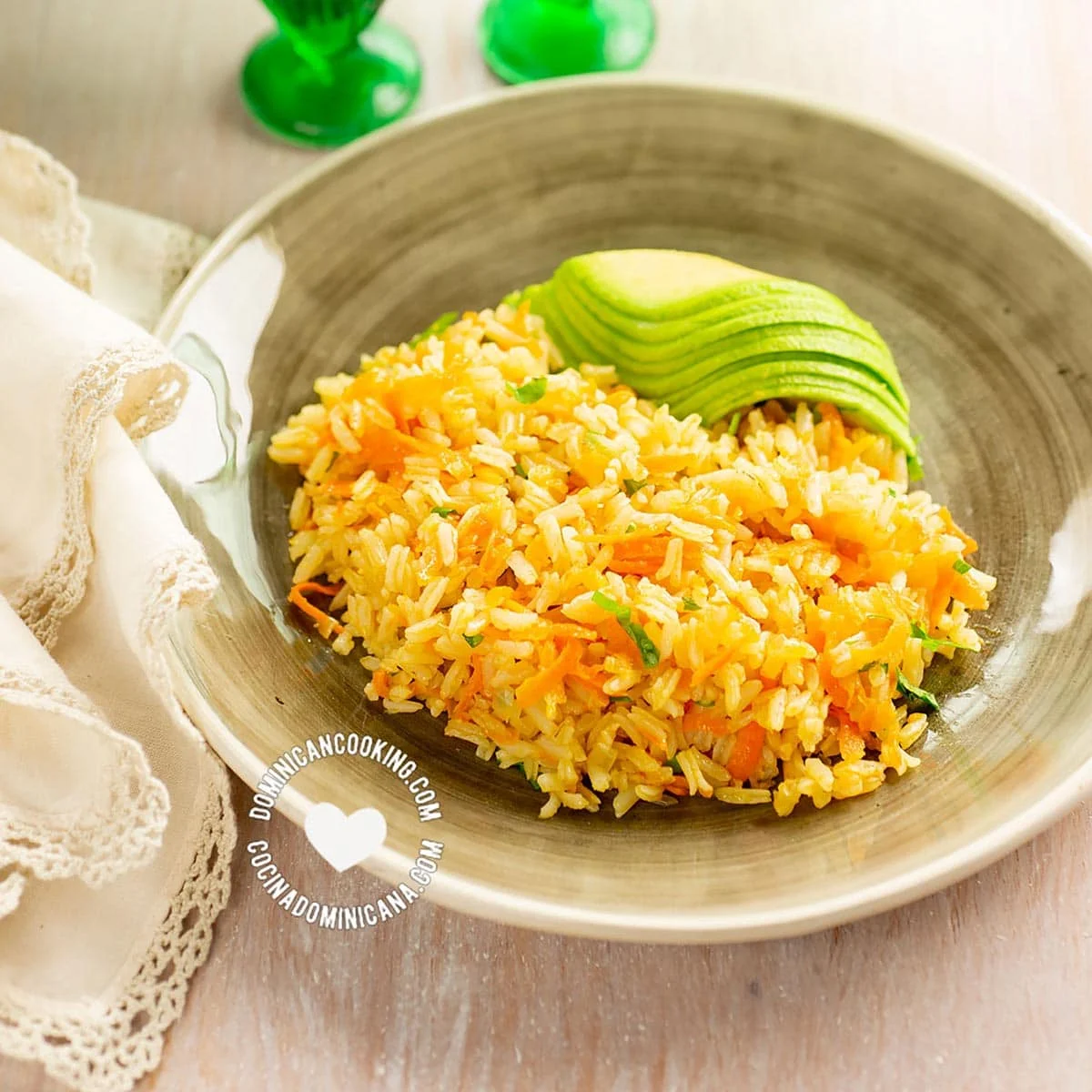
Dominican arroz amarillo is a quick way to turn cooked white rice into a colourful side dish with carrot, red onion and parsley. It is especially handy when you have leftover rice and want a flavourful meal accompaniment in about 15 minutes.
Ingredients
- 1 largecarrot
- 1 largered onion
- 45 ml (3 tablespoons)olive oil
- about 950 g (6 cups)cooked white rice (arroz blanco)
- 120 ml (½ cup), dividedvegetable broth
- 1 sprigparsley, minced
Instructions
- 1
Sauté the vegetables
Heat the olive oil in a large frying pan over medium heat. Add the carrot and red onion, stir, then cover and cook for a couple of minutes.
- 2
Add the rice
Add the cooked white rice and mix well. Pour in half the vegetable broth and cook over low heat for 2 minutes. If the rice seems too dry, add more broth and continue cooking until it reaches your preferred doneness.
- 3
Fluff and serve
Fluff the rice with a fork and stir in the parsley. Serve with your chosen accompaniments.
What is arroz amarillo?
Arroz amarillo means yellow rice in Spanish, and rice dishes are a familiar part of cooking across the Caribbean, including the Dominican Republic. This version is a quick, practical preparation made with already-cooked white rice rather than rice cooked from scratch.
Carrot and red onion bring colour and savoury sweetness, while vegetable broth helps the grains heat through. Parsley stirred in at the end gives the dish a fresh finish.
Nutrition and macros by portion
The nutrition label shows one serving as written: 280 calories, 4g protein, 47g carbs, 7g fat.
| Portion | Adjustment | kcal | Protein | Carbs | Fat |
|---|---|---|---|---|---|
| Lighter | Use less olive oil | 196 kcal | 3g | 33g | 5g |
| This serving | As written | 280 kcal | 4g | 47g | 7g |
| Hungry | Serve a larger portion | 420 kcal | 6g | 71g | 11g |
The rice provides most of the carbohydrates, while olive oil supplies most of the fat; the vegetables and parsley contribute smaller amounts. Protein is modest, so balance the plate with beans or another protein-rich main and add extra vegetables.
Choosing and preparing the vegetables
Carrot: Cut it into small, even pieces so it has a chance to soften during the brief covered sauté.
Red onion: Chop it finely for a little flavour in each forkful. The recipe cooks the carrot and onion together in the oil.
Using cooked rice
Leftover rice: This recipe is designed around cooked white rice, which makes the 15-minute preparation possible. Break up any compacted clumps before adding it so it mixes more evenly with the vegetables.
Freshly cooked rice: Let it stop steaming before using, if possible. Rice that is very wet can become softer as it heats in the pan.
Adding the broth gradually
First addition: The recipe divides the broth, adding half after the rice has been mixed with the vegetables. Keep the heat low while the rice warms for 2 minutes.
Adjusting: Check the texture before adding more broth. Add it gradually if the rice seems dry, rather than pouring in all the remaining liquid at once.
Checking the texture
The rice should be heated through and easy to fluff with a fork. The recipe leaves the final texture to your preference, so use the broth to make it drier or softer.
Stir gently once the rice is in the pan to help keep the grains distinct. Fold in the minced parsley just before serving.
What to serve it with
Serve arroz amarillo as a side with beans, vegetables or a main dish of your choice. Its mild, savoury flavour works alongside a range of Caribbean-inspired meals.
For a fuller plate, add a protein-rich accompaniment and another vegetable dish. Serve the rice hot, straight from the pan.
Recipe notes & tips
- Chop the carrot and onion into small pieces so they cook quickly.
- Use a large frying pan to make it easier to mix the rice evenly.
- Break up clumps of cooked rice before adding it to the pan.
- Keep the heat low after adding the rice so it warms without catching.
- Add any extra broth a little at a time, checking the texture as you go.
- Stir in the minced parsley just before serving for a fresh finish.
Variations
- Add garlic: Sauté finely chopped garlic with the carrot and onion.
- Use coriander: Swap the parsley for minced fresh coriander at the end.
- Add peas: Stir cooked peas through the rice as it warms.
- Make it spicier: Add a little chopped chilli while sautéing the vegetables.
- Try chicken broth: Use chicken broth instead of vegetable broth if it suits your meal.
Common mistakes to avoid
- Large vegetable pieces: They may stay firm; chop the carrot and onion small and evenly.
- Adding all the broth at once: The rice can become too soft; start with half and adjust gradually.
- High heat after adding rice: The bottom may catch before the rice heats through; cook it over low heat.
- Skipping the stir: Rice may not mix evenly with the vegetables; stir well when adding it.
- Overmixing: The grains can break up; fold the rice gently and fluff it with a fork at the end.
How to store
Cool leftovers promptly, place them in a covered container and refrigerate for up to 2 days. Reheat until steaming hot, adding a small splash of broth or water if the rice has dried out; only reheat once.
Frequently asked questions
Can I use freshly cooked rice?
Yes. Let it cool briefly before adding it so it is not excessively steamy or wet.
How much broth should I add?
Start with half of the 120 ml, as directed. Add more gradually if the rice seems dry or you prefer a softer texture.
Can I make this with leftover rice?
Yes, leftover cooked white rice is ideal for this quick method. Refrigerated rice should be reheated until steaming hot.
How do I stop the rice from sticking?
Use a large pan, keep the heat low once the rice is added and stir gently as it warms.
Can I prepare it ahead?
It is best served freshly made, but you can chop the carrot and onion in advance. Refrigerate any cooked leftovers promptly and reheat thoroughly.
Cook it from the original
This recipe comes from dominicancooking.com. Their page has the author’s own photos, notes and tips — the best place to cook it from.
Open the recipe on dominicancooking.com