
Osaka Okonomiyaki 大阪風お好み焼き
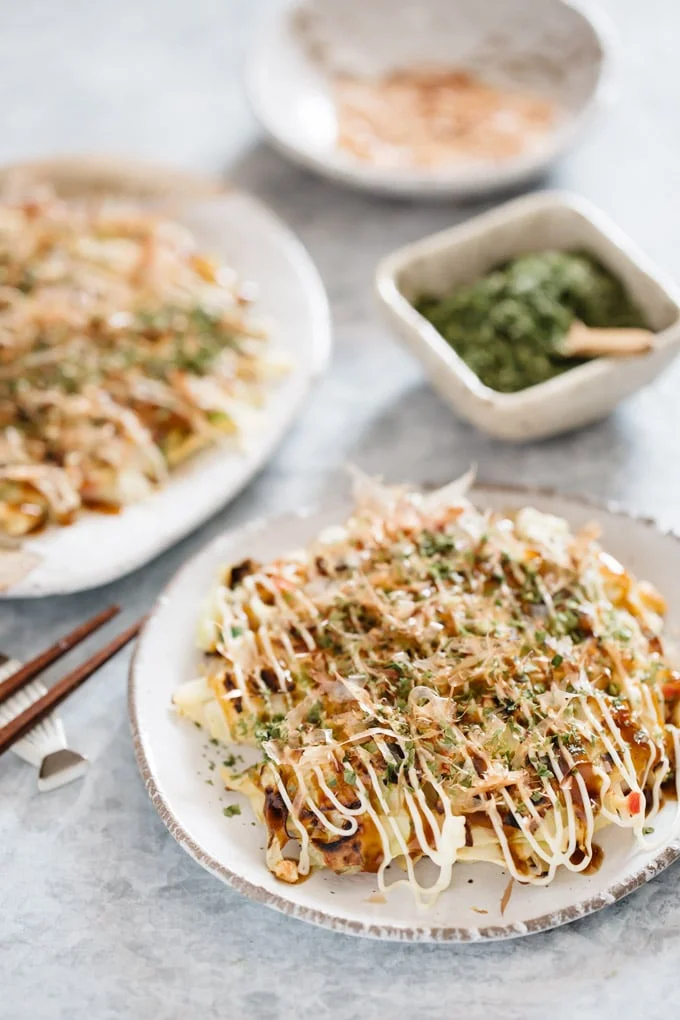
Osaka-style okonomiyaki is a savoury Japanese pancake made with cabbage, dashi-seasoned batter and thinly sliced pork. This version cooks the batter in four portions and finishes each pancake with okonomiyaki sauce, pickled ginger and seaweed.
Ingredients
- 200 mlwater
- 1 tsp (5 ml)konbu dashi stock powder
- 160 gplain flour
- 4eggs
- 1/4 tsp (1.25 ml)salt
- 1/4 tsp (1.25 ml)sugar
- 480 gfinely chopped cabbage
- 40 gchopped green shallot
- 40 gtenkasu
- 160 gthinly sliced pork
- to garnishbonito flakes
- to garnishpickled ginger
- to garnishaonori
- 1 tbsp (15 ml)olive oil
- 1/4 cup (60 ml)okonomiyaki sauce
Instructions
- 1
Make the dashi
Stir the konbu dashi powder into the water until dissolved.
- 2
Mix the batter
Put the flour in a large bowl, add the salt and sugar, then pour in the dashi stock and mix. Set aside.
- 3
Divide the vegetables
Split the cabbage, green shallots and tenkasu evenly among four small mixing bowls.
- 4
Add egg and batter
Add one egg and a quarter of the flour-and-dashi mixture to each bowl.
- 5
Combine each portion
Mix the contents of each bowl well with a fork.
- 6
Cook the pancakes
Heat the cooking plate to 200°C. Pour on the cabbage mixture and spread it to about 2 cm thick.
- 7
Top with pork
Lay the thinly sliced pork and some bonito flakes over the cabbage mixture.
- 8
Flip the pancake
When the edge is firm and cooked, turn the okonomiyaki over using two egg flippers.
- 9
Steam under a lid
Cover with a lid and steam-grill for a few minutes.
- 10
Check the pork
Turn the okonomiyaki over once more to check that the meat is cooked.
- 11
Sauce and garnish
Brush with okonomiyaki sauce, then garnish with pickled ginger, more bonito flakes and a sprinkle of aonori.
What is Osaka okonomiyaki?
Okonomiyaki is a Japanese savoury pancake, with regional styles that vary in how the ingredients are combined and cooked. The Osaka approach mixes the cabbage into the batter before cooking.
Here, dashi seasons a simple flour batter, while tenkasu adds a savoury note. Pork and classic garnishes make it a substantial, flavourful pancake.
Nutrition and macros by portion
The nutrition label shows one serving as written: 483 calories, 15g protein, 39g carbs, 29g fat.
| Portion | Adjustment | kcal | Protein | Carbs | Fat |
|---|---|---|---|---|---|
| Lighter | Less sauce, leaner pork | 338 kcal | 11g | 27g | 20g |
| This serving | As written | 483 kcal | 15g | 39g | 29g |
| Hungry | Larger pancake portion | 725 kcal | 23g | 59g | 44g |
The flour and cabbage provide most of the carbohydrates, while the pork, eggs and olive oil contribute much of the fat and protein. Serve with a side of fresh vegetables to add variety and balance the plate.
The batter and dashi
Dashi first: dissolve the konbu stock powder fully in the water so its flavour is distributed through the batter.
Mix gently: combine the flour mixture with the stock, then portion it between the bowls as directed. The egg and vegetables are mixed into each portion just before cooking.
Cabbage and tenkasu
Cabbage: chop it finely so it mixes evenly with the batter and cooks through in the pancake.
Tenkasu: these crunchy tempura scraps are mixed in with the vegetables. They bring a distinctive savoury texture to the Osaka-style mixture.
Getting the flip right
Wait until the edge looks firm and cooked before turning the pancake. Two egg flippers help support it; lift and turn decisively to keep the cabbage mixture together.
The recipe makes four separate portions, so cook each pancake to the same approximate 2 cm thickness for more even results.
Checking doneness
Cook the first side until the edge firms, then cover the pancake to steam-grill it for a few minutes. The lid helps the thicker centre cook through.
Turn it over again and check that the pork is cooked before serving. The recipe gives no exact cooking time for each side, so use these visual and doneness cues.
Sauce and toppings
Okonomiyaki sauce is brushed over the cooked pancake, with pickled ginger, bonito flakes and aonori added as garnishes. The sauce can be bought ready-made, as noted in the recipe description.
Bonito is included on top before the flip and again as a finishing garnish. For a vegetarian or vegan version, choose suitable alternatives for the dashi, egg, pork and bonito.
Serving the pancakes
Serve the okonomiyaki hot so the pancake and toppings are at their best. A crisp salad or lightly dressed vegetables make a fresh side alongside the cabbage-rich main.
The recipe lists olive oil but does not specify when to use it. Follow the instructions for your cooking plate, and use oil if needed to prevent sticking.
Recipe notes & tips
- Chop the cabbage finely for a more even mixture.
- Divide the vegetables and batter carefully so the four pancakes are similar in size.
- Let the edge firm before attempting to flip each pancake.
- Use two egg flippers to support the pancake as you turn it.
- Keep the lid on during the steaming step to help the centre cook through.
- Check the pork is cooked before adding the finishing sauce and garnishes.
Variations
- Vegetarian version: omit the pork and bonito, and use a suitable vegetarian dashi and sauce.
- Vegan version: use plant-based alternatives for the egg, pork, bonito, dashi and sauce.
- Shop-bought sauce: use ready-made okonomiyaki sauce instead of making your own.
- Extra cabbage: increase the cabbage and adjust the mixture portions to suit.
- Garnish to taste: add the pickled ginger, bonito and aonori in the amounts you prefer.
Common mistakes to avoid
- Uneven cabbage pieces: chop them finely so they mix and cook more consistently.
- Flipping too soon: wait until the edge is firm so the pancake is less likely to break.
- Overly thick pancakes: spread each portion to about 2 cm as directed.
- Skipping the lid: cover the pancake for a few minutes so the centre can steam-grill.
- Serving before checking: turn the pancake again and make sure the pork is cooked.
- Forgetting the oil: the method does not say when to use it, so follow your cooking plate's needs to prevent sticking.
How to store
Refrigerate leftovers in a covered container and eat within 2 days. Reheat until piping hot in a frying pan or microwave; the outside may be less crisp after storage.
Frequently asked questions
Can I use shop-bought okonomiyaki sauce?
Yes. The recipe description suggests buying it from a local shop as an alternative to making your own.
How do I know when to flip the pancake?
Flip it when the edge has become firm and cooked. Use two egg flippers to support it.
Why does the recipe divide the mixture into four bowls?
Each bowl makes one portion, with one egg and a quarter of the flour-and-dashi mixture. This helps keep the four pancakes evenly portioned.
Can I make this without pork?
Yes. Leave out the pork and use a suitable vegetarian or vegan alternative if desired. Check that the dashi, sauce and garnishes also suit your needs.
What is tenkasu?
Tenkasu is crunchy tempura batter scraps used here as a savoury addition to the cabbage mixture.
Can I make the pancakes ahead?
They are best served hot after cooking. You can refrigerate cooked leftovers and reheat them until piping hot.
Cook it from the original
This recipe comes from chopstickchronicles.com. Their page has the author’s own photos, notes and tips — the best place to cook it from.
Open the recipe on chopstickchronicles.com