
Sheet Pan Eggs
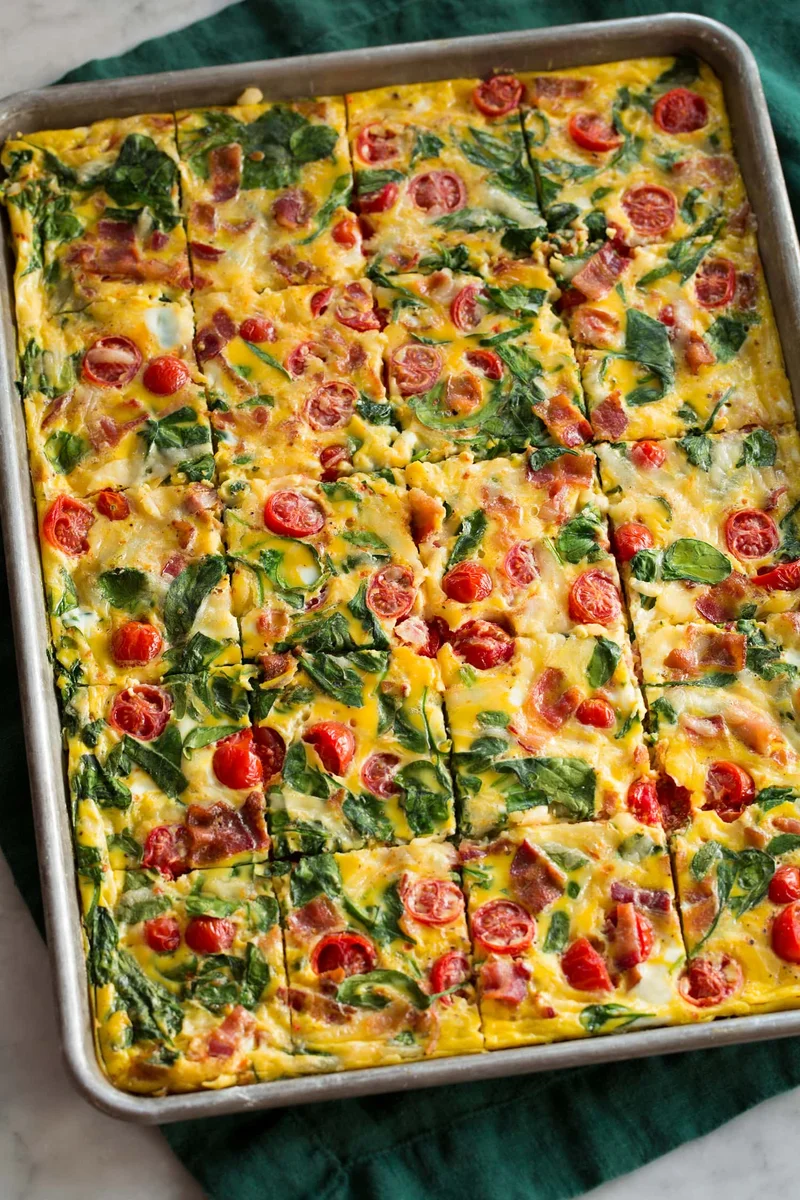
Sheet pan eggs are a simple, crowd-friendly way to make tender baked eggs for breakfast sandwiches or brunch. The large tray is easy to customise with cheddar and mix-ins, and portions can be prepared ahead for the freezer.
Ingredients
- 18large eggs
- 180 ml (¾ cup)half-and-half
- 7.5 ml (1½ tsp)salt
- 2.5 ml (½ tsp)black pepper
- 115–170 g (1–1½ cups)grated cheddar cheese (sharp or medium)
- 480–720 ml (2–3 cups)optional mix-ins (see notes)
Instructions
- 1
Preheat the oven
Heat the oven to 163°C (325°F).
- 2
Whisk the eggs
Crack the eggs into a large mixing bowl and use a whisk to break the yolks and combine the eggs. Add the half-and-half, salt and black pepper, then mix.
- 3
Add the fillings
Stir in the cheese and any mix-ins. If using cheese without other mix-ins, you can instead scatter it over the eggs after pouring them into the pan.
- 4
Prepare the tray
Coat a rimmed baking sheet measuring 46 × 33 × 2.5 cm (18 × 13 × 1 inch) very well with non-stick cooking spray.
- 5
Pour in the eggs
Pour the egg mixture into the prepared pan. Transfer it carefully to the oven; doing this on the counter near the oven helps avoid carrying the pan far and spilling the eggs.
- 6
Bake until just set
Bake in the preheated oven for about 20–25 minutes, until the eggs are just barely cooked through in the centre.
What are sheet pan eggs?
Sheet pan eggs are eggs whisked with dairy and baked in a shallow tray, then cut into portions. This American-style approach turns a breakfast staple into an easy format for feeding a group or making sandwiches.
This version uses half-and-half for richness and cheddar for savoury flavour. Baking the mixture in one layer makes it straightforward to portion once it has set.
Nutrition and macros by portion
The nutrition label shows one serving as written: 99 calories, 7g protein, 1g carbs, 7g fat.
| Portion | Adjustment | kcal | Protein | Carbs | Fat |
|---|---|---|---|---|---|
| Lighter | Use less cheddar | 69 kcal | 5g | 1g | 5g |
| This serving | As written | 99 kcal | 7g | 1g | 7g |
| Hungry | Add another egg portion | 149 kcal | 11g | 2g | 11g |
The eggs provide most of the protein and some of the fat, while the half-and-half and cheddar add further fat; the eggs contribute very little carbohydrate. Pair a portion with fruit or wholemeal toast and vegetables to make a more balanced plate.
Choosing the cheese and mix-ins
Cheddar: Sharp cheddar gives a more pronounced flavour, while medium cheddar is milder. The recipe allows the cheese to be mixed in or sprinkled on top if you are not adding other fillings.
Mix-ins: The recipe leaves these flexible, so choose fillings that suit your meal and chop them small enough to distribute through the eggs. Avoid adding excess liquid, which can make the finished eggs wetter.
Whisking and preparing the pan
Whisking: Break the yolks before adding the half-and-half, salt and pepper, then mix until the eggs are combined. This helps the seasoning and dairy spread throughout the tray.
Greasing: Coat the rimmed baking sheet thoroughly with non-stick spray, including the corners. The shallow rim helps contain the mixture while it bakes.
How to judge doneness
Centre: Start checking around the 20-minute mark. The eggs should be just set through the middle, rather than browned or left to bake until dry.
Carryover: The tray will remain hot after it comes out of the oven, so avoid waiting for a firm, dry-looking surface before removing it. Let the eggs settle briefly before cutting portions.
Timing and handling the tray
Oven time: Bake at 163°C (325°F) for about 20–25 minutes; the exact time can vary with the pan and the amount of filling. Keep the tray level as you move it so the uncooked mixture does not slosh over the rim.
Near the oven: Pour the mixture into the pan on a counter close to the oven, as the recipe suggests. This shortens the distance you need to carry a full tray.
Serving ideas
Sandwiches: Cut the baked eggs into portions and tuck them into breakfast rolls or English muffins. Add your preferred sandwich accompaniments at serving time.
Brunch: Serve the eggs with toast, fruit or a simple salad for a fuller spread. For a make-ahead breakfast, cool and portion the eggs before storing.
Recipe notes & tips
- Set the greased tray on a nearby counter before pouring in the egg mixture.
- Use a large bowl so the eggs and dairy can be whisked without splashing.
- Chop mix-ins into small pieces for more even distribution.
- For a cheese-only tray, scatter the cheddar over the eggs after pouring them into the pan.
- Check the centre at about 20 minutes so the eggs do not overbake.
Variations
- Cheese on top: Keep the eggs plain and scatter the cheddar over the mixture in the tray.
- Vegetable mix-ins: Add finely chopped vegetables, keeping their total within the recipe's 2–3 cup range.
- Herb finish: Add chopped fresh herbs to the cooked portions just before serving.
- Sandwich portions: Bake as directed, then cut pieces to fit your breakfast rolls or muffins.
- Milder flavour: Choose medium cheddar instead of sharp cheddar.
Common mistakes to avoid
- Carrying a full tray too far: Pour it in a spot near the oven to reduce the chance of spills.
- Under-greasing the pan: Coat the tray thoroughly with non-stick cooking spray so portions release more easily.
- Overbaking: Check the centre from about 20 minutes and take the tray out when the eggs are just set.
- Adding wet mix-ins: Excess moisture can make the eggs watery; use well-drained fillings.
- Cutting straight away: Let the tray settle briefly after baking for neater portions.
How to store
Cool the eggs, cut into portions and refrigerate in an airtight container for up to 3–4 days. Reheat until hot, or freeze individual portions in a freezer-safe container and thaw in the fridge before reheating.
Frequently asked questions
Can I use a different size baking tray?
The recipe is written for a rimmed 46 × 33 × 2.5 cm (18 × 13 × 1 inch) tray. A different size changes the depth of the mixture and may affect the baking time, so check the centre for doneness.
Can I leave out the mix-ins?
Yes. The mix-ins are optional, and the recipe works with eggs, half-and-half, seasoning and cheddar alone.
How do I know when the eggs are done?
The centre should be just barely cooked through after about 20–25 minutes. Avoid baking until the eggs look dry or browned.
Can I make these ahead?
Yes. Once cooled, portion the eggs and refrigerate or freeze them for later breakfasts. Reheat portions until hot before serving.
Can I use only cheese on top?
Yes. Pour the egg mixture into the prepared tray first, then sprinkle the cheddar over the top instead of stirring it in.
Cook it from the original
This recipe comes from cookingclassy.com. Their page has the author’s own photos, notes and tips — the best place to cook it from.
Open the recipe on cookingclassy.com