
Japanese Cheesecake チーズケーキ
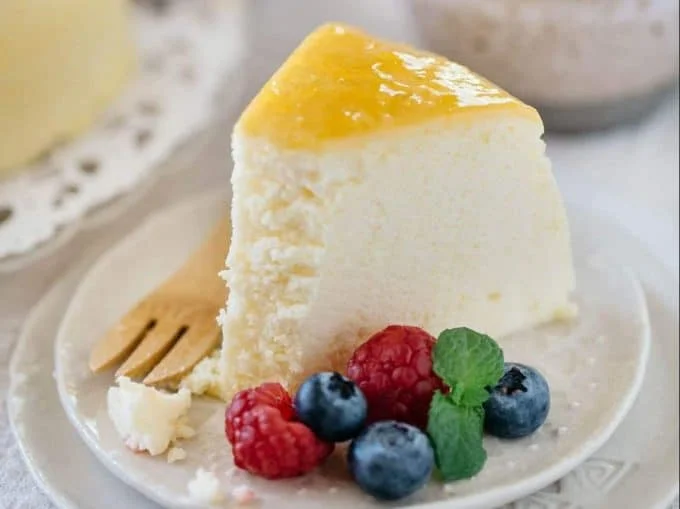
Japanese cheesecake is a softly set, airy cake with a gentle wobble and a light cream-cheese and lemon flavour. This version uses a meringue folded into the cheese mixture and a slow, gradual cool for its delicate texture.
Ingredients
- 200 g (7 oz)Philadelphia cream cheese
- 4egg yolks
- 20 g (0.7 oz)caster sugar
- 100 ml (3.4 fl oz)double cream
- 100 ml (3.4 fl oz)milk
- 1 tbsplemon juice
- 2 tsplemon zest (from ½ lemon)
- 40 g (1.4 oz)plain flour
- 10 g (0.35 oz)cornflour
- 4egg whites
- ¼ tspcream of tartar
- 60 g (2.1 oz)caster sugar
- 30 g (1 oz)apricot jam
- 1 tbspwater or brandy
Instructions
- 1
Soften the cheese
Leave the cream cheese at room temperature until soft.
- 2
Prepare the tin
Use a round cake tin 17 cm across and 7.5 cm tall. Spread a thin layer of unsalted butter inside, line the base with baking paper and put the tin in the fridge.
- 3
Sift the flour
Sift the plain flour and cornflour together and set aside.
- 4
Separate the eggs
Separate the eggs, placing the yolks in one bowl and the whites in another. Refrigerate the egg whites.
- 5
Smooth the cheese
Stir the softened cream cheese with a wooden spatula until it has a smooth, creamy texture.
- 6
Add the dairy
Combine the milk and cream. Add the mixture to the cream cheese a little at a time, mixing well after each addition.
- 7
Mix in yolks
Add the sugar, then add the egg yolks one at a time, mixing well each time.
- 8
Strain the mixture
Pass the cream cheese mixture through a sieve into a large mixing bowl to remove any lumps.
- 9
Add the lemon
Stir the lemon juice and lemon zest into the mixture.
- 10
Add the flour
Sift the flour and cornflour into the yolk and cream cheese mixture, then combine.
- 11
Preheat the oven
Preheat the oven to 170°C.
- 12
Start the meringue
Whisk the egg whites until large bubbles form. Add the cream of tartar and continue whisking.
- 13
Whisk to soft peaks
Add the 60 g caster sugar in three or four additions, whisking after each. Stop when soft peaks form: a peak lifted on the whisk should bend over slightly.
- 14
Stabilise the meringue
Take the bowl off the stand mixer and whisk the meringue by hand to stabilise it.
- 15
Fold in meringue
Carefully fold one-third of the meringue into the cream cheese mixture with a whisk, taking care not to knock out the air. Repeat once with another third.
- 16
Combine the mixtures
Add the cream cheese mixture to the bowl of remaining meringue and gently fold everything together with a spatula.
- 17
Fill the tin
Pour the batter into the prepared tin, stopping about 1.5 cm below the rim. Tap the tin on the worktop a couple of times to release air bubbles.
- 18
Bake at 160°C
Put the tin in a water bath in the preheated oven. Reduce the oven temperature to 160°C and bake for 20 minutes.
- 19
Bake at 140°C
Reduce the temperature to 140°C and bake for a further 55 minutes. The oven may take about 20 minutes to cool to this temperature.
- 20
Cool in the oven
Turn off the oven after the cake has baked for 55 minutes at 140°C. Leave the cake inside for a further 30 minutes to cool gradually.
- 21
Cool with the door open
After 30 minutes, remove the water bath. Leave the oven door slightly open and let the cake continue cooling gradually.
- 22
Chill overnight
Keep the cheesecake in its tin, place it in an airtight container and refrigerate overnight.
- 23
Remove the cake
Take the chilled cake out of the tin.
- 24
Glaze and serve
Brush the top with a glaze made from the apricot jam and water or brandy. Slice with a sharp, warm knife to serve.
What is Japanese cheesecake?
Japanese cheesecake is a light, airy baked cheesecake, often recognised by its soft texture and gentle wobble. It is distinct from denser, richer baked cheesecakes because whipped egg whites are folded into the batter.
This version pairs cream cheese with cream, milk and lemon, then finishes the cooled cake with apricot glaze. The meringue brings lift, while the water bath and slow cooling help the cake bake and settle gently.
Nutrition and macros by portion
The nutrition label shows one serving as written: 248 calories, 5g protein, 20g carbs, 16g fat.
| Portion | Adjustment | kcal | Protein | Carbs | Fat |
|---|---|---|---|---|---|
| Lighter | Smaller cheesecake slice | 174 kcal | 4g | 14g | 11g |
| This serving | As written | 248 kcal | 5g | 20g | 16g |
| Hungry | Larger cheesecake slice | 372 kcal | 8g | 30g | 24g |
The flour and sugar provide most of the carbohydrates, while the cream cheese, double cream and egg yolks contribute much of the fat. Eggs and cream cheese provide the protein. Serve a slice with fresh fruit for a simple plate with an additional fresh element.
The cream cheese base
Soft cream cheese: letting it come to room temperature makes it easier to mix smoothly with the dairy and yolks. Adding the milk and cream gradually helps the mixture stay even.
Straining: passing the mixture through a sieve catches lumps before the flour and meringue go in. Use only the yellow part of the lemon zest; the white pith can taste bitter or astringent.
Making a stable meringue
Cold whites: the recipe chills the separated egg whites before whipping. Start whisking until large bubbles appear, then add the cream of tartar.
Soft peaks: add the sugar in several additions and stop when lifted peaks curl over slightly. Whisking the meringue briefly by hand after removing the bowl from the stand mixer helps stabilise it before folding.
Folding without losing air
First additions: fold two portions of meringue into the cheese mixture carefully, using a whisk as directed. These additions lighten the denser base.
Final fold: add the cheese mixture to the remaining meringue and fold with a spatula until combined. Gentle movements help preserve the air that gives the cake its fluffy texture.
A gentle bake
Water bath: bake the filled tin in a water bath, starting at 160°C for 20 minutes. Lower the oven to 140°C and bake for another 55 minutes.
Gradual cooling: leave the cake in the switched-off oven for 30 minutes, then remove the water bath and continue cooling with the door slightly open. This recipe also calls for chilling the cake in its tin overnight before serving.
Serving the cheesecake
Apricot finish: brush the top with a glaze made from apricot jam and water or brandy. A sharp, warm knife helps make neat slices.
To serve: offer the cheesecake on its own or alongside fresh fruit. Its light texture and lemon notes also pair well with unsweetened tea.
Recipe notes & tips
- Let the cream cheese soften fully so it mixes into a smooth base.
- Sift the flour and cornflour before adding them to help avoid lumps.
- Keep the meringue at soft peaks; firmer peaks are harder to fold through evenly.
- Fold gently and stop once the mixtures are combined to retain as much air as possible.
- Fill the tin only to about 1.5 cm below the rim.
- Allow the full gradual cooling and overnight chilling time before removing the cake from its tin.
Variations
- Citrus swap: use orange zest instead of lemon zest for a different fragrant note.
- Berry topping: serve slices with fresh berries rather than the apricot glaze.
- Plain finish: leave off the glaze for a less sweet, uncoated top.
- Brandy glaze: use brandy in the glaze instead of water for a more aromatic finish.
Common mistakes to avoid
- Lumpy cheese: soften the cream cheese first, then strain the mixture before adding the lemon.
- Overwhisked whites: stop at soft peaks, when the lifted peak bends slightly.
- Deflated batter: fold the mixtures gently with a spatula rather than stirring vigorously.
- Overfilled tin: leave about 1.5 cm of space below the rim when pouring in the batter.
- Fast cooling: follow the oven-off rest and door-open cooling stages instead of removing the cake straight away.
- Unchilled cake: refrigerate it overnight in the tin before attempting to remove it.
How to store
Keep the cheesecake covered in an airtight container in the fridge and eat within 3 days. Serve chilled, or let a slice stand briefly at room temperature before eating. Avoid reheating, as warming can soften its delicate structure.
Frequently asked questions
Why does the recipe use a water bath?
The cake bakes in a gentler, moist environment, which suits its airy batter. Place the prepared tin in the water bath as directed.
How do I know when the meringue is ready?
The recipe calls for soft peaks: when you lift the whisk, the peak should bend over slightly.
Can I use a different-sized cake tin?
The method is written for a round tin 17 cm in diameter and 7.5 cm tall. A different size can affect how high the batter sits and how it bakes, so keep it about 1.5 cm below the rim.
Why does the cake cool in the oven?
The method uses gradual cooling: leave it in the switched-off oven for 30 minutes, then continue cooling with the door slightly open. This avoids an abrupt change in temperature.
Can I make the cheesecake ahead?
Yes. The recipe specifically calls for chilling it overnight in its tin before removing and glazing it.
How do I get clean slices?
Use a sharp knife warmed before slicing, as directed. Wipe the blade between cuts if needed.
Cook it from the original
This recipe comes from chopstickchronicles.com. Their page has the author’s own photos, notes and tips — the best place to cook it from.
Open the recipe on chopstickchronicles.com