
Slow Cooker Blood Orange And Ginger Steamed Pudding
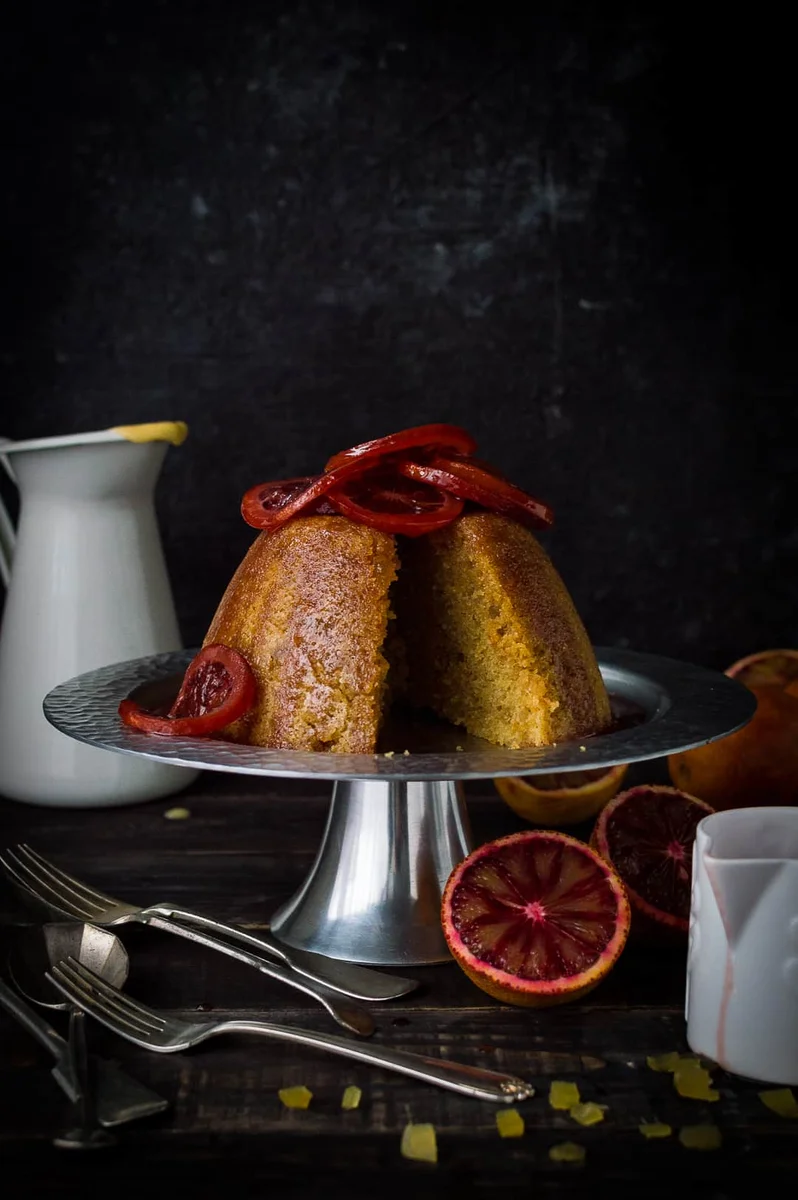
This slow-cooked steamed pudding pairs a soft, buttery sponge with blood orange, warm ginger and a glossy citrus syrup. It makes a comforting dessert for sharing, with the slow cooker doing the gentle, steady steaming.
Ingredients
- 150 g (1/2 cup + 2 Tbsp)softened butter
- 150 g (1/2 + 1/3 cup)light brown soft sugar
- finely grated zest of 2blood oranges
- 3 largeeggs
- 150 g (1 + 1/4 cups)self-raising flour
- 1 tspground ginger
- pinchsalt
- 3 balls (about 3 Tbsp chopped)stem ginger, finely chopped
- juice of 3blood oranges
- 150 g (3/4 cup)granulated sugar
- 1blood orange, thinly sliced
Instructions
- 1
Prepare the basin
Generously grease a 1 to 1.2 litre pudding basin and place a small disc of baking parchment in its base. Put the kettle on.
- 2
Cream butter and sugar
Whisk the butter, light brown sugar and orange zest until pale and fluffy. Whisk in the eggs one at a time, adding a spoonful of flour with each egg.
- 3
Fold in dry ingredients
Sift in the remaining flour, ground ginger and salt, then fold them through the mixture. Stir in the chopped stem ginger.
- 4
Fill the basin
Transfer the batter to the prepared basin and level the top. Leave at least 2.5 cm of space between the batter and the rim so the pudding can expand.
- 5
Cover the pudding
Cover the basin with a centrally pleated circle of baking parchment and a second circle of foil. Tie them securely with string, making a loop in the string to use as a carrying handle.
- 6
Set up the cooker
Place an upturned saucer in the bottom of the slow cooker and set the pudding basin on top. Pour in enough freshly boiled water to reach two-thirds of the way up the basin.
- 7
Cook the pudding
Put the lid on and cook on high for 4 hours. The pudding should feel firm, and a skewer inserted in the centre should come out clean. If it is still undercooked, replace the parchment, foil and string and cook for another hour.
- 8
Make the syrup
While the pudding cooks, measure the blood orange juice and add enough water to bring the total to 250 ml. Put it in a small saucepan with the granulated sugar and heat gently, stirring regularly, until the sugar dissolves.
- 9
Candy the orange
Add the orange slices and bring the liquid to a gentle simmer. Cook for 45 minutes to 1 hour, until the oranges are soft and their peel has become slightly translucent, stirring occasionally so they are evenly coated in syrup.
- 10
Cool the syrup
Take the pan off the heat and leave the oranges and syrup to cool. They can be kept in an airtight container in the fridge for up to a week.
- 11
Turn out and serve
When the pudding is cooked, remove the string and covering. Place a serving platter over the basin and carefully turn them over together. Lift away the basin, top the pudding with the candied orange slices and syrup, and serve straight away with custard or ice cream.
What is steamed pudding?
Steamed pudding is a traditional British dessert cooked gently in a covered basin, rather than baked in an oven. This version brings blood orange and ginger into a buttery sponge, then finishes it with fruit cooked in citrus syrup.
Slow-cooker steaming gives the pudding a moist, tender texture with little need to monitor a pan on the hob. The basin and its cover help contain the steam as the sponge rises.
Nutrition and macros by portion
The nutrition label shows one serving as written: 550 calories, 6g protein, 78g carbs, 27g fat.
| Portion | Adjustment | kcal | Protein | Carbs | Fat |
|---|---|---|---|---|---|
| Lighter | Smaller pudding slice | 385 kcal | 4g | 55g | 19g |
| This serving | As written | 550 kcal | 6g | 78g | 27g |
| Hungry | Larger pudding slice | 825 kcal | 9g | 117g | 41g |
The flour and sugars provide most of the carbohydrates, while butter supplies much of the fat; eggs contribute some protein and additional fat. Serve a moderate slice with fruit or a spoonful of custard, and balance the meal with a lighter main course if you like.
The ginger and orange
Orange zest: finely grated zest goes into the batter, where it perfumes the sponge without adding much liquid.
Stem ginger: chopped pieces bring concentrated, sweet warmth through the pudding. Keep the pieces small so they distribute evenly.
Getting the batter right
Creaming: whisk the butter, sugar and zest until pale and fluffy before adding the eggs. Add the eggs gradually, with a spoonful of flour each time, to help the mixture stay together.
Folding: sift the remaining flour with the ground ginger and salt, then fold just until combined. Overmixing can make the sponge less tender.
Covering and steaming
Pleated cover: the parchment and foil need a central pleat so the pudding has room to expand. Tie the coverings firmly, and make the string loop before lowering the basin into the cooker.
Water bath: the upturned saucer keeps the basin off the cooker base, while the hot water should reach about two-thirds of the way up its sides. Keep the slow-cooker lid in place during cooking.
How to check it is done
Touch: after 4 hours on high, the pudding should feel firm at the top. A skewer pushed into the centre should come out clean.
Extra time: if the centre is not cooked through, replace the coverings and cook for another hour. Take care when handling the hot basin and water.
The candied orange topping
Gentle simmer: dissolving the sugar over low heat helps make an even syrup before the slices go in. Once added, keep the liquid at a gentle simmer rather than a vigorous boil.
Doneness: the slices are ready when soft and the peel looks slightly translucent. Stir them occasionally so the syrup coats them evenly.
Serving the pudding
Turn out: remove the coverings, place a platter over the basin, and invert them together. Lift the basin away carefully, then spoon over the candied oranges and syrup.
Pairing: serve the pudding straight away with custard or ice cream. Their cool, creamy texture complements the warm ginger and bright citrus.
Recipe notes & tips
- Grease the basin generously so the steamed sponge releases more easily.
- Leave at least 2.5 cm of headroom above the batter for it to rise.
- Use a secure string tie and make its carrying loop before cooking.
- Check doneness with a skewer at the centre, not just at the edge.
- Keep the syrup at a gentle simmer to soften the orange slices without breaking them up.
- Turn out the pudding carefully, as the basin and its contents will be hot.
Variations
- Use regular oranges: Swap in ordinary oranges if blood oranges are unavailable.
- Adjust the ginger: Reduce the stem ginger for a milder flavour.
- Add more spice: Include a little extra ground ginger for a warmer sponge.
- Serve with custard: Choose custard for a classic, creamy accompaniment.
- Serve with ice cream: Add a scoop alongside the warm pudding.
Common mistakes to avoid
- Overfilling the basin: The pudding needs at least 2.5 cm of space to expand; remove some batter if needed.
- Loose covering: Steam can get into the basin; pleat the parchment and foil and tie them securely.
- Water touching the rim: Fill the slow cooker only to about two-thirds of the basin's height.
- Boiling the syrup hard: A vigorous boil can damage the slices; keep it at a gentle simmer.
- Skipping the doneness check: If a centre skewer is not clean, replace the coverings and cook for another hour.
- Rushing the turn-out: Place the platter securely over the basin and invert carefully to avoid spills.
How to store
Store leftover pudding covered in the fridge and eat within 2 days; keep the candied oranges and syrup in an airtight container in the fridge for up to a week. Reheat a portion until hot, or serve it at room temperature.
Frequently asked questions
Can I make the candied oranges ahead?
Yes. The recipe says they can be stored in an airtight container in the fridge for up to a week.
How do I know when the pudding is cooked?
It should feel firm, and a skewer inserted into the centre should come out clean. If it needs more time, replace its coverings and cook for another hour.
Can I cook it on low?
The method specifies cooking on high for 4 hours, with an additional hour if it is still undercooked. It does not give a low-setting time.
What can I serve with it?
Serve it straight away with custard or ice cream.
Can I use ordinary oranges?
Yes, ordinary oranges can stand in for blood oranges, though the flavour and colour will differ.
Cook it from the original
This recipe comes from domesticgothess.com. Their page has the author’s own photos, notes and tips — the best place to cook it from.
Open the recipe on domesticgothess.com