
Hawaiian Pineapple Shrimp Fried Rice
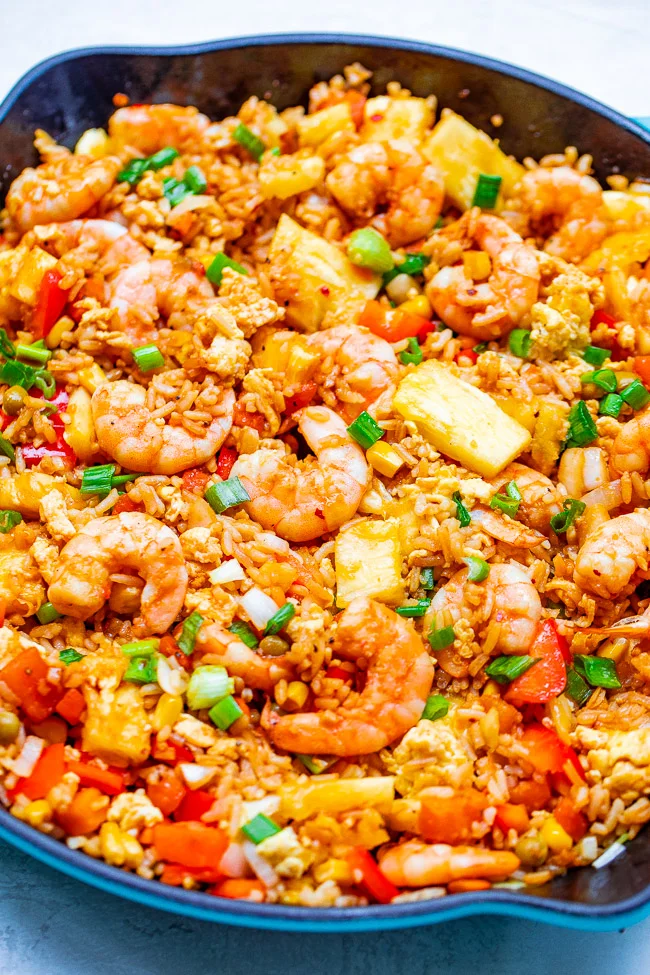
This Hawaiian-inspired fried rice combines shrimp, vegetables, egg and sweet pineapple in a savoury soy and sesame sauce. It is a quick way to turn cooked rice into a colourful one-pan meal.
Ingredients
- 45–60 ml (3–4 tablespoons)rapeseed or vegetable oil (olive oil may be substituted)
- 15–30 ml (1–2 tablespoons)sesame oil
- 454 g (1 pound)medium-large fresh shrimp, cleaned (approximately 15–20 shrimp)
- 1 mediumred pepper, finely diced
- 150 g (1 cup)peas and diced carrots, frozen and thawed or tinned and drained
- 80 g (½ cup)sweetcorn, frozen and thawed or tinned and drained
- 2–3 clovesgarlic, finely minced or pressed
- 1 teaspoonground ginger, or to taste
- 3 largeeggs, lightly beaten
- 600–640 g (4 cups)cooked rice
- 165–250 g (1–1½ cups)fresh pineapple, diced (or one 227 g tin of pineapple pieces, drained)
- 2–3spring onions, trimmed and thinly sliced
- 60 ml (¼ cup)reduced-salt soy sauce, or to taste
- ½ teaspoonfreshly ground black pepper, or to taste
- To taste (optional)red chilli flakes
Instructions
- 1
Cook the shrimp
Heat both oils in a large non-stick frying pan or wok over medium-high heat. Add the shrimp and cook for about 3 minutes, turning halfway through; cooking time depends on their size, so take care not to overcook them.
- 2
Set shrimp aside
Lift the shrimp out with a slotted spoon, leaving the oil and cooking juices in the pan. Put the shrimp on a plate and set aside.
- 3
Soften vegetables
Add the red pepper, peas, carrots and sweetcorn. Cook for about 2 minutes, stirring now and then, until the vegetables begin to soften.
- 4
Add aromatics
Stir in the garlic and ground ginger. Cook for 1 minute, stirring intermittently.
- 5
Scramble the eggs
Move the vegetables to one side of the pan. Pour the beaten eggs into the other side and scramble them, stirring as needed.
- 6
Warm the rice
Lower the heat, add the cooked rice and stir everything together. Let it warm through for a minute or two; if the mixture seems dry, add more oil to taste.
- 7
Combine everything
Return the shrimp to the pan and add the pineapple and spring onions. Drizzle over the soy sauce, starting with less if you are sensitive to salt or soy sauce, then season with black pepper and optional chilli flakes. Stir to combine.
- 8
Check seasoning
Taste the fried rice and adjust the seasoning if needed. Add more soy sauce to taste; about 80 ml (⅓ cup) in total may be needed.
What is Hawaiian pineapple shrimp fried rice?
Fried rice is a broad family of dishes found across Asian cuisines, usually made by stir-frying cooked rice with seasonings and other ingredients. This version takes a Hawaiian-inspired approach, pairing shrimp and vegetables with pineapple for a sweet-savoury contrast.
The combination works because the rice takes on the pan juices and soy sauce, while pineapple brings a bright, fruity note. The method cooks the shrimp and egg separately from the rice at first, helping each ingredient keep its character.
Nutrition and macros by portion
The nutrition label shows one serving as written: 356 calories, 10g protein, 42g carbs, 17g fat.
| Portion | Adjustment | kcal | Protein | Carbs | Fat |
|---|---|---|---|---|---|
| Lighter | Use less cooking oil | 249 kcal | 7g | 29g | 12g |
| This serving | As written | 356 kcal | 10g | 42g | 17g |
| Hungry | Serve a larger portion | 534 kcal | 15g | 63g | 26g |
The rice, peas, carrots, sweetcorn and pineapple provide most of the carbohydrates, while the cooking oils contribute much of the fat. Shrimp and eggs provide protein, with smaller amounts also coming from the rice. Serve with extra vegetables or a crisp salad to round out the plate.
Choose the right rice
Cooked rice: use rice that is already cooked, as the recipe specifies, so it can be warmed through quickly in the pan. Separate any clumps as you add it for more even mixing.
Oil: the canola or vegetable oil provides the main cooking fat, while sesame oil adds a distinct toasted aroma. Keep both in the pan after cooking the shrimp so their flavour carries into the vegetables.
Cook the shrimp gently
Size: medium-large shrimp cook quickly, and the recipe gives about 3 minutes as a guide. Turn them halfway through and remove them from the pan once cooked rather than leaving them in as the vegetables soften.
Carry-over: the shrimp go back into the pan near the end, so they only need to warm through with the other ingredients. This helps avoid overcooking them.
Build flavour in stages
Vegetables: give the pepper, peas, carrots and sweetcorn about 2 minutes to begin softening before adding the aromatics. Stir intermittently so they cook evenly in the pan juices.
Garlic and ginger: cook these for just 1 minute before adding the egg. This brief stage lets them become fragrant without lingering in the hot pan for too long.
Get the texture right
Egg: push the vegetables aside and scramble the egg in the open part of the pan. Stir as needed, then mix it through with the rice.
Rice: lower the heat before adding the cooked rice and give it a minute or two to warm. If it appears dry, the recipe suggests adding oil to taste rather than leaving the rice to heat for longer.
Balance the sweet and savoury
Pineapple: add it towards the end so it combines with the rice and shrimp without being cooked through from the beginning. Fresh diced pineapple is suggested, with drained tinned pieces as an alternative.
Soy sauce: start with less if you are sensitive to its saltiness, then taste the finished mixture and add more as needed. The recipe notes that about 80 ml in total may suit its preferred seasoning.
Serve it as a meal
The rice already includes shrimp, egg and a mix of vegetables, so it can be served as a complete meal. Spring onions add a fresh finishing note, while chilli flakes are an optional way to add heat.
For a simple accompaniment, serve it with extra vegetables or a crisp salad. Keep any additional sauces on the side so everyone can adjust their own serving.
Recipe notes & tips
- Have the vegetables, aromatics and pineapple prepared before heating the pan, as the cooking stages move quickly.
- Use a slotted spoon to remove the shrimp while leaving the pan oils and juices behind.
- Stir the vegetables intermittently as they soften so they cook evenly.
- Lower the heat before adding the cooked rice, as directed, and let it warm through for only a minute or two.
- Add soy sauce gradually if you prefer a less salty result, then taste before adding more.
- Use the optional chilli flakes to adjust the heat at the table.
Variations
- Use tinned pineapple: drain one 227 g tin of pineapple pieces well before adding them.
- Choose olive oil: use it in place of the canola or vegetable oil as the recipe allows.
- Adjust the ginger: use less or more ground ginger to suit your taste.
- Add chilli: stir in red chilli flakes to give the rice a little heat.
- Change the seasoning: begin with less reduced-salt soy sauce and add more after tasting.
Common mistakes to avoid
- Overcooking the shrimp: cook for about 3 minutes, turning halfway, and remove them before they become tough.
- Discarding the pan juices: leave the oil and cooking juices in the pan when you lift out the shrimp.
- Cooking the garlic too long: add it with the ginger and cook for only 1 minute.
- Heating the rice for too long: lower the heat and warm it through for a minute or two.
- Adding too much soy sauce at once: start with less if saltiness is a concern, then taste and adjust.
- Leaving the rice dry: if it seems dry as it warms, add more oil to taste.
How to store
Refrigerate leftovers promptly in a covered container and eat within 1–2 days. Reheat until steaming hot throughout, stirring as needed; add a small splash of water if the rice seems dry.
Frequently asked questions
Can I use tinned pineapple?
Yes. The recipe allows one 227 g tin of pineapple pieces as a substitute for fresh pineapple; drain it before adding.
Can I use frozen vegetables?
Yes. The peas and carrots, and the sweetcorn, can be frozen and thawed before cooking.
How do I know when the shrimp are cooked?
Follow the recipe’s guide of about 3 minutes over medium-high heat, turning them halfway through. The time varies with shrimp size, so avoid cooking them longer than needed.
Can I use freshly cooked rice?
The recipe calls for cooked rice. Make sure it is cooked before you begin the frying steps, then add it to the pan to warm through.
How much soy sauce should I use?
Begin with less if you are sensitive to salt or soy sauce, then taste and add more as needed. The recipe notes that about 80 ml (⅓ cup) may be needed in total.
Can I leave out the chilli flakes?
Yes. They are optional, so leave them out for a milder fried rice.
Cook it from the original
This recipe comes from averiecooks.com. Their page has the author’s own photos, notes and tips — the best place to cook it from.
Open the recipe on averiecooks.com