
Habichuelas Negras Guisadas [Video+Recipe] Stewed Black Beans
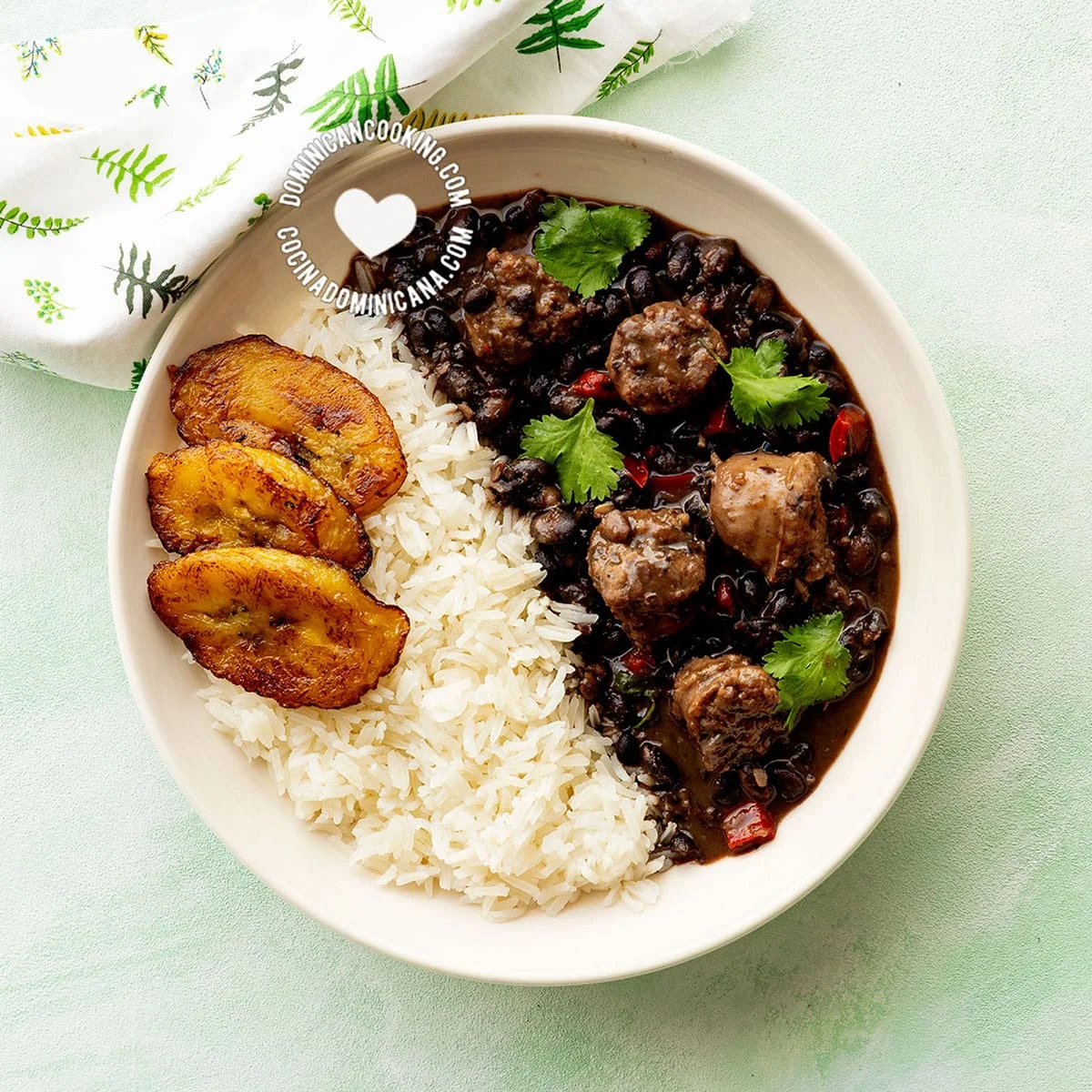
Dominican stewed black beans are simmered with longaniza, onion, garlic and herbs until soft and creamy. This flavourful one-pot dish works as a hearty meal or as part of a larger Dominican spread.
Ingredients
- 950 mlcooked black beans
- 1 tablespoonvegetable oil (or olive oil)
- 454 glonganiza (Dominican sausage), sliced (optional)
- 1 small (or ½ large)white onion, halved
- ½ teaspoondried ground oregano
- 4 sprigs (or 1 teaspoon dried)thyme (optional)
- ½ teaspoonfreshly cracked or ground pepper
- 1 teaspoon, or moresalt, to taste
- 2 clovesgarlic, crushed
- 1red or green bell pepper, chopped
- A few sprigsfresh coriander
Instructions
- 1
Soak and boil
If starting with dried beans, soak them overnight or for at least a couple of hours to shorten the cooking time. Drain, put them in a large pot with 2 litres of water and an optional bay leaf, then boil over medium-low heat until very tender and easily squashed between your fingers. Add more water as needed to keep the pot from drying out or scorching.
- 2
Drain the beans
Strain the cooked beans, keeping their cooking liquid. Measure out 6 cups of liquid, topping it up with tap water if needed. Set the beans and liquid aside. If using canned beans and you want to reduce their sodium, discard the canning liquid and use tap water for the later cooking liquid.
- 3
Brown the sausage
Warm the oil in a pot over medium-high heat. Add the sliced longaniza and cook, stirring, until browned. Remove some of the released fat if there is more than you want in the dish.
- 4
Cook the aromatics
Add the onion, oregano, thyme, pepper, 1 teaspoon of salt and crushed garlic. Stir and cook for half a minute. Add the beans, cover and cook for a couple of minutes, stirring and adding a little of their cooking liquid to prevent them from sticking or burning.
- 5
Simmer until creamy
Pour 6 cups of liquid into the pot. Lower the heat to medium-low and cook until the liquid has reduced and the beans are very soft and creamy. Taste and adjust the salt and pepper as needed. If the beans are not soft and creamy enough, mash them lightly with a potato masher, keeping plenty of whole beans intact.
- 6
Serve the beans
Take the pot off the heat and serve.
What are habichuelas negras guisadas?
Habichuelas negras guisadas are Dominican-style stewed black beans, also known as frijoles negros. Beans are a familiar part of Dominican cooking, and this version turns them into a soft, richly seasoned stew.
Longaniza, garlic, herbs and pepper build savoury flavour, while a slow simmer gives the beans their creamy texture. The sausage is optional, so the beans can also be made without it.
Nutrition and macros by portion
The nutrition label shows one serving as written: 373 calories, 19g protein, 23g carbs, 23g fat.
| Portion | Adjustment | kcal | Protein | Carbs | Fat |
|---|---|---|---|---|---|
| Lighter | Omit the longaniza | 261 kcal | 13g | 16g | 16g |
| This serving | As written | 373 kcal | 19g | 23g | 23g |
| Hungry | Larger portion with rice | 560 kcal | 29g | 35g | 35g |
The beans provide most of the carbohydrates and a substantial share of the protein; longaniza contributes much of the fat and additional protein. Pair a serving with vegetables or salad to add freshness and balance the plate.
Choosing the beans
Cooked beans: The recipe calls for 4 cups of boiled black beans. If cooking them from dried, soak first and boil until they are tender enough to squash easily.
Cooking liquid: Save the bean water after straining. Its flavour becomes part of the stew, and adding it gradually helps stop the beans catching during the initial cooking.
Building flavour in the pot
Longaniza: Browning the sliced sausage first gives the oil a savoury base for the rest of the ingredients. If it releases more fat than you prefer, spoon some out before adding the aromatics.
Aromatics: Onion, garlic, oregano and thyme need only half a minute in the pot before the beans go in. Stir them so the garlic does not sit against the hot base and scorch.
Getting the creamy texture
Gentle simmer: Once the 6 cups of liquid are in, keep the heat at medium-low and cook until the beans are very soft and the liquid has reduced. Stir from time to time, especially as the stew thickens.
Light mashing: If the beans remain loose rather than creamy, press a few with a potato masher. Avoid mashing the whole pot; leaving plenty whole gives the stew a satisfying texture.
Seasoning and timing
Salt check: The recipe starts with 1 teaspoon of salt, then calls for a final taste and adjustment. Canned beans or sausage can already be salty, so taste before adding more.
Dried beans: Soaking and boiling dried beans happens before the stewing method and can take considerably longer than the stated 30-minute total time. Starting with already cooked beans keeps the main recipe to its quicker cooking stage.
Serving the stew
Serve the beans hot as a substantial side or as the centre of a meal. Rice is a natural pairing, and a crisp salad or cooked vegetables can add freshness alongside the rich, creamy stew.
The chopped bell pepper adds colour and sweetness, while fresh coriander provides a bright finish. Add the coriander near the end or scatter it over the bowls when serving.
Recipe notes & tips
- Use the cooking liquid from the beans for a deeper-flavoured stew.
- If using dried beans, cook them until they squash easily before starting the stewing stage.
- Drain off excess sausage fat after browning if you prefer a less rich result.
- Stir the beans as they thicken so they do not catch on the bottom of the pot.
- Mash only a small portion of the beans to thicken the stew while keeping most whole.
- Taste before adding extra salt, particularly if using canned beans or salty sausage.
Variations
- Skip the sausage: Leave out the longaniza for a bean-focused version.
- Use olive oil: Swap in olive oil for the vegetable oil, as suggested in the recipe.
- Choose the pepper: Use either red or green bell pepper to suit what you have.
- Use dried thyme: Replace the fresh sprigs with 1 teaspoon of dried thyme.
- Adjust the herbs: Omit the optional thyme if you want a simpler seasoning.
Common mistakes to avoid
- Beans still firm: Boil dried beans until they squash easily before using them in the stew.
- Pot drying out: Add a little of the reserved cooking liquid while the beans cook.
- Too much sausage fat: Spoon some fat from the pot after browning the longaniza.
- Garlic scorching: Stir the aromatics for only half a minute before adding the beans.
- Stew not creamy: Mash a few beans lightly, rather than crushing the whole batch.
- Over-salting: Taste the finished stew before adding more salt.
How to store
Cool leftovers promptly and store them in an airtight container in the fridge for up to 3 days. Reheat gently in a saucepan, stirring and adding a splash of water if the stew has thickened; heat until piping hot throughout.
Frequently asked questions
Can I use canned black beans?
Yes. Drain them if you want to discard the canning liquid, then use tap water as the cooking liquid. The recipe calls for 4 cups of cooked beans.
Do I need to soak dried beans overnight?
The recipe recommends soaking overnight or for at least a couple of hours to reduce the boiling time. Boil them until very tender before continuing.
Can I leave out the longaniza?
Yes, it is optional. The beans will still be seasoned with onion, garlic, oregano, pepper and the other herbs.
How do I make the beans creamy?
Simmer until the beans are very soft and the liquid has reduced. If needed, lightly mash some beans with a potato masher, leaving most of them whole.
What can I serve with these beans?
They work well with rice as part of a meal. A crisp salad or cooked vegetables can make a fresh accompaniment.
Cook it from the original
This recipe comes from dominicancooking.com. Their page has the author’s own photos, notes and tips — the best place to cook it from.
Open the recipe on dominicancooking.com