
Braised Pork Shoulder with Molasses & Mustard
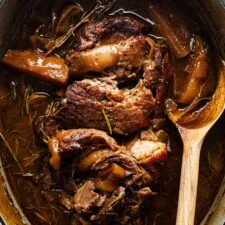
Pork shoulder is slowly braised until tender in a rich sauce of molasses, mustard, apples, herbs and warming spices. It is a comforting, hands-off centrepiece for a cool-weather meal, especially served with mashed potatoes to catch the savoury-sweet gravy.
Ingredients
- 1.59–1.81 kgboneless pork shoulder (pork butt)
- to seasonkosher salt and freshly ground black pepper
- 30 mlolive oil
- 1 largeyellow onion, sliced into half-moons
- 2 largeapples (such as Honeycrisp), cored and sliced
- 30 mlgarlic paste
- 30 mlCreole Cajun seasoning, homemade or shop-bought
- 10 mlground allspice
- 1.25 mlchipotle powder
- 120 mldry white wine, such as Sauvignon Blanc or Pinot Grigio
- 950 mlchicken stock
- 120 mlmolasses
- 60 mlwholegrain mustard
- 60 mlsmooth Dijon mustard
- 60 mlpure maple syrup
- 15 mlWorcestershire sauce
- 6 sprigs, plus extra for garnishfresh rosemary
Instructions
- 1
Season the pork
Season the pork generously on all sides with salt and pepper. Leave it on a large plate for at least 30 minutes to rest and come towards room temperature. Meanwhile, heat the oven to 150°C.
- 2
Brown the pork
Heat the olive oil in a large Dutch oven over medium-high heat, swirling to coat the base once hot. Add the pork and sear for about 2–3 minutes on each side, until a deep brown crust forms. Transfer it to a clean plate or small baking tray and reduce the heat to medium. If needed to fit your pot, cut the pork into sections.
- 3
Cook the apples
Add the onion and apples to the pot and cook in the pork fat, stirring occasionally. Season to taste with salt and pepper, and cook for about 2–3 minutes, until tender and lightly golden.
- 4
Build the sauce
Make a small space in the centre of the pot and stir in the garlic paste until mostly dissolved. Add the Cajun seasoning, allspice and chipotle powder; stir and cook for 1–2 minutes to toast the spices. Pour in the wine and scrape up the caramelised bits from the bottom with a wooden utensil. Stir continuously for about 2–3 minutes, until the wine has reduced and the mixture thickens. Add the chicken stock, molasses, both mustards, maple syrup, Worcestershire sauce and rosemary, then stir to combine.
- 5
Return the pork
Put the pork back in the pot with any juices collected on the plate. The meat should be almost completely covered by the liquid. Raise the heat to medium-high and bring the pot to a simmer, about 5 minutes, then remove it from the heat.
- 6
Braise until tender
Cover the pot and transfer it to the oven. Braise at 150°C for 2½ hours, then uncover and cook for a further 30 minutes to deepen the colour. Remove the pot from the oven and leave the pork to rest for 10–15 minutes.
- 7
Serve the pork
Carefully transfer the very tender pork to a serving platter with the onions and apples. Spoon over some braising liquid and garnish with rosemary, if you like. Serve in shallow bowls over creamy mashed potatoes, with more gravy poured over the top if desired.
What is braised pork shoulder?
Braising is a slow-cooking method in which a well-browned cut of meat cooks gently in a covered pot with liquid. Pork shoulder, also called pork butt, has enough connective tissue and fat to become succulent over a long cook.
This version pairs that savoury, tender meat with molasses, two kinds of mustard, maple syrup, apples and herbs. Its sweet, tangy and gently spiced sauce makes a substantial cold-weather meal.
Nutrition and macros by portion
The nutrition label shows one serving as written: 770 calories, 55g protein, 39g carbs, 42g fat.
| Portion | Adjustment | kcal | Protein | Carbs | Fat |
|---|---|---|---|---|---|
| Lighter | More greens, less gravy | 539 kcal | 39g | 27g | 29g |
| This serving | As written | 770 kcal | 55g | 39g | 42g |
| Hungry | Larger pork portion | 1155 kcal | 83g | 59g | 63g |
The pork supplies most of the protein and fat, while the apples, molasses and maple syrup contribute much of the carbohydrates and sugars. The stock, mustard and seasoning also add sodium, so serve with a generous portion of greens and add salt to the finished sauce only after tasting.
Why brown the pork first?
A deep crust gives the finished braise a richer, more savoury flavour. Give the pork room in the pot and brown it on every side; if the joint does not fit, divide it into sections.
Keep the browned bits in the pot. The wine loosens them from the base, adding their flavour to the sauce.
Building the flavour
Garlic paste: Stir it into a small well in the onion and apple mixture so it disperses before the spices go in.
Spices: Toast the Cajun seasoning, allspice and chipotle briefly, just until fragrant, then add the wine before they scorch.
Sauce: Molasses and maple bring sweetness, while wholegrain and Dijon mustard contribute tang and texture. Chicken stock supplies the braising liquid that carries those flavours through the pork.
Getting the braise right
Liquid level: The pork should be almost submerged when it goes into the oven. Return any juices from the plate as well, since they belong in the sauce.
Gentle heat: Keep the pot covered for the first 2½ hours at 150°C, then uncover it for the final 30 minutes. This gives the meat time to soften before the surface darkens further.
How to tell it is ready
The recipe gives a total oven time of 3 hours: 2½ hours covered, followed by 30 minutes uncovered. The pork should be very tender after this slow cook; handle it carefully when lifting it out, as it may start to fall apart.
Rest the pork for 10–15 minutes before serving. This makes it easier to transfer while the onions and apples stay soft enough to serve alongside.
Serving ideas
Creamy mashed potatoes are the suggested accompaniment, and their mild flavour works well with the bold, sweet-savoury gravy. Spoon some braising liquid over both the potatoes and the pork.
For a lighter plate, add a green vegetable such as steamed greens or green beans. Keep the rosemary garnish simple so it complements rather than overwhelms the sauce.
Recipe notes & tips
- Let the pork rest for at least 30 minutes before searing so it is not fridge-cold at the start.
- Use an oven-safe Dutch oven large enough to hold the pork and almost cover it with liquid.
- Give the pork time to develop a deep crust before turning it.
- Scrape the base thoroughly when adding the wine to lift the browned bits into the sauce.
- Taste the braising liquid before serving and adjust the seasoning if needed.
- Lift the pork gently, since the long braise makes it especially tender.
Variations
- Adjust the heat: Use a little more chipotle powder for a hotter, smokier sauce.
- Change the apples: Choose another firm eating apple that will hold its shape during the braise.
- Use another dry wine: A different dry white wine can stand in for Sauvignon Blanc or Pinot Grigio.
- Add a green side: Serve the pork with green beans or leafy greens alongside the mashed potatoes.
- Make it gluten-free: Check that the Cajun seasoning, stock and Worcestershire sauce are labelled gluten-free.
Common mistakes to avoid
- Skipping the sear: The sauce misses out on browned flavour, so take time to colour the pork on all sides.
- Crowding the pot: The pork may not brown evenly; divide it into sections if it does not fit.
- Burning the spices: They can turn bitter if left too long, so cook them for just 1–2 minutes before adding the wine.
- Leaving the pot uncovered too soon: The pork can dry before it softens, so keep it covered for the first 2½ hours.
- Lifting the pork roughly: It may break apart when very tender, so use two broad utensils or a careful transfer.
- Serving straight away: The meat is harder to handle immediately from the oven, so rest it for 10–15 minutes.
How to store
Refrigerate leftovers in an airtight container with some braising liquid for up to 3 days. Reheat gently in a covered pan over low heat, or in the oven, until piping hot; add a splash of stock or water if the sauce has thickened.
Frequently asked questions
Can I make this without a Dutch oven?
Use a large, oven-safe pot with a snug-fitting lid. Make sure it is deep enough to hold the pork and braising liquid; if the joint is too large, cut it into sections.
Can I prepare it ahead?
Yes. Cool the cooked pork and sauce, then refrigerate them together. Reheat gently in the sauce until piping hot, taking care not to break up the tender meat.
What can I use instead of dry white wine?
The recipe relies on wine to deglaze the pot. If you prefer not to use it, use extra chicken stock for that step, though the sauce will have a different flavour.
How do I know when the pork is tender?
After the full 3-hour oven braise, it should be very tender and easy to handle carefully. If it is still firm, continue cooking until it softens.
What should I serve with it?
Creamy mashed potatoes are the suggested pairing and work especially well with the gravy. Add a green vegetable for freshness and contrast.
Can I use a different cut of pork?
This method is written for boneless pork shoulder, which suits long, moist cooking. A leaner cut may not become as succulent over the same cooking time.
Cook it from the original
This recipe comes from butterbeready.com. Their page has the author’s own photos, notes and tips — the best place to cook it from.
Open the recipe on butterbeready.com