
Chicken Karahi
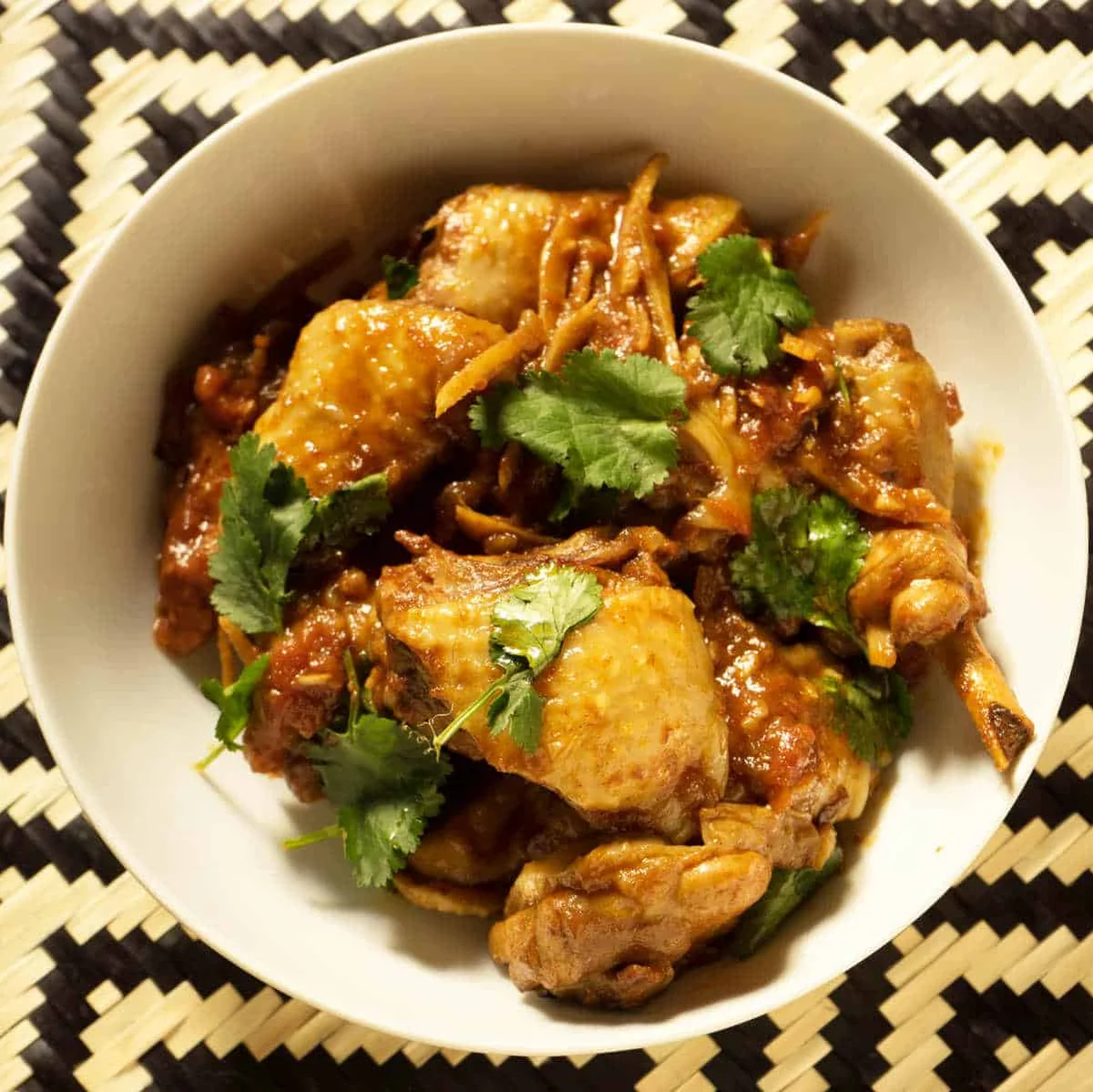
Chicken karahi is a Pakistani chicken curry cooked with tomatoes, warming spices, ginger and garlic. It comes together in about 40 minutes and is delicious with naan, roti or rice.
Ingredients
- 680 gboneless chicken breast (or chicken thighs), cut into pieces
- 907 gtomatoes, peeled, seeded and crushed
- 1 largered onion, finely chopped
- 3 clovesgarlic, finely minced
- 1 piece, 5 cmfresh ginger, cut into thin matchsticks
- 15 mlred chilli flakes
- 15 mlgaram masala
- 5 mlground coriander
- 5 mlground cumin
- 5 mlground turmeric
- 90 mlmelted ghee (or vegetable oil)
- 120 mlboiling water
- to tastesalt
- 45 mlchopped coriander leaves
- 2green chillies, halved lengthways
- to tastefreshly squeezed lemon juice
- as neededkarahi or cast-iron pan
Instructions
- 1
Heat the ghee
Warm the ghee or oil in a karahi or cast-iron pan over a medium heat.
- 2
Cook the onion
Add the onion and sauté until it is just beginning to brown.
- 3
Add aromatics
Stir in the ginger and garlic and sauté for 1 minute, stirring continuously.
- 4
Sauté the chicken
Add the chicken pieces and sauté until their surfaces turn white.
- 5
Fry the spices
Add the chilli flakes, ground coriander, garam masala, cumin and turmeric. Cook over a medium-high heat for 30 seconds, stirring constantly.
- 6
Add tomatoes
Pour in the boiling water straight away to keep the spices from burning, stir, then add the crushed tomatoes.
- 7
Simmer the curry
Cook over a low to medium heat for about 25 minutes.
- 8
Check the chicken
If the chicken is not tender, add 30–45 ml (2–3 tablespoons) boiling water and cook for another 5 minutes, stirring regularly.
- 9
Garnish and serve
Serve straight away, topped with the green chillies, chopped coriander and a little lemon juice.
What is chicken karahi?
Chicken karahi, also called kadai chicken, is a tomato-based curry from northern and north-western South Asia, especially associated with Pakistani cooking. Its name comes from the deep, round pan traditionally used to cook it.
This version builds flavour by frying the onion, aromatics and spices before simmering chicken in crushed tomatoes. The fresh chilli, coriander and lemon added at the end bring brightness to the rich, spiced sauce.
Nutrition and macros by portion
The nutrition label shows one serving as written: 126 calories, 19g protein, 6g carbs, 3g fat.
| Portion | Adjustment | kcal | Protein | Carbs | Fat |
|---|---|---|---|---|---|
| Lighter | Use less ghee | 88 kcal | 13g | 4g | 2g |
| This serving | As written | 126 kcal | 19g | 6g | 3g |
| Hungry | Serve with rice | 189 kcal | 29g | 9g | 5g |
The chicken provides most of the protein, while the tomatoes and onion contribute carbohydrates. Ghee or oil supplies most of the fat; serve the curry with a generous portion of vegetables alongside naan, roti or rice to round out the plate.
Choosing the chicken
Chicken breast: Cut it into evenly sized pieces so they cook at a similar rate, and check it for tenderness before serving.
Chicken thighs: These can be used instead and tend to stay succulent during the simmer. Keep the pieces roughly the same size as you would for breast.
Build flavour in stages
Onion first: Sauté until it is just starting to brown for a sweet, savoury base without letting it become too dark.
Spices briefly: Stir them constantly for 30 seconds, then add the boiling water promptly. This short fry releases their aroma, while the water helps prevent scorching.
Get the sauce texture right
Tomatoes: Crushed, peeled and seeded tomatoes make a smooth, plentiful sauce. Let the curry simmer gently for about 25 minutes so it thickens around the chicken.
Doneness: The chicken should be tender and cooked through. If it needs more time, add 30–45 ml boiling water and simmer for 5 minutes more, stirring regularly.
Plan the cooking time
The stated total time is 40 minutes, including preparation and cooking. Have the spices measured and the tomatoes crushed before you start, as the spice stage moves quickly.
Keep the heat low to medium during the longer simmer. A vigorous boil can reduce the sauce too fast before the chicken has had time to become tender.
What to serve alongside
Naan or roti: Both are handy for scooping up the thick tomato sauce. Add lemon at the table if you like a sharper finish.
Rice: Plain rice makes a simple partner and helps serve the curry as a larger meal. The recipe's green chillies and coriander provide a fresh garnish.
Recipe notes & tips
- Cut the chicken into evenly sized pieces to help it cook consistently.
- Measure the spices before heating the pan so they can be added together without delay.
- Stir constantly while frying the spices to reduce the chance of scorching.
- Use boiling water when the recipe calls for extra liquid so the simmer can resume quickly.
- Add the lemon juice at the end to keep its flavour fresh.
Variations
- Use chicken thighs: Swap in boneless thighs for a more succulent result.
- Adjust the heat: Use fewer chilli flakes or green chillies for a milder curry.
- Choose vegetable oil: Replace the ghee with vegetable oil if preferred.
- Add more lemon: Finish with extra lemon juice for a brighter, tangier sauce.
- Serve with flatbread: Pair it with naan or roti to scoop up the tomato gravy.
Common mistakes to avoid
- Over-browning the onion: Stop when it is just starting to colour so it does not turn bitter.
- Leaving spices unattended: Stir continuously during their 30-second fry to prevent burning.
- Adding tomatoes before water: Add the boiling water first to help protect the spices from scorching.
- Boiling too hard: Keep the curry at a low to medium simmer so the sauce reduces steadily.
- Skipping the tenderness check: If the chicken is not tender after the simmer, add boiling water and cook for 5 minutes more.
How to store
Refrigerate leftovers in a covered container for up to 3 days. Reheat gently in a pan until piping hot, adding a splash of water if the sauce has thickened too much.
Frequently asked questions
Can I use chicken thighs instead of breast?
Yes. The ingredient list allows boneless chicken thighs as an alternative. Cut them into pieces and check that they are tender before serving.
What can I use instead of a karahi?
A cast-iron pan is listed as an alternative. Use a pan large enough to hold the chicken and sauce comfortably.
How can I tell when the chicken is ready?
It should be tender after the simmer. If it is not, add 30–45 ml boiling water and cook for another 5 minutes, stirring regularly.
Can I make the curry less spicy?
Use fewer red chilli flakes and reduce or omit the green chillies. The remaining spices still give the sauce plenty of flavour.
What should I serve with chicken karahi?
Serve it with naan, roti or rice, as suggested for the dish. A little lemon juice and chopped coriander make a fresh finishing garnish.
Cook it from the original
This recipe comes from 196flavors.com. Their page has the author’s own photos, notes and tips — the best place to cook it from.
Open the recipe on 196flavors.com