
Salt and pepper squid
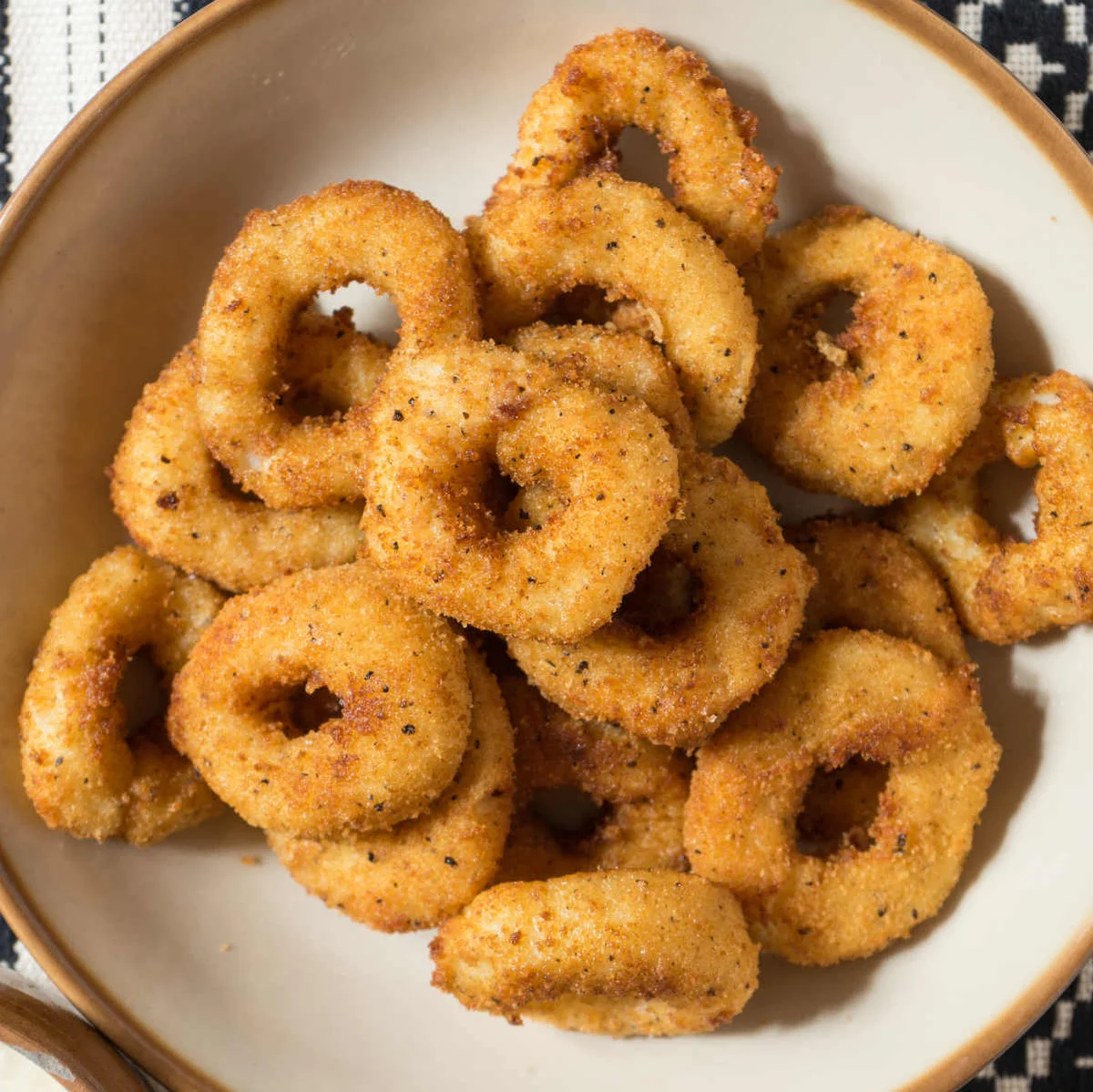
Salt and pepper squid is crisp, golden squid coated in seasoned breadcrumbs and served with a quick garlic mayonnaise. It makes a satisfying starter or sharing dish, with a brief rest in the fridge helping the coating cling during frying.
Ingredients
- 500 gsquid rings
- 80 gplain flour
- 1egg, lightly beaten
- 70 mlmilk
- 200 gbreadcrumbs
- 2 teaspoonssalt
- 1 teaspoonlemon pepper
- ½ teaspooncracked black pepper
- for deep fryingvegetable oil
- 125 mlmayonnaise
- 3 clovesgarlic, chopped
Instructions
- 1
Dust with flour
Lightly coat the squid rings in flour, then shake off any excess.
- 2
Mix egg and milk
Combine the beaten egg and milk. Dip the squid into the mixture and coat it well.
- 3
Coat in crumbs
In a shallow dish, mix the breadcrumbs, salt, lemon pepper and cracked black pepper. Roll the squid in the mixture, pressing the crumbs on firmly.
- 4
Chill the squid
Transfer the coated squid to a dish and refrigerate for 30 minutes.
- 5
Heat the oven
Preheat the oven to 140°C.
- 6
Heat the oil
Fill a large, deep frying pan or deep fryer with plenty of oil and heat it to 170°C.
- 7
Fry in batches
Fry the squid in batches for 2–3 minutes per batch, until golden and cooked through.
- 8
Drain the squid
Lift out the squid and drain it on kitchen paper.
- 9
Keep it warm
Keep the cooked squid warm in the oven while you fry the remaining batches.
- 10
Make the dip
Mix the mayonnaise and chopped garlic together in a bowl.
- 11
Serve hot
Serve the squid while hot.
What is salt and pepper squid?
Salt and pepper squid is a popular Australian dish of squid coated in seasoned crumbs and fried until crisp. Its name points to the simple peppery seasoning, while the crunchy coating and tender centre make it a favourite to share.
This version layers flour, egg and breadcrumbs for an even crust, then pairs the hot squid with garlic mayonnaise. A short chill before frying helps the coating stay in place.
Nutrition and macros by portion
The nutrition label shows one serving as written: 760 calories, 31g protein, 56g carbs, 43g fat.
| Portion | Adjustment | kcal | Protein | Carbs | Fat |
|---|---|---|---|---|---|
| Lighter | Serve less mayonnaise | 532 kcal | 22g | 39g | 30g |
| This serving | As written | 760 kcal | 31g | 56g | 43g |
| Hungry | Add a larger portion | 1140 kcal | 47g | 84g | 65g |
The squid and egg provide most of the protein, while the flour and breadcrumbs supply much of the carbohydrate. Mayonnaise and oil used in frying contribute most of the fat, and the salt adds a substantial share of the sodium. Balance a serving with salad or vegetables, and serve extra mayonnaise on the side.
The coating, layer by layer
Flour first: a light dusting gives the egg mixture something to grip, so shake off the excess to avoid a pasty layer.
Egg and milk: this forms the sticky middle layer. Turn the squid through it until each ring is covered.
Seasoned crumbs: press the breadcrumbs onto the squid rather than merely rolling it through them. This helps make a more complete crust.
Why the chill matters
Chilling the coated squid for 30 minutes gives the layers time to settle and adhere. Keep it refrigerated during this rest, and arrange the rings so they do not get pressed together.
Frying for a crisp finish
Oil temperature: aim for 170°C before adding the squid. If it is too cool, the coating can absorb more oil; if it is too hot, it may brown before the squid cooks.
Small batches: leave room around the rings so the oil temperature can recover. Fry each batch for 2–3 minutes, watching for a golden crust.
How to tell when it is done
Look for an evenly golden coating and squid that has turned opaque. Squid cooks quickly, so avoid leaving it in the oil beyond the stated 2–3 minutes per batch.
Garlic mayonnaise and serving
The dip is simply mayonnaise mixed with chopped garlic, so it can be made while the squid chills. Serve it alongside the squid as soon as the final batch is fried.
For a fuller meal, serve with a crisp green salad or vegetables and lemon wedges. Keep the squid in a single layer where possible so the coating stays crisp.
Recipe notes & tips
- Pat the squid dry before coating if it is wet, so the flour forms a light layer.
- Use a thermometer to check that the oil reaches 170°C before frying.
- Fry a few rings at a time to prevent the oil temperature dropping sharply.
- Let excess egg mixture drip off before adding the squid to the crumbs.
- Keep finished batches warm in the 140°C oven while the remaining squid cooks.
Variations
- Add lemon: serve with lemon wedges for a fresh squeeze at the table.
- Use panko: swap in panko breadcrumbs for a coarser, crunchier coating.
- Adjust the pepper: increase or reduce the cracked black pepper to suit your preference.
- Make it spicier: add a pinch of chilli flakes to the breadcrumb mixture.
- Serve with a different dip: offer tartare sauce instead of the garlic mayonnaise.
Common mistakes to avoid
- Leaving excess flour on: it can make the coating heavy, so shake the squid well after dusting.
- Loose breadcrumbs: press them firmly onto the squid so the crust is less likely to fall away.
- Skipping the chill: the coating may not hold as well, so refrigerate it for the full 30 minutes.
- Overfilling the pan: the oil temperature can fall, so fry in small batches.
- Overcooking the squid: it can turn tough, so remove each batch once golden and cooked through, after 2–3 minutes.
How to store
Store leftover squid and garlic mayonnaise separately in airtight containers in the fridge for up to 2 days. Reheat the squid in an oven or air fryer until hot; the coating may be less crisp after storage, and it is best not to reheat it in the microwave.
Frequently asked questions
Can I prepare the squid ahead?
You can coat it and refrigerate it for the recipe's 30-minute rest before frying. Keep it chilled until you are ready to cook.
How do I know the oil is ready?
Use a thermometer and heat the oil to 170°C. Without one, a small breadcrumb should sizzle promptly when dropped into the oil, but a thermometer gives the clearest check.
Can I cook the squid without deep-frying?
This method is designed for deep-frying, which gives the crumb coating its crisp finish. Baking or air-frying would need a different method and may produce a different texture.
Why is my squid tough?
Squid can become tough if it is cooked too long. Fry each batch for 2–3 minutes and take it out once golden and cooked through.
Can I use frozen squid rings?
Yes. Defrost them fully and pat them dry before starting the flour, egg and breadcrumb coating.
Cook it from the original
This recipe comes from 196flavors.com. Their page has the author’s own photos, notes and tips — the best place to cook it from.
Open the recipe on 196flavors.com