
Spatchcock Chicken
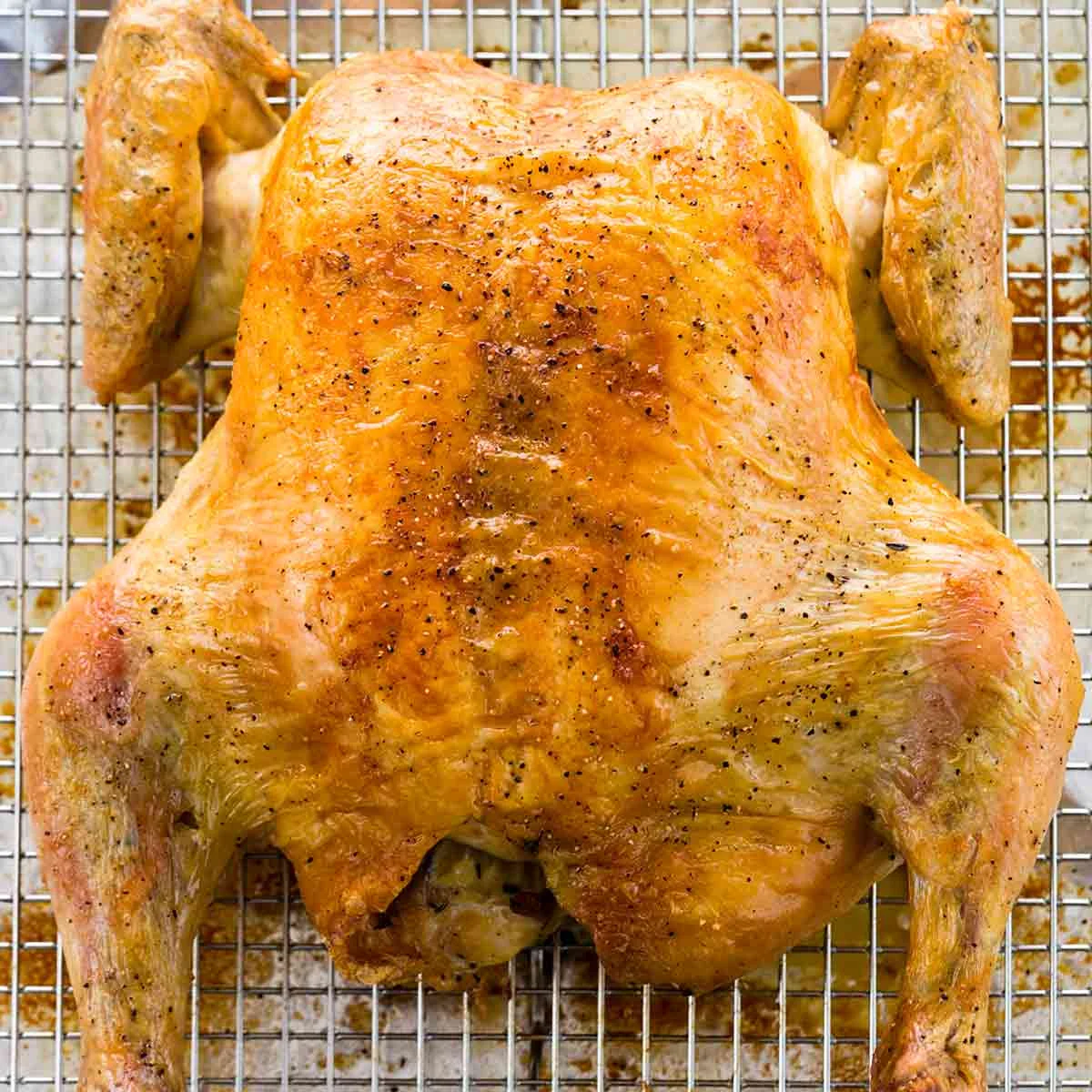
Spatchcocking removes the chicken’s backbone so it can lie flat and roast more quickly and evenly. This simple American-style version uses olive oil, salt and pepper for juicy meat and crisp skin.
Ingredients
- 2.27 kg (5 lb)chicken
- 10 ml (2 teaspoons)kosher salt
- 2.5 ml (½ teaspoon)black pepper
- 15 ml (1 tablespoon)olive oil
Instructions
- 1
Remove the backbone
Pat the chicken dry with kitchen paper. Set it breast-side down on a chopping board and, using sharp kitchen or poultry shears, cut along each side of the backbone from the neck to the tail. Remove the backbone and discard it or save it for another recipe.
- 2
Flatten the chicken
Turn the chicken breast-side up and pull the legs outwards so they sit to either side. Press firmly on the breastbone with both hands until it cracks and the chicken lies flat.
- 3
Season the chicken
Brush the olive oil over the whole chicken. Season both sides evenly with the salt and black pepper.
- 4
Set up the pan
Place the chicken on a wire rack set over a foil-lined baking tray, with the breasts in the centre and the legs near the edges. Hold each drumstick by the bone and gently turn the legs inwards so the thicker thigh meat faces upwards.
- 5
Roast the chicken
Position the oven rack in the middle and heat the oven to 204°C (400°F). Roast for about 1 hour, until the thickest part of the breast reaches 71–74°C (160–165°F) and the thighs reach 74–77°C (165–170°F).
- 6
Rest and serve
Leave the chicken to rest for at least 10 minutes before carving and serving.
What is spatchcock chicken?
Spatchcocking is a way of preparing poultry by cutting out the backbone and pressing the bird flat. The technique is used in several cooking traditions; this American-style version roasts the chicken whole on a rack.
Flat chicken cooks more evenly than a whole bird with its legs tucked in. A short ingredient list lets the roasted chicken flavour and crisp skin take centre stage.
Nutrition and macros by portion
The nutrition label shows one serving as written: 308 calories, 25g protein, 0g carbs, 22g fat.
| Portion | Adjustment | kcal | Protein | Carbs | Fat |
|---|---|---|---|---|---|
| Lighter | More vegetables, less skin | 216 kcal | 18g | 0g | 15g |
| This serving | As written | 308 kcal | 25g | 0g | 22g |
| Hungry | Larger chicken portion | 462 kcal | 38g | 0g | 33g |
The chicken provides most of the protein and fat, while olive oil adds further fat; the listed ingredients contribute very little carbohydrate. For a balanced plate, serve a portion with vegetables and a suitable starchy side such as potatoes.
Removing the backbone
Dry skin: patting the chicken dry makes it easier to handle and helps the surface roast rather than steam.
Sharp shears: cut close to either side of the backbone, working from neck to tail. Keep the bird stable on the board and save the backbone for stock if you like.
Getting it flat
Leg position: splay the legs out before pressing on the breastbone. This helps the chicken lie level on the rack.
Firm pressure: press down over the centre of the breast until the bone cracks. The chicken should sit flatter, with the breasts and thighs exposed to the heat.
Seasoning and arranging
Oil and seasoning: brush the olive oil over both sides, then distribute the salt and pepper evenly. The oil helps the seasoning adhere to the skin.
Rack placement: centre the breasts over the middle of the tray and leave the legs nearer the edges. Turning the thicker thigh meat upwards follows the recipe’s arrangement for roasting.
Roasting to doneness
Oven heat: roast at 204°C (400°F) with the rack in the middle position. The stated roasting time is about 1 hour, but use the temperature cues as your doneness check.
Check both areas: measure the thickest part of the breast and the thighs without touching bone. The breast should reach 71–74°C (160–165°F), and the thighs 74–77°C (165–170°F).
Resting and serving
Resting time: leave the chicken undisturbed for at least 10 minutes before carving. This also gives you time to prepare the rest of the meal.
On the plate: serve carved chicken with roast potatoes or bread for a hearty meal, or pair it with green vegetables and a fresh salad.
Recipe notes & tips
- Use sharp poultry shears to make cutting along the backbone easier.
- Keep the chicken breast-side down and steady while removing the backbone.
- Pat the chicken dry before brushing on the oil.
- Arrange the chicken as directed, with the breasts centred and the legs near the tray edges.
- Check the breast and thighs separately with a food thermometer.
- Rest the chicken for at least 10 minutes before carving.
Variations
- Add garlic: rub finely chopped garlic over the chicken with the oil.
- Use herbs: season with chopped rosemary or thyme along with the salt and pepper.
- Add lemon: place lemon wedges on the serving platter for a fresh citrus accent.
- Make it spicy: add a little chilli powder to the salt and pepper.
- Use a different oil: brush with another neutral cooking oil if olive oil is unavailable.
Common mistakes to avoid
- Damp skin: pat the chicken dry before seasoning so its surface can roast properly.
- Uneven cuts: keep close to either side of the backbone to remove it cleanly.
- Chicken not flat: press firmly on the breastbone until it cracks and the bird sits level.
- Thighs facing down: turn the legs inwards so the thicker thigh meat faces upwards.
- Guessing doneness: check the breast and thighs with a thermometer rather than relying on time alone.
- Carving straight away: rest the chicken for at least 10 minutes before serving.
How to store
Refrigerate leftover chicken in a covered container within 2 hours and use within 3–4 days. Reheat until piping hot throughout, or freeze leftovers in a suitable container for up to 3 months and defrost in the fridge before reheating.
Frequently asked questions
What does spatchcocking mean?
It means removing the backbone and flattening the chicken before cooking. This lets the bird roast in a flatter, more even shape.
Can I prepare the chicken ahead?
You can spatchcock and season it ahead, then keep it covered in the fridge until you are ready to roast. Keep raw chicken separate from ready-to-eat foods.
How do I know when the chicken is done?
Check the thickest part of the breast for 71–74°C (160–165°F) and the thighs for 74–77°C (165–170°F), avoiding the bone with the thermometer.
Why use a wire rack?
The rack holds the chicken above the foil-lined tray and allows heat to circulate around it. Position the breasts in the centre and the legs near the edges.
Can I use the backbone?
Yes. The recipe suggests saving it for another recipe instead of discarding it; it can be used as a base for stock.
How long should the chicken rest?
Rest it for at least 10 minutes before carving and serving.
Cook it from the original
This recipe comes from jessicagavin.com. Their page has the author’s own photos, notes and tips — the best place to cook it from.
Open the recipe on jessicagavin.com