
Roasted Kabocha Squash
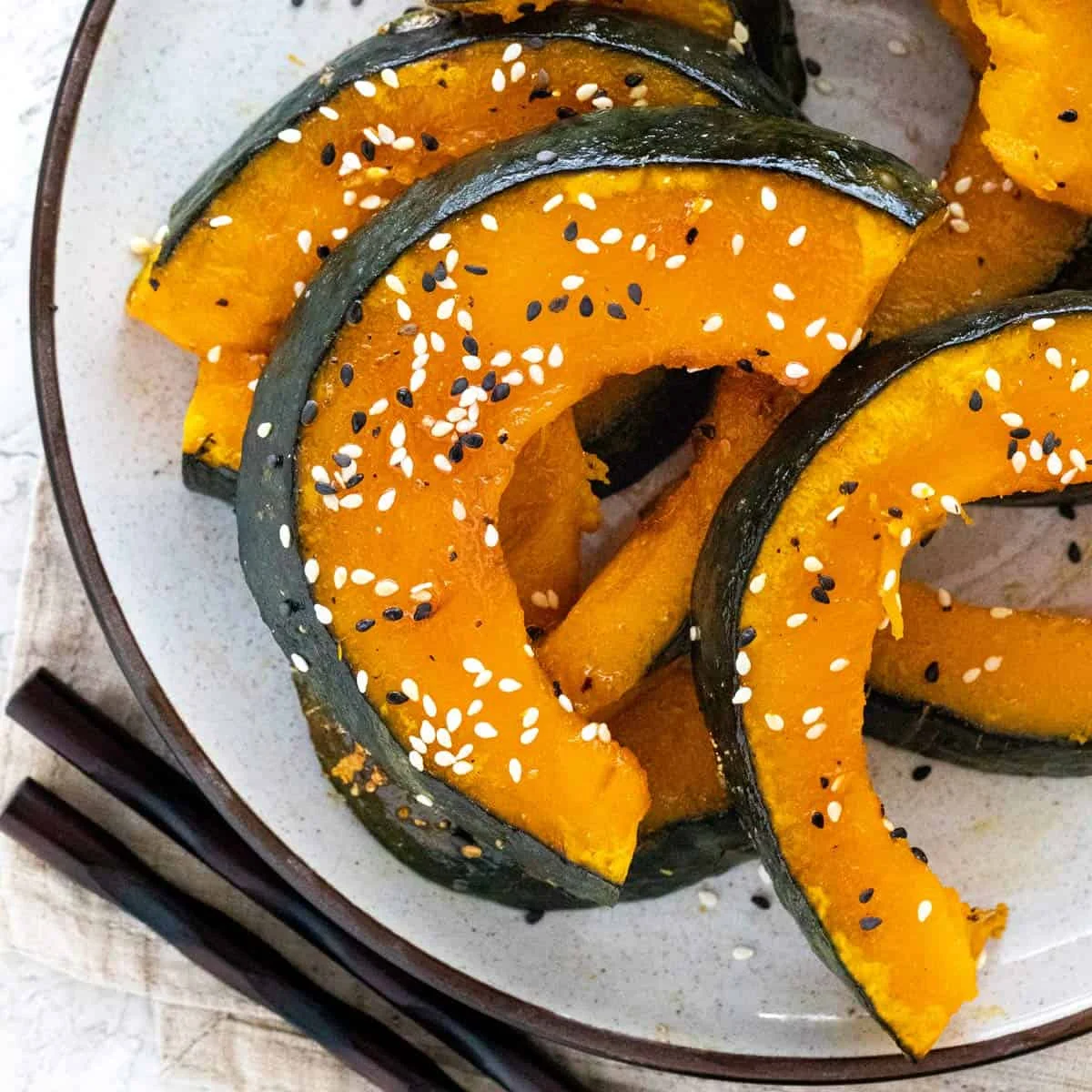
Kabocha squash wedges are roasted until tender, then brushed with a sweet, savoury soy and ginger glaze. This Japanese-inspired side is straightforward to prepare and pairs well with a range of mains.
Ingredients
- 907 g (2 pounds)kabocha squash
- 30 ml (2 tablespoons)olive oil or vegetable oil
- 2.5 ml (½ teaspoon)kosher salt
- 1.25 ml (¼ teaspoon)black pepper
- 30 ml (2 tablespoons)maple syrup
- 10 ml (2 teaspoons)soy sauce
- 1.25 ml (¼ teaspoon)ground ginger
- 5 ml (1 teaspoon)sesame seeds, toasted (optional)
Instructions
- 1
Heat the oven
Set a rack in the middle of the oven and heat it to 204°C (400°F).
- 2
Prepare the squash
Wash and dry the squash. Carefully cut it in half through the middle with a sharp chef’s knife, then scoop out the seeds with a spoon.
- 3
Cut into wedges
Set each half cut-side down and trim away the stem and the bottom root end. Using a rocking motion, cut the squash into wedges about 2.5 cm (1 inch) thick.
- 4
Season and arrange
Toss the squash slices in a large bowl with the oil, salt and pepper. Arrange them in a single layer on a foil-lined, rimmed baking sheet.
- 5
Roast until tender
Roast for 15 minutes, then turn the slices over. Roast for a further 10 to 15 minutes, until a fork passes easily through the squash.
- 6
Glaze and broil
Mix the maple syrup, soy sauce and ground ginger in a small bowl, then brush the mixture over the roasted squash. Place the tray in the centre of the oven and broil on high for about 2 to 3 minutes, until the surface is lightly browned. Turn the slices over, brush the other side with the sauce and broil for another 2 to 3 minutes.
- 7
Toast the sesame
Toast the sesame seeds in a small non-stick pan over medium heat for about 1 minute, until lightly browned.
- 8
Finish and serve
Scatter the toasted sesame seeds over the squash and serve warm.
What is kabocha squash?
Kabocha is a Japanese variety of winter squash, with firm orange flesh and an earthy, sweet flavour. It is often served roasted or simmered, and its skin can be eaten when cooked until tender.
Here, roasting brings out the squash’s sweetness, while a quick soy, maple and ginger glaze adds savoury depth. Sesame seeds give the finished wedges a light toasted note.
Nutrition and macros by portion
The nutrition label shows one serving as written: 86 calories, 1g protein, 13g carbs, 4g fat.
| Portion | Adjustment | kcal | Protein | Carbs | Fat |
|---|---|---|---|---|---|
| Lighter | Use less oil | 60 kcal | 1g | 9g | 3g |
| This serving | As written | 86 kcal | 1g | 13g | 4g |
| Hungry | Serve a larger portion | 129 kcal | 2g | 20g | 6g |
The squash and maple syrup provide most of the carbohydrates, while the oil contributes most of the fat; the soy sauce adds savoury flavour and some protein. Serve a portion with a protein-rich main and another vegetable to make a more complete plate.
Choosing and preparing the squash
Whole squash: choose one that feels firm and heavy for its size, with an intact rind. The method uses 907 g (2 pounds) of squash.
Cutting: kabocha can be dense, so use a stable cutting board and a sharp chef’s knife. Cut carefully through the middle, scoop out the seeds, then slice the halves into even wedges.
Roasting for tender wedges
Single layer: spread the pieces out on the lined baking sheet so hot air can circulate around them. Crowded wedges may soften without browning as well.
Doneness: turn the squash after 15 minutes, then check it after another 10 minutes. It is ready when a fork slides into the flesh easily.
Getting the glaze right
Mix first: combine the maple syrup, soy sauce and ground ginger before brushing them onto the roasted slices. This helps the ginger distribute evenly through the glaze.
Broil briefly: the maple syrup can brown quickly, so keep a close eye on the squash during each 2 to 3 minute broil. Brush and broil the second side as directed.
Serving suggestions
Serve the wedges warm as a side with rice, noodles or a simple grain bowl. Their sweet-savoury glaze also works alongside roasted vegetables or a main dish with a mild seasoning.
For a balanced plate, pair the squash with a source of protein and another vegetable. Add the sesame seeds just before serving for their toasted flavour.
Timing and texture
The stated total time is 45 minutes, including preparation and roasting. Cutting the squash into similarly thick wedges helps them cook at a similar rate.
The flesh should be soft enough to pierce with a fork, while the edges may take on some colour. If the wedges are not tender after the stated roasting time, continue roasting and check them in short intervals.
Recipe notes & tips
- Dry the squash after washing so the oil and seasonings coat it evenly.
- Line the rimmed baking sheet with foil for easier clean-up.
- Keep the wedges in one layer rather than stacking them.
- Use a fork to check tenderness before applying the glaze.
- Watch closely under the broiler because the maple glaze can brown fast.
- Toast the sesame seeds in a dry pan and remove them as soon as they are lightly browned.
Variations
- Use vegetable oil: swap it for the olive oil as the recipe allows.
- Skip the sesame: leave out the optional sesame seeds for a simpler finish.
- Add chilli: sprinkle a little chilli alongside the glaze for gentle heat.
- Boost the ginger: add a little more ground ginger for a stronger warming flavour.
- Serve with rice: pair the wedges with rice to make a more substantial side.
Common mistakes to avoid
- Uneven wedges: cut them to a similar thickness so they finish roasting at roughly the same time.
- Crowded baking sheet: leave space between the slices so they roast rather than steam.
- Rushing the roast: wait until a fork pierces the squash easily before glazing.
- Leaving the broiler unattended: check often so the maple glaze does not burn.
- Over-toasting sesame: take the seeds off the heat once they are lightly browned.
How to store
Refrigerate leftover squash in a covered container for up to 3 days. Reheat in a 180°C oven until warmed through, or use a microwave; the wedges may soften slightly after storage.
Frequently asked questions
Can I eat the skin of kabocha squash?
Yes, the skin can be eaten when cooked until tender. Wash and dry the squash well before cutting.
How do I know when the squash is cooked?
A fork should pass easily into the flesh. If it still feels firm, roast it for a little longer before adding the glaze.
Can I prepare the squash ahead of time?
You can wash, halve, seed and cut the squash in advance, then keep it covered in the refrigerator until you are ready to roast it.
Can I use another type of squash?
Another firm-fleshed winter squash can be used, though its sweetness and cooking time may differ. Check for tenderness as it roasts.
Can I make this without the sesame seeds?
Yes. The sesame seeds are optional, so you can leave them off without changing the roasting or glazing steps.
Cook it from the original
This recipe comes from jessicagavin.com. Their page has the author’s own photos, notes and tips — the best place to cook it from.
Open the recipe on jessicagavin.com