
Bumbu Dasar Merah: Basic Red Spice Paste
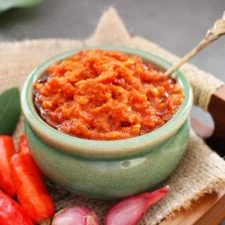
Bumbu dasar merah is an Indonesian red spice paste made from chillies, shallots, garlic and tomatoes, cooked down with oil and seasonings. Make a batch to keep in the fridge and use as a flavourful starting point for dishes such as nasi goreng or rendang.
Ingredients
- 200 gcurly or large red chillies, chopped
- 150 gshallots, peeled and chopped
- 50 ggarlic, peeled and chopped
- 2 largered tomatoes
- 1 tbsproasted shrimp paste (optional)
- to tastesalt
- 1 tspsugar
- 150 mlcooking oil
Instructions
- 1
Blend the ingredients
Blend the chillies, shallots, garlic and tomatoes into a fine paste.
- 2
Combine in the wok
Put the blended spices in a wok and add the salt, sugar, shrimp paste and cooking oil.
- 3
Bring to the boil
Bring the mixture to the boil over medium-high heat, then reduce the heat to medium-low.
- 4
Cook the paste
Continue cooking and stirring until the liquid has evaporated and the mixture is well cooked, about 45 minutes.
- 5
Cool and jar
Let the mixture cool completely, then transfer it to a clean jar with an airtight lid.
- 6
Refrigerate
Store the jar in the fridge.
What is bumbu dasar merah?
Bumbu dasar merah is a foundational Indonesian red spice paste, made here from chillies, shallots, garlic and tomatoes. It is prepared ahead and used to build flavour in a range of dishes, including nasi goreng and rendang.
This version blends the aromatics with tomato, then cooks them slowly in oil until the liquid has evaporated. That reduction makes a concentrated paste that is ready to add to later cooking.
Nutrition and macros by portion
The nutrition label shows one serving as written: 180 calories, 3g protein, 9g carbs, 14g fat.
| Portion | Adjustment | kcal | Protein | Carbs | Fat |
|---|---|---|---|---|---|
| Lighter | Use less oil | 126 kcal | 2g | 6g | 10g |
| This serving | As written | 180 kcal | 3g | 9g | 14g |
| Hungry | Use a larger portion | 270 kcal | 4g | 14g | 21g |
The cooking oil provides most of the energy and fat, while the chillies, shallots, garlic and tomatoes contribute most of the carbohydrates. The aromatics and optional shrimp paste contribute a little protein, but this paste is mainly a seasoning rather than a complete meal. Pair a measured amount with rice and a protein-rich dish or vegetables to make a more balanced plate.
Choosing the ingredients
Chillies: curly or large red chillies give the paste its colour and heat. The finished spice level depends on the chillies you use.
Aromatics: shallots and garlic form the savoury base, while tomatoes add moisture and a rounded, slightly tangy flavour.
Seasoning: roasted shrimp paste is optional but gives the mixture a savoury depth. Add salt to taste; the sugar provides a small counterpoint to the chilli and tomato.
Blending to a fine paste
A fine, even blend helps the ingredients cook down consistently. Scrape the blender sides as needed so larger pieces do not remain around the edges.
The method blends the ingredients before adding the oil and seasonings in the wok. If the blender struggles, pause and redistribute the mixture rather than leaving noticeable chunks.
Cooking off the liquid
The paste needs steady cooking after it comes to the boil. Once it reaches that point over medium-high heat, reduce the heat to medium-low and keep stirring.
Allow around 45 minutes for this stage. The stated cue is that the liquid has evaporated and the mixture is well cooked; judge by that change as well as the time.
Stirring and texture
As the moisture reduces, the paste thickens and needs regular stirring so it cooks evenly in the wok. Scrape along the bottom and sides to move the mixture through the oil.
Avoid turning the heat back up to hurry the process: the recipe relies on cooking the paste through after reducing the heat. Let it cool completely before putting it into the jar.
Using the paste
Use the paste as a flavour base in dishes such as nasi goreng or rendang, as suggested in the recipe description. Add it to the dish you are preparing and adjust the other seasoning to suit.
Its concentrated flavour pairs well with plain rice and simply cooked vegetables or protein. Keep the paste chilled between uses.
Recipe notes & tips
- Chop the chillies, shallots and garlic before blending so they process more evenly.
- Use a wok large enough to stir the paste without spilling.
- Keep the heat at medium-low after bringing the mixture to the boil.
- Stir regularly and scrape the bottom of the wok as the paste thickens.
- Cool the paste fully before sealing it in the jar.
Variations
- Skip the shrimp paste: leave it out for a version without that ingredient.
- Adjust the heat: choose milder or hotter red chillies to suit your preference.
- Make a smaller batch: scale all the ingredients down in the same proportion.
- Use a neutral oil: choose a cooking oil with a mild flavour so the aromatics remain prominent.
Common mistakes to avoid
- Coarse blending: blend until fine so the paste cooks more evenly.
- High heat throughout: reduce to medium-low after the mixture comes to the boil.
- Infrequent stirring: stir regularly and scrape the wok to help prevent sticking.
- Stopping too early: cook until the liquid has evaporated and the paste is well cooked.
- Jarring while warm: cool the paste completely before transferring it to the jar.
How to store
Once completely cool, transfer the paste to a clean airtight jar and refrigerate it, as directed. Use a clean utensil each time and discard it if its appearance or smell changes; the recipe does not specify a storage duration.
Frequently asked questions
How long does the paste take to cook?
The method gives around 45 minutes after bringing the mixture to the boil and reducing the heat. Cook until the liquid has evaporated and the paste is well cooked.
Can I leave out the shrimp paste?
Yes. The shrimp paste is optional, so you can omit it.
How do I know when the paste is ready?
The recipe's cues are that the liquid has evaporated and the mixture is well cooked. This takes about 45 minutes of cooking and stirring after reducing the heat.
Does the paste need to cool before I jar it?
Yes. Let it cool completely before transferring it to a clean jar with an airtight lid.
What can I use bumbu dasar merah in?
The recipe description names nasi goreng and rendang as examples. It can be used as a prepared spice base in a variety of dishes.
Cook it from the original
This recipe comes from cookmeindonesian.com. Their page has the author’s own photos, notes and tips — the best place to cook it from.
Open the recipe on cookmeindonesian.com