
Braised Portuguese Chicken with Chorizo
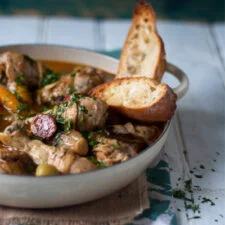
Chicken pieces are browned, then gently braised with chorizo, peppers, olives, wine and herbs until tender. It makes a hearty, savoury one-pot meal with plenty of sauce for crusty bread.
Ingredients
- 6–8 pieceschicken (thighs, legs and wings)
- to tastesalt and freshly milled pepper
- 5 ml (1 tsp)paprika
- about 60 g (½ cup), for dustingflour
- a little, for fryingolive oil
- 6pickling onions, peeled
- 3 clovesgarlic, crushed
- 2red chillies, seeded and left whole
- 2 smallred peppers, seeded and quartered
- 100 gchorizo, thinly sliced
- 2bay leaves
- 4 sprigsthyme
- 60 ggreen olives, pitted
- 375 ml (1½ cups)white wine
- 125 ml (½ cup)chicken stock
- a handfulparsley, roughly chopped
Instructions
- 1
Season chicken
Season the chicken with salt, pepper and paprika. Dust it lightly with flour, then shake off any excess.
- 2
Brown chicken
Heat a little olive oil in a heavy-based saucepan and brown the chicken pieces. Lift them out and set aside.
- 3
Sauté aromatics
Add a little more olive oil to the same pan. Gently sauté the onions, garlic, chillies, red peppers, chorizo, bay leaves and thyme for about 5 minutes, until the onions have browned and the chorizo starts releasing its oil.
- 4
Add liquids
Return the chicken to the pan and add the olives, white wine and chicken stock. Season to taste with salt and pepper.
- 5
Braise gently
Cover the pan and simmer gently for about 1½ hours, until the chicken is tender and comes away from the bone.
- 6
Finish and serve
Scatter over the chopped parsley and serve straight away with crusty bread to mop up the sauce.
What is Portuguese chicken with chorizo?
This is a homestyle braise built around chicken cooked slowly with wine, vegetables and herbs. Its Portuguese-inspired combination of peppers, olives and paprika gives the dish a savoury, gently warming character.
Here, chorizo adds smoky seasoning and richness to the pan, while the wine and stock form a sauce as the chicken cooks. The long, gentle simmer brings the flavours together and makes the meat tender.
Nutrition and macros by portion
The nutrition label shows one serving as written: 650 calories, 49g protein, 23g carbs, 34g fat.
| Portion | Adjustment | kcal | Protein | Carbs | Fat |
|---|---|---|---|---|---|
| Lighter | Less chorizo, more peppers | 455 kcal | 34g | 16g | 24g |
| This serving | As written | 650 kcal | 49g | 23g | 34g |
| Hungry | Add extra crusty bread | 975 kcal | 74g | 35g | 51g |
The chicken provides most of the protein, while the flour and the bread served alongside contribute carbohydrates. Chorizo and olive oil account for much of the fat, with olives adding further richness; serve with plenty of peppers or a green vegetable to balance the plate.
Why brown the chicken first?
Browning gives the chicken a deeper savoury flavour before it goes into the braising liquid. Dusting it lightly with flour also helps the sauce develop body as it cooks.
Work in batches if the pan is crowded, so the pieces can brown rather than steam. Shake off excess flour to avoid a pasty coating.
Let the chorizo season the pan
Chorizo releases seasoned oil as it warms, which flavours the onions, peppers and garlic. Keep the heat gentle during the roughly 5-minute sauté so the garlic does not burn.
The chillies are left whole after seeding, giving a more restrained warmth than chopping them into the sauce. Remove them before serving if you prefer not to eat them.
Keep the braise gentle
Once the wine and stock are in, bring the pan to a gentle simmer rather than a hard boil. Cover it and allow about 1½ hours for the chicken to become tender.
Check that the liquid is bubbling softly and that the chicken is coming away from the bone before serving. If the pan looks very dry during cooking, check the heat and keep the lid on.
Build a balanced sauce
The wine and stock loosen the browned flavourings in the pan, while olives add a briny contrast to the rich chorizo. Taste the sauce near the end before adding more salt, since both chorizo and olives can be salty.
The parsley is added at the end for a fresh finish. Serve with crusty bread as suggested, or spoon the chicken and sauce over potatoes or rice.
Plan the timing
Allow time for the chicken to brown and the vegetables to soften before the covered braise begins. The 1½-hour simmer is the longest stage, so start early enough to serve the chicken hot and tender.
Keep the heat low and steady rather than rushing the cooking with a stronger boil. This helps the chicken soften while the sauce reduces gently.
Recipe notes & tips
- Pat the chicken dry before seasoning to help it brown.
- Brown the chicken in batches if the saucepan is crowded.
- Keep the heat gentle when sautéing the garlic and chorizo.
- Taste the sauce before adding extra salt, as the chorizo and olives are already seasoned.
- Check that the chicken comes away from the bone before serving.
- Serve soon after adding the parsley so it stays fresh and green.
Variations
- Use chicken thighs: Choose bone-in thighs for a similarly tender braise.
- Adjust the heat: Leave out one or both chillies for a milder sauce.
- Add more vegetables: Include extra red pepper for a sweeter, vegetable-forward pan.
- Try black olives: Swap them for the green olives for a deeper, less sharp flavour.
- Change the herbs: Use rosemary in place of thyme for a more pronounced herbal note.
Common mistakes to avoid
- Crowding the pan: The chicken steams instead of browning; work in batches.
- Leaving excess flour on: It can make the coating pasty; shake off loose flour before frying.
- Cooking the garlic too hot: It can turn bitter; sauté the aromatics gently.
- Boiling the braise hard: The sauce can reduce too quickly; keep it at a gentle simmer.
- Salting too early: Chorizo and olives add salt; taste the finished sauce before adjusting.
- Serving before the chicken is tender: Give it the full braising time and check that it comes away from the bone.
How to store
Cool leftovers promptly and refrigerate in a covered container for up to 3 days. Reheat gently in a saucepan until piping hot throughout, adding a splash of stock or water if the sauce has thickened.
Frequently asked questions
Can I use boneless chicken?
Yes, but boneless pieces will cook faster than bone-in thighs, legs and wings. Check them for tenderness earlier so they do not dry out.
Can I make this without wine?
Replace the white wine with additional chicken stock. The sauce will have a different flavour, but the chicken can still braise in the liquid.
How do I know the chicken is ready?
It should be tender and come away from the bone easily. If it is still firm, continue simmering gently and check again.
Can I prepare it ahead?
Yes. Cool and refrigerate the cooked dish, then reheat it gently until piping hot. The sauce may thicken in the fridge, so loosen it with a little stock or water if needed.
What can I serve with it?
Crusty bread is ideal for the sauce. Potatoes, rice or a green vegetable also work well alongside the chicken.
Cook it from the original
This recipe comes from crushmag-online.com. Their page has the author’s own photos, notes and tips — the best place to cook it from.
Open the recipe on crushmag-online.com