
Egg White Pudding
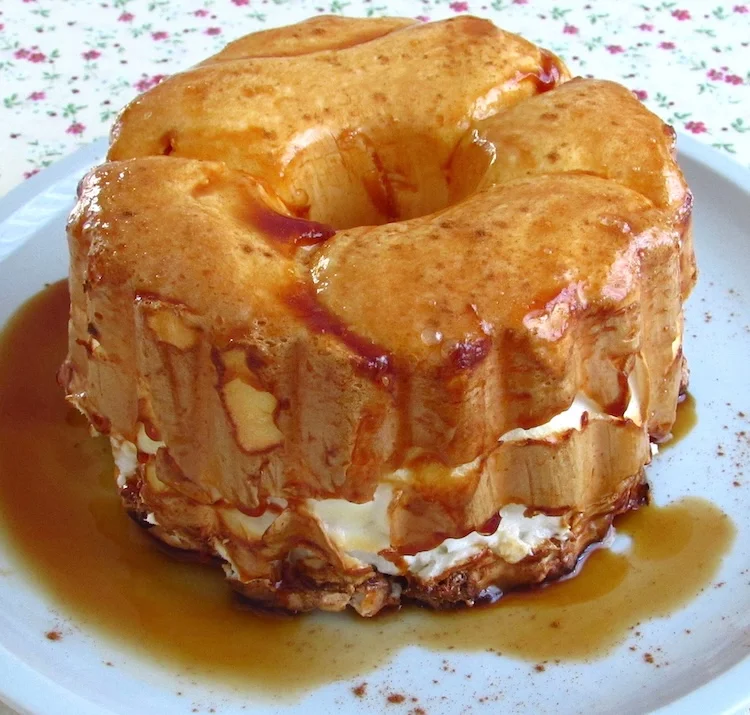
This Portuguese-style egg white pudding is a light, fluffy dessert flavoured with cinnamon and vanilla, set beneath a layer of caramel. It uses a short list of ingredients and bakes in about 20 minutes, making it a simple way to use leftover egg whites.
Ingredients
- 7egg whites
- 1 teaspoon (5 ml)ground cinnamon
- 1 teaspoon (5 ml)vanilla powder
- 150 g (2/3 cup)granulated sugar
- 150 g (2/3 cup)granulated sugar, for caramel
Instructions
- 1
Preheat the oven
Heat the oven to 180°C (350°F).
- 2
Make the caramel
Put 150 g (2/3 cup) of sugar into a 16 × 10 cm (6 1/3 × 4-inch) pudding mould. Set it over low heat on the hob, turning the mould carefully until the sugar has caramelised and coats it.
- 3
Mix the pudding
Using an electric mixer on medium speed, beat the egg whites with the remaining 150 g (2/3 cup) of sugar until the mixture is homogeneous. Add the cinnamon and vanilla powder, then fold them in with a spatula.
- 4
Bake until golden
Pour the mixture into the caramel-coated mould. Bake for about 20 minutes, or until golden; the timing depends on your oven.
- 5
Cool in the mould
Take the pudding out of the oven and leave it to cool completely in the mould.
- 6
Turn out to serve
Place a serving plate over the mould and invert it to release the pudding.
What is egg white pudding?
Egg white pudding, known in Portugal as pudim de claras and often associated with the airy dessert Molotof, is made mainly from whipped egg whites and sugar. This version adds cinnamon and vanilla, then turns out onto a coating of caramel.
Its appeal is the contrast between a soft, pale interior and the sweet caramel around it. The ingredient list is short, so careful mixing and baking matter.
Nutrition and macros by portion
The nutrition label shows one serving as written: 110 calories, 2g protein, 25g carbs, 0g fat.
| Portion | Adjustment | kcal | Protein | Carbs | Fat |
|---|---|---|---|---|---|
| Lighter | Smaller pudding slice | 77 kcal | 1g | 18g | 0g |
| This serving | As written | 110 kcal | 2g | 25g | 0g |
| Hungry | Larger pudding slice | 165 kcal | 3g | 38g | 0g |
Most of each serving's energy and carbohydrates come from the granulated sugar, including the sugar used for caramel; the egg whites provide nearly all the protein. Serve a slice with fresh fruit and a lighter main course if you want to balance the plate.
The two sugars
Pudding mixture: The first 150 g of sugar is beaten with the egg whites. Add it as directed and mix until the mixture looks even before folding in the flavourings.
Caramel: The other 150 g is heated in the mould. Keep the heat low and rotate the mould so the caramel spreads across its base and sides.
Mix gently after flavouring
Egg whites: Use an electric mixer at medium speed as the method specifies, until the mixture is homogeneous. The recipe does not call for a separate whipping stage or a particular peak test.
Spices: Fold the cinnamon and vanilla in with a spatula, rather than beating them vigorously. This helps distribute the flavourings without working the mixture more than needed.
Watch the colour
Baking: The oven should be at 180°C, and the stated baking time is about 20 minutes. Look for a golden surface, while allowing for differences between ovens.
Cooling: Let the pudding cool completely in its mould before turning it out. This gives it time to settle and makes the final release easier to manage.
Turning out the pudding
Plate: Choose a serving plate that is wider than the mould and has a little room to catch the caramel. Set it over the mould before turning the two over together.
Release: If the pudding does not come away straight away, avoid pulling at it; let gravity and the caramel do the work. The method calls for turning it out after it has cooled completely.
Serving ideas
Serve slices on their own so the cinnamon, vanilla and caramel remain the focus. A few fresh berries alongside can add a tart contrast.
For a fuller dessert, offer a small spoonful of fruit compote or serve it after a simple meal. Keep additions modest if you want the pudding itself to remain the main feature.
Recipe notes & tips
- Use the specified 16 × 10 cm mould so the mixture has the intended space to bake.
- Turn the mould carefully while caramelising so the base and sides are coated.
- Fold in the cinnamon and vanilla with a spatula after beating the egg whites and sugar.
- Begin checking for a golden surface at around 20 minutes, as ovens vary.
- Cool the pudding completely in the mould before attempting to turn it out.
Variations
- Citrus note: Add finely grated lemon zest with the cinnamon and vanilla.
- Almond aroma: Replace the vanilla powder with a small amount of almond extract.
- Extra spice: Add a pinch of ground nutmeg alongside the cinnamon.
- Berry pairing: Serve each slice with fresh raspberries or sliced strawberries.
- Cocoa finish: Dust the plated pudding lightly with cocoa powder just before serving.
Common mistakes to avoid
- High heat for caramel: The sugar can darken too quickly; keep the hob low and rotate the mould carefully.
- Uneven caramel: Some areas may remain uncoated; keep turning the mould until the caramel covers it.
- Vigorous folding: The mixture may lose some of its lightness; fold the flavourings in gently with a spatula.
- Relying only on the clock: Ovens vary; check for a golden surface around the 20-minute mark.
- Turning out too soon: A warm pudding may not hold together as well; let it cool completely in the mould.
How to store
Cover and refrigerate leftovers, and eat within 2–3 days. Serve chilled or let a portion stand briefly at room temperature; reheating is not recommended because it can affect the pudding's texture.
Frequently asked questions
Can I make the caramel ahead?
The method makes the caramel directly in the pudding mould before adding the mixture. Make it just before filling the mould so it remains workable.
How do I know when the pudding is baked?
The recipe gives about 20 minutes at 180°C and says to look for a golden surface. The exact time can vary with the oven.
Why does the pudding need to cool in its mould?
Cooling completely in the mould lets it settle before you turn it out. This also gives the caramel time to coat the pudding as it is released.
Can I use liquid vanilla instead of vanilla powder?
Yes, but the recipe specifies vanilla powder. If substituting, use a modest amount of extract so it does not add too much liquid to the mixture.
Can I make this with fewer egg whites?
The quantities are designed for 7 egg whites and a 16 × 10 cm mould. Changing the amount may affect the pudding's height and baking time.
What goes well with egg white pudding?
It is good on its own, or with fresh berries or a little fruit compote to contrast with the sweet caramel.
Cook it from the original
This recipe comes from foodfromportugal.com. Their page has the author’s own photos, notes and tips — the best place to cook it from.
Open the recipe on foodfromportugal.com