
Mamidikaya Mukkala Pachadi | Instant Raw Mango Pickle
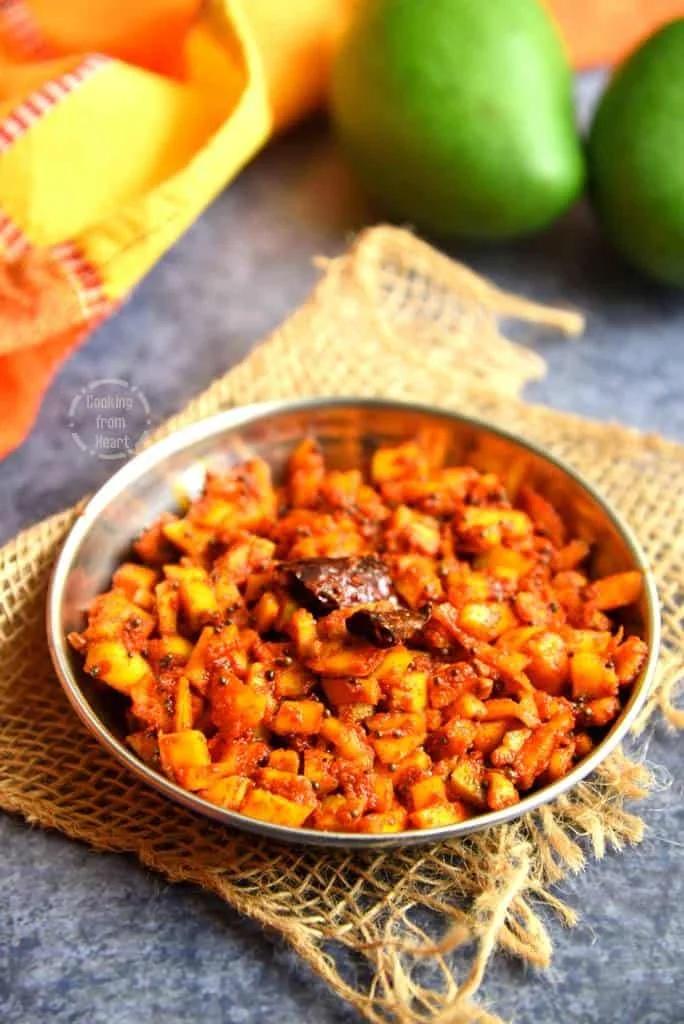
Mamidikaya Mukkala Pachadi is an Andhra-style instant pickle made with chopped raw mango, chilli and a fragrant sesame-oil tempering. It is a sharp, spicy accompaniment for rice dishes and comes together without cooking the mango.
Ingredients
- 80 g (½ cup)raw mango, peeled and finely chopped
- 1 tspred chilli powder
- ¼ tspturmeric powder
- 1 tspsalt
- 1 tbsp (15 ml)gingelly oil (sesame oil)
- ½ tspmustard seeds
- 6–8fenugreek seeds
- 1dried red chilli
- ¼ tspasafoetida
Instructions
- 1
Prepare the mango
Put 80 g (½ cup) finely chopped mango in a stainless-steel or glass bowl. Peeling it is recommended, though you can leave the skin on if you prefer.
- 2
Season with salt
Add 1 tsp salt and ¼ tsp turmeric powder to the mango.
- 3
Leave to rest
Mix well and set aside for 10–20 minutes. Alternatively, leave it for up to 8 hours or overnight.
- 4
Add the chilli
Add 1 tsp red chilli powder and mix it through the mango.
- 5
Make the tempering
Meanwhile, heat 1 tbsp (15 ml) sesame oil in a small pan. Add ½ tsp mustard seeds, 6–8 fenugreek seeds and 1 dried red chilli cut into small pieces. When the mustard seeds splutter, add ¼ tsp asafoetida and take the pan off the heat.
- 6
Combine and cool
Let the tempering cool completely, then add it to the mango mixture and stir well.
- 7
Store and serve
Transfer the pickle to an airtight glass or ceramic container and keep it in the fridge for up to 15–20 days. Serve alongside hot rice, sambar rice or curd rice.
What is Mamidikaya Mukkala Pachadi?
Mamidikaya Mukkala Pachadi is an Andhra-style raw mango pickle, with mamidikaya meaning raw mango and mukkalu referring to pieces. It combines tart mango with chilli, salt and a hot oil tempering.
This instant version relies on a short rest rather than a long pickling process. The mango stays in pieces, giving the pickle a fresh, crunchy contrast to soft rice.
Nutrition and macros by portion
The nutrition label shows one serving as written: 175 calories, 1g protein, 15g carbs, 14g fat.
| Portion | Adjustment | kcal | Protein | Carbs | Fat |
|---|---|---|---|---|---|
| Lighter | Use less sesame oil | 122 kcal | 1g | 11g | 10g |
| This serving | As written | 175 kcal | 1g | 15g | 14g |
| Hungry | Serve with extra rice | 263 kcal | 2g | 23g | 21g |
Most of the carbohydrates come from the raw mango, while the sesame oil provides most of the fat; the mango and spices contribute only a little protein. Since the pickle is salty and strongly flavoured, serve a small amount with rice and vegetables or dal to make a more balanced plate.
Choosing the mango
Firm fruit: Choose a hard, unripe mango with a distinctly sour flavour. A ripe or soft mango will be less tangy and can turn mushy as it rests.
Peeling: The recipe recommends removing the skin, but it is optional. Peeling gives the pieces a more even, tender bite; leaving it on adds texture.
The resting stage
Salt and turmeric: These season the mango as it rests and draw out some of its juices. Mix them evenly over the pieces so the flavour is distributed.
Timing: The 10–20 minute rest is enough for a quick version. For a more rested pickle, the method allows up to 8 hours or overnight before adding the chilli powder.
Getting the tempering right
Hot oil: Heat the sesame oil until ready for the seeds, then add the mustard and fenugreek. The mustard seeds should splutter; take care, as they can pop out of the pan.
Asafoetida: Add it after the mustard seeds have spluttered, then remove the pan from the heat. Let the tempering cool completely before mixing it into the mango.
Balancing the flavours
Tart and hot: Raw mango supplies the sharp acidity, while red chilli powder brings heat and the tempering adds savoury, aromatic notes. The amount of chilli can be adjusted to suit your preference.
Crunch and texture: Keep the mango pieces small and evenly chopped so they are easy to scoop with rice. Stir gently after adding the oil so the pieces stay intact.
Serving with rice
Rice dishes: Serve a little alongside hot plain rice, sambar rice or curd rice, as the bold, sour flavour complements softer and milder dishes. It also works as a small side with a South Indian meal.
Portioning: Treat it as a condiment rather than a main dish. Start with a small spoonful and add more to taste.
Recipe notes & tips
- Use a glass or stainless-steel bowl while the mango rests.
- Chop the mango into small, similar-sized pieces for an even seasoning.
- Keep the pan over moderate heat so the spices do not scorch.
- Let the tempering cool fully before combining it with the mango.
- Use a clean, dry spoon when serving from the storage container.
Variations
- Keep the skin: Leave it on for a firmer, more textured pickle.
- Adjust the chilli: Use less red chilli powder for a milder result.
- Make it ahead: Rest the salted mango for up to 8 hours or overnight before adding the chilli powder.
- Change the oil: Use another cooking oil if sesame oil is unavailable, though the flavour will differ.
- Serve as a side: Pair it with curd rice for a cooling contrast to the pickle's sharpness.
Common mistakes to avoid
- Using ripe mango: It can become soft and less tangy; choose firm, unripe fruit.
- Uneven chopping: Large pieces season less evenly; cut the mango into small, similar-sized pieces.
- Burning the spices: Overheated oil can make the tempering bitter; add the seeds carefully and take the pan off the heat after the asafoetida.
- Adding hot tempering: It can affect the fresh texture; wait until the oil mixture has cooled completely.
- Storing it carelessly: Moisture or a used spoon can contaminate the pickle; use a clean, dry utensil and an airtight container.
How to store
Store in an airtight glass or ceramic container in the fridge; the recipe gives a storage time of up to 15–20 days. Use a clean, dry spoon each time and serve it cold or let a portion come briefly to room temperature; reheating is not needed.
Frequently asked questions
Do I have to peel the raw mango?
No. Peeling is recommended in the method, but it is optional. The skin gives the pieces a firmer texture.
How long should the mango rest?
For a quick version, rest it with salt and turmeric for 10–20 minutes. The method also allows resting it for up to 8 hours or overnight.
When should I add the tempering?
Add it only after it has cooled completely. This keeps the process from cooking the mango.
What should I serve it with?
It is suggested as an accompaniment to hot rice, sambar rice or curd rice. Serve it in small amounts because its flavours are intense.
How long does the pickle keep?
The recipe says it can be refrigerated in an airtight glass or ceramic container for up to 15–20 days. Always use a clean, dry spoon when serving.
Cook it from the original
This recipe comes from cookingfromheart.com. Their page has the author’s own photos, notes and tips — the best place to cook it from.
Open the recipe on cookingfromheart.com