
Methi Malai Paneer Recipe | মেথি মালাই পনির
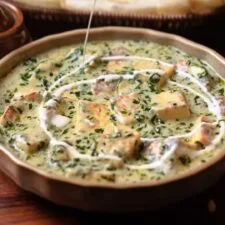
Methi malai paneer is a creamy Indian paneer curry with fresh fenugreek leaves, a gently spiced onion-and-cashew gravy and a finishing swirl of cream. Frying the paneer and fenugreek separately builds flavour before they meet in the sauce.
Ingredients
- 1 bunchfresh fenugreek leaves
- 500 gpaneer
- 4onions
- 12–15cashews
- 3green chillies
- a littleneutral oil
- 2–3 teaspoons for washing, 1 teaspoon for the soaking water, then to tastesalt
- ½ teaspoonasafoetida
- 1 teaspoonbutter
- 1 teaspoonghee
- a fewcloves
- 4–5green cardamom pods
- 1 teaspooncumin seeds
- 2 teaspoonsginger–garlic paste
- ½ teaspoonground white pepper
- 1½ teaspoonsground coriander
- to tastewater
- to tastemilk
- a littlesugar
- a littlefresh cream
Instructions
- 1
Prepare the fenugreek
Discard the tough ends and separate the fenugreek leaves from the stems. The stems can be used, but they may make the dish more bitter.
- 2
Chop the leaves
Chop the fenugreek leaves into small pieces.
- 3
Wash the fenugreek
Put the leaves in a bowl, add 2–3 teaspoons of salt and rinse well with water. Squeeze out the excess water and leave the leaves in a strainer to drain.
- 4
Cut the paneer
Cut 500 g paneer into cubes, or into another shape if you prefer.
- 5
Cook the gravy base
Bring water to the boil in a pan. Add the diced onions, 12–15 cashews and 3 green chillies, then cover and boil until cooked.
- 6
Fry the paneer
Heat a little neutral oil in a frying pan. Fry the paneer pieces until lightly golden on one side, turn them and colour the other side, then lift them out.
- 7
Soak the paneer
Put the fried paneer straight into water. Add 1 teaspoon of salt and ½ teaspoon of asafoetida, then stir to combine.
- 8
Fry the fenugreek
Melt 1 teaspoon of butter in the pan used for the paneer. Add the fenugreek and cook over a medium heat until its moisture has evaporated.
- 9
Cook the spices
Heat 1 teaspoon of ghee in the same pan. Add a few cloves, 4–5 cardamom pods and 1 teaspoon of cumin seeds. Once the cumin is fragrant, add 2 teaspoons of ginger–garlic paste and cook over a low heat until its raw smell has gone. Add salt to taste, ½ teaspoon of white pepper and 1½ teaspoons of ground coriander, then stir over a low heat.
- 10
Add the gravy
Stir the prepared onion gravy into the spices. Mix well and cook briefly, as the onion, cashews and chillies are already cooked.
- 11
Simmer with milk
When the gravy boils, add milk and stir. Cover and bring it back to a boil. Once the gravy is bubbling and the ghee begins to separate, add the paneer, followed by the fenugreek.
- 12
Finish and serve
Add a little sugar and mix it in. Boil for 1–1½ minutes, then finish with a little fresh cream. Stir and serve hot.
What is methi malai paneer?
Methi malai paneer is an Indian curry combining paneer, fresh fenugreek (methi) and a rich, creamy sauce. Methi means fenugreek, while malai refers to cream; the dish brings the herb’s distinctive savoury bitterness together with dairy.
This version builds its gravy from cooked onion, cashews and green chillies, then enriches it with milk, ghee and cream. Frying the paneer and leaves separately gives each ingredient a chance to develop flavour before they are combined.
Nutrition and macros by portion
The nutrition label shows one serving as written: 550 calories, 22g protein, 26g carbs, 40g fat.
| Portion | Adjustment | kcal | Protein | Carbs | Fat |
|---|---|---|---|---|---|
| Lighter | Less cream and ghee | 385 kcal | 15g | 18g | 28g |
| This serving | As written | 550 kcal | 22g | 26g | 40g |
| Hungry | Extra paneer portion | 825 kcal | 33g | 39g | 60g |
Paneer is the main source of protein and also contributes much of the fat, alongside the ghee, butter, oil, cashews and cream. The onion and milk contribute carbohydrates, with a little more from the sugar; pair a moderate portion with vegetables and a measured serving of bread or rice to balance the plate.
Choosing and preparing fenugreek
Leaves first: separate the leaves from the tougher stems and chop them small. The recipe cautions that including the stems can increase the fenugreek’s bitterness.
Rinse well: wash the leaves with 2–3 teaspoons of salt and water, then squeeze and drain them. Cooking the drained leaves in butter until their moisture evaporates helps prevent excess liquid in the finished curry.
Building the onion gravy
Cook the base: boil the diced onions, cashews and green chillies in water until cooked, then use this mixture as the gravy. The method does not give a separate blending instruction, so prepare the cooked mixture as directed by the original recipe rather than assuming an unlisted step.
Bloom the spices: warm the whole spices in ghee and let the cumin become fragrant before adding the ginger–garlic paste. Keep the heat low as you cook the paste and stir in the ground spices so they do not catch.
Getting paneer tender and golden
Fry lightly: brown both sides of the paneer in a little oil, then transfer it straight into water with salt and asafoetida. The recipe says this helps the seasoning infuse into the paneer.
Add it late: stir the paneer into the bubbling gravy after the milk has been added and the ghee starts to separate. This limits the time it spends simmering in the sauce.
Balancing the creamy sauce
Milk and cream: milk loosens the gravy, while a little fresh cream finishes it. Add the milk after the gravy has been stirred into the spices, then cover and bring the mixture back to a boil.
Sweetness: a little sugar is added after the fenugreek. It rounds out the flavour; use a small amount first, as the recipe does not specify a measured quantity.
Timing and doneness cues
The recipe gives a total time of 40 minutes but does not specify times for most individual stages. Allow enough time to prepare the leaves, cook the onion base and brown the paneer.
Look for cues rather than relying on a precise simmer time: the ginger–garlic paste should lose its raw smell, the gravy should bubble after adding milk, and the fenugreek needs only 1–1½ minutes in the final curry.
What to serve with it
The recipe suggests serving methi malai paneer hot with roomali roti, naan or paratha. These breads are useful for scooping up the creamy gravy.
For a more balanced plate, serve a moderate portion with a simple vegetable side. Rice is another practical accompaniment if you would rather not serve bread.
Recipe notes & tips
- Drain the washed fenugreek thoroughly before frying it so it can cook off its moisture.
- Brown the paneer on both sides rather than leaving it pale.
- Keep the heat low when cooking the ginger–garlic paste and ground spices.
- Add the milk once the gravy has been mixed into the spices, then cover it as it comes to a boil.
- Stir in the fenugreek near the end and limit the final boil to 1–1½ minutes.
- Finish with cream just before serving for a smooth, creamy sauce.
Variations
- Use butter: replace the ghee with butter as the recipe allows.
- Use neutral oil: cook the spices in neutral oil instead of ghee.
- Choose your shape: cut paneer into strips or triangles rather than cubes.
- Adjust the chilli: use fewer green chillies for a milder gravy.
- Serve with rice: pair the curry with rice instead of roomali roti, naan or paratha.
Common mistakes to avoid
- Leaving tough stems in: they can make the fenugreek more bitter; separate the leaves first.
- Skipping the drain: excess water can stop the fenugreek frying properly; squeeze and strain it well.
- Frying only one side: turn the paneer so both sides develop colour.
- Scorching the spices: keep the heat low after adding the ginger–garlic paste and ground spices.
- Boiling the fenugreek for too long: add it near the end and cook for just 1–1½ minutes.
- Adding too much sugar: start with a little, since the recipe does not specify an exact amount.
How to store
Cool leftovers promptly, transfer them to a covered container and refrigerate for up to 3 days. Reheat gently in a pan until hot throughout, adding a splash of milk or water if the gravy has thickened; avoid prolonged boiling so the paneer stays tender.
Frequently asked questions
Can I use frozen fenugreek leaves?
Yes, but thaw them and squeeze out excess water before frying in butter. Cook until their moisture has evaporated, as with fresh leaves.
Can I use water instead of milk?
Yes. The recipe says water can be used in place of milk, though the sauce will be less creamy.
How do I make the curry less bitter?
Remove the tougher stems, wash the leaves with salt as directed, and cook them in butter before adding them to the gravy.
Does the paneer need to be fried?
The method fries it until lightly golden on both sides, then puts it into seasoned water. You can cut it into a different shape, but keep the browning step for the flavour described in the recipe.
What can I serve with methi malai paneer?
Roomali roti, naan and paratha are suggested in the recipe. Rice also works as an accompaniment.
When should I add the cream?
Stir in a little fresh cream at the end, after the short final simmer with the fenugreek.
Cook it from the original
This recipe comes from atanurrannagharrecipe.com. Their page has the author’s own photos, notes and tips — the best place to cook it from.
Open the recipe on atanurrannagharrecipe.com