
Christmas Mince Pies
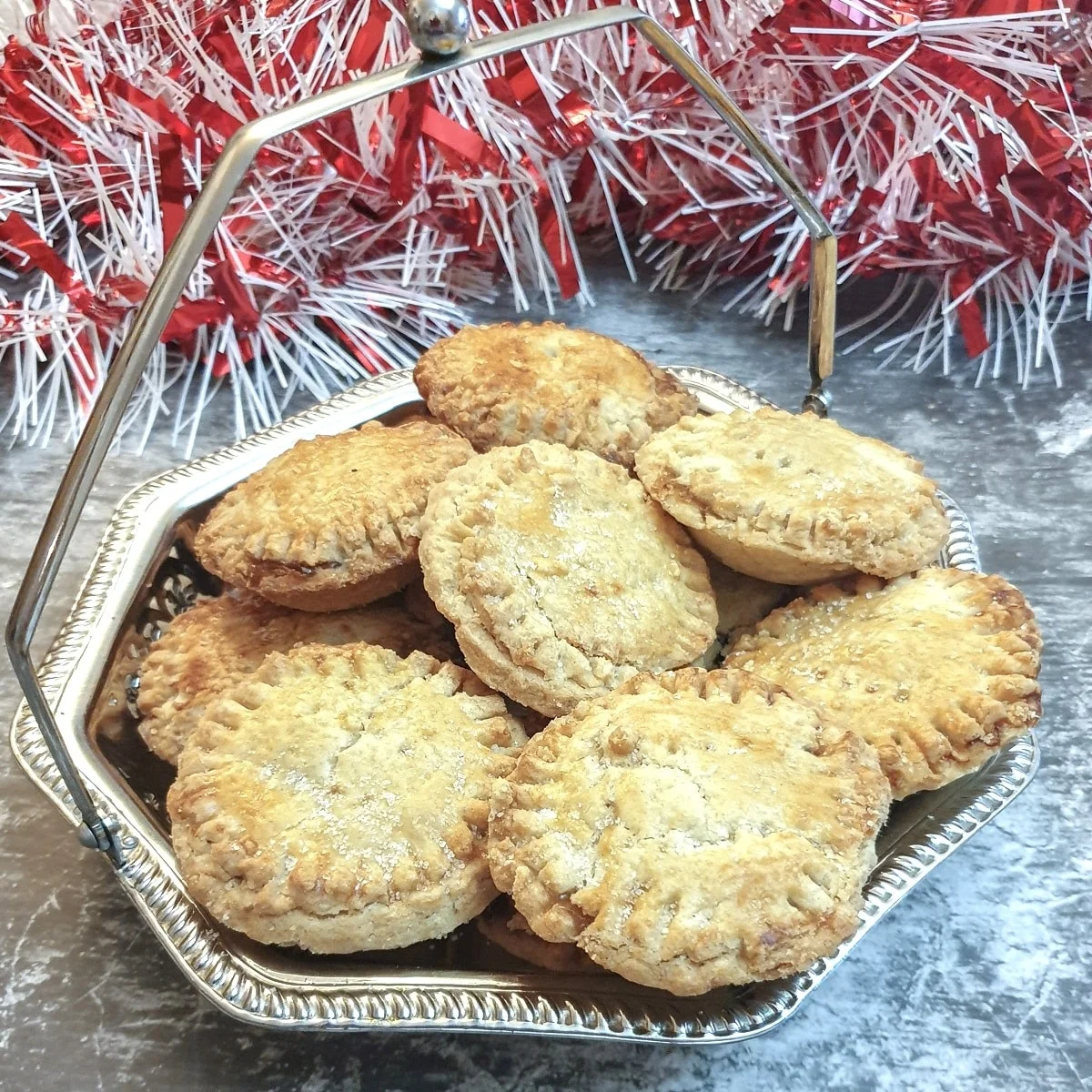
These British Christmas mince pies have buttery sweet pastry wrapped around a spiced fruit mincemeat filling enriched with grated apple and orange essence. They make a festive batch to share, with crisp golden tops and a light dusting of icing sugar if you like.
Ingredients
- 375 g (2½ cups)plain flour, sifted
- 225 g (8 oz)butter, cubed
- 125 g (9 tablespoons)caster sugar
- 1 largeegg yolk
- 1–2 tablespoons, if requiredice-cold water
- ½ teaspoonsalt
- 400 g (14 oz)fruit mincemeat
- 1apple
- 1 teaspoonorange essence
- 1 smallegg, beaten, for glazing
- To taste, optionalicing sugar, for sprinkling
- As neededadditional flour, for rolling the pastry
Instructions
- 1
Cream butter and sugar
Put the butter and caster sugar in a food processor and pulse until combined. Alternatively, beat them together in a mixing bowl with a wooden spoon.
- 2
Add the yolk
Add the egg yolk and process for 1 minute, or until the mixture is pale and creamy.
- 3
Mix the pastry
Mix in the salt and half the flour, then add the remaining flour and mix until the dough forms a shaggy ball. If it seems too dry or floury to come together, add 1–2 tablespoons of ice-cold water.
- 4
Shape and chill
Turn the dough onto a lightly floured surface and press it into a flat disc. Put it in a plastic bag or cover it with cling film, then chill in the refrigerator for 30 minutes.
- 5
Heat the oven
Preheat the oven to 200°C (400°F).
- 6
Mix the filling
Peel and grate the apple, then combine it in a mixing bowl with the mincemeat and orange essence.
- 7
Grease the tin
Grease a 12-hole tart tin with a little butter, or lightly coat it with cooking spray.
- 8
Cut the pastry bases
Take one-third of the pastry and roll it out to about 3 mm (⅛ inch) thick, dusting the work surface with additional flour if needed. Use a 7 cm (3-inch) cutter to cut rounds and fit them into the greased holes of a 12-hole jam-tart tin.
- 9
Make more bases
Repeat with the second third of the pastry to make 18 rounds in total. Keep the remaining third for the lids, using pastry scraps if needed.
- 10
Fill the cases
Put 1 tablespoon of filling into each pastry case. Avoid overfilling, as the mixture can bubble out during baking.
- 11
Cut the lids
Roll out the remaining pastry and cut 6 cm (2½-inch) rounds for the lids. Brush the underside of each round with lightly beaten egg.
- 12
Seal and glaze
Place the lids egg-side down over the pies. Press the edges with a fork to seal and make holes in each top. Brush with beaten egg and, if you like, sprinkle with a little sugar.
- 13
Bake until golden
Bake in the preheated oven at 200°C (400°F) for 12–15 minutes, until golden. Remove from the oven and leave to cool.
- 14
Dust with icing sugar
Once cooled, sprinkle with icing sugar if desired.
What are Christmas mince pies?
Mince pies are small British pastries traditionally served around Christmas, filled with fruit mincemeat: a sweet mixture of dried fruit and spices. Despite the name, the filling in this recipe is fruit-based.
Here, shop-bought mincemeat is mixed with grated apple and orange essence, then enclosed in sweet, buttery pastry. Chilling the pastry helps it rest before rolling and shaping.
Nutrition and macros by portion
The nutrition label shows one serving as written: 297 calories, 4g protein, 39g carbs, 13g fat.
| Portion | Adjustment | kcal | Protein | Carbs | Fat |
|---|---|---|---|---|---|
| Lighter | Smaller pie portion | 208 kcal | 2g | 27g | 9g |
| This serving | As written | 297 kcal | 4g | 39g | 13g |
| Hungry | Add another mince pie | 446 kcal | 5g | 59g | 19g |
Most of the carbohydrates come from the flour, sugar and fruit mincemeat, while butter contributes much of the fat. The pastry and egg yolk provide a little protein, with the filling adding some as well. Pair a pie with fruit or a yoghurt-based accompaniment if you want to round out the serving.
The sweet pastry
Butter and sugar: beat these together before adding the yolk, so the pastry starts with an even, creamy mixture.
Flour and water: add the flour in two portions and mix only until the dough comes together. Use the optional cold water sparingly if the mixture looks too dry to form a shaggy ball.
A fruit-filled centre
Mincemeat: the jar supplies the recipe's spiced, fruity base, so stir it thoroughly with the grated apple and orange essence before filling the cases.
Portioning: add 1 tablespoon of filling to each case and leave room at the top. Overfilled pies can bubble over as they bake.
Rolling and shaping
Pastry bases: roll the first two portions to about 3 mm thick and cut 18 rounds with a 7 cm cutter. Dust the surface with extra flour as needed to prevent sticking.
Lids: use the final portion of pastry for 6 cm rounds. Brushing the underside with egg helps the lids meet the pastry cases, while fork-pressed edges seal them.
Know when they are done
Bake the pies at 200°C for 12–15 minutes, watching for golden pastry. The recipe gives colour as the doneness cue, so check them towards the shorter end of the baking time.
The small holes in the lids let steam escape. Let the pies cool before adding icing sugar so the finish stays visible.
Serving the pies
Serve the pies cooled or just warm, with icing sugar if desired. They pair well with tea or coffee, or can be served as a festive dessert with cream or custard.
Recipe notes & tips
- Keep the pastry chilled for the full 30 minutes before rolling.
- Add the cold water a little at a time only if the dough needs help coming together.
- Use a light dusting of flour on the work surface to stop the pastry sticking.
- Keep the filling to 1 tablespoon per case to reduce bubbling over.
- Make small holes in each lid so steam can escape while the pies bake.
- Cool the pies before dusting them with icing sugar.
Variations
- Citrus finish: add a little extra orange essence to the filling if you want a more pronounced orange note.
- Different fruit: use another apple variety, peeled and grated, in place of the apple specified.
- Decorative tops: cut small pastry shapes from the scraps and place them on the lids before glazing.
- Skip the sugar dusting: leave off the optional icing sugar for a less sweet finish.
- Serve with custard: offer warm pies with custard for a more substantial dessert.
Common mistakes to avoid
- Overworking the dough: mix only until it forms a shaggy ball, then press it together by hand.
- Dry pastry: add the optional ice-cold water gradually, using only enough to help the dough come together.
- Sticky rolling surface: dust the work surface lightly with the additional flour.
- Overfilled cases: measure 1 tablespoon of filling into each one and leave space beneath the lid.
- Loose lids: brush their undersides with egg and press the edges firmly with a fork.
- Burnt pastry: check the pies at 12 minutes and remove them once golden.
How to store
Once completely cool, store the pies in an airtight container at room temperature and eat within a few days. Reheat briefly in a low oven until warmed through; add icing sugar after reheating if desired.
Frequently asked questions
Can I make the pastry without a food processor?
Yes. Beat the butter and sugar together in a mixing bowl with a wooden spoon, then mix in the remaining pastry ingredients as directed.
Why does the pastry need to chill?
The recipe rests the dough in the refrigerator for 30 minutes before rolling. This gives the pastry time to rest and makes it ready for shaping.
Can I make the filling ahead?
You can combine the mincemeat, grated apple and orange essence ahead of assembling the pies. Keep the mixture covered in the refrigerator until needed.
How do I stop the filling bubbling out?
Measure 1 tablespoon into each pastry case and avoid adding extra. Make holes in the lids as directed so steam can escape.
Can I freeze the mince pies?
Freeze the baked pies once fully cool in a suitable airtight container. Thaw them before warming in the oven; add icing sugar after reheating.
How can I tell when they are baked?
The recipe's cue is golden pastry after 12–15 minutes at 200°C. Check them from 12 minutes onwards.
Cook it from the original
This recipe comes from foodleclub.com. Their page has the author’s own photos, notes and tips — the best place to cook it from.
Open the recipe on foodleclub.com