
Scottish Shortbread
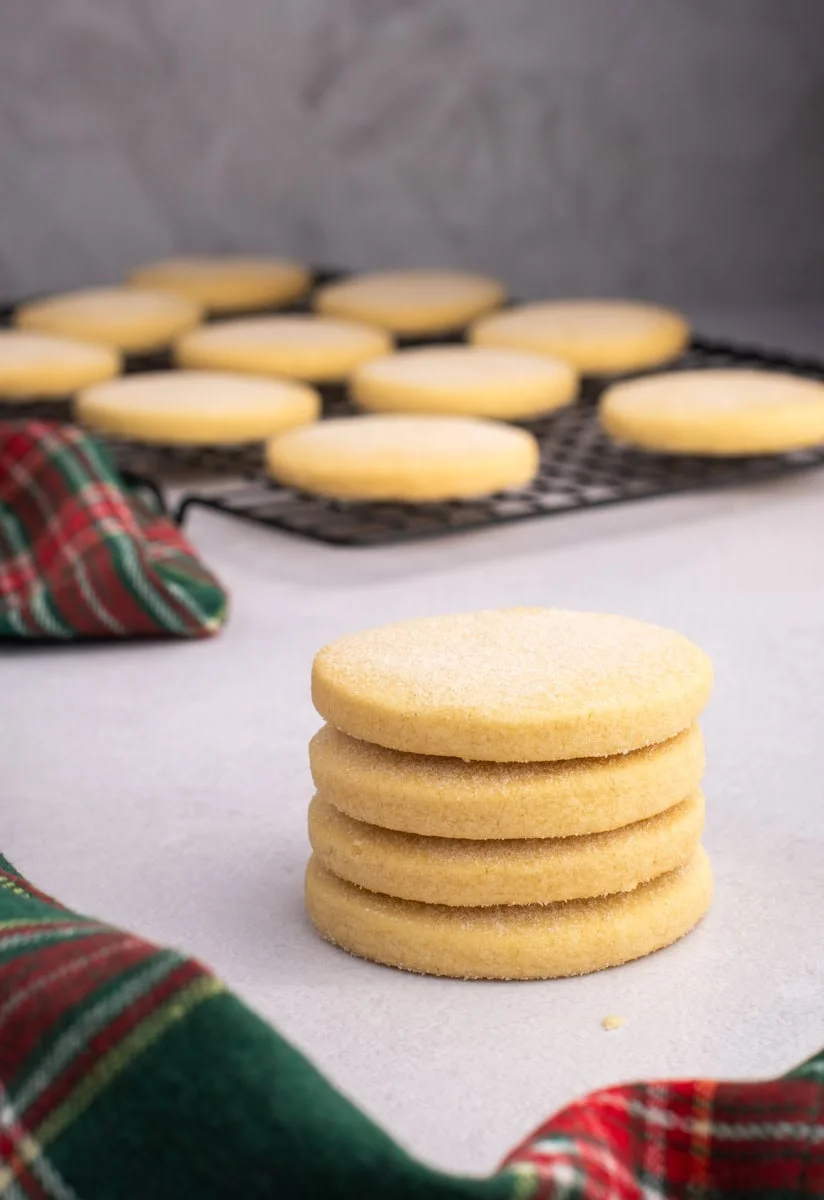
Scottish shortbread is a rich, crisp-edged biscuit with a tender, crumbly centre. This simple version uses butter or block margarine, caster sugar and a little cornflour, making it well suited to sharing with a cuppa or giving as a gift.
Ingredients
- 75 gCaster sugar
- 150 gBlock margarine or butter, at room temperature
- 200 gPlain flour
- 25 gCornflour
Instructions
- 1
Prepare the trays
Heat the oven to 180°C, or 160°C for a fan-assisted oven (Gas Mark 4 or 350°F). Grease a couple of baking trays with a little excess butter or margarine and set them aside.
- 2
Cream butter and sugar
In a large bowl, beat the butter or margarine with the sugar until the mixture looks lighter in colour and feels fluffy.
- 3
Make the dough
Sift in the plain flour and cornflour, then mix until a stiff dough begins to form, using your hands if needed. Turn it onto a floured worktop and gently bring it together into a smooth dough, handling it as little as possible.
- 4
Shape the biscuits
Roll the dough to between 5 mm and 1 cm (¼–½ inch) thick, according to how thick you want the biscuits. Cut them into your chosen shapes and sizes, place them on the prepared trays and prick the tops with a fork.
- 5
Bake until golden
Bake in the preheated oven for around 15–20 minutes, until the edges are lightly golden and the tops look dry.
- 6
Cool the shortbread
Take the trays out of the oven and sprinkle a little extra sugar over each biscuit. Leave them on the trays until cool enough to touch, then transfer them to a wire rack to cool completely.
What is Scottish shortbread?
Shortbread is a traditional Scottish biscuit known for its buttery richness and delicate, crumbly texture. This family-style version uses a straightforward mix of butter or margarine, sugar and flour, with cornflour to help give the biscuits a tender bite.
The dough is shaped and pricked before baking, then finished with a little sugar while warm. Its simple ingredients and neat shapes make it a natural choice for festive sharing, gifting or an everyday cup of tea.
Nutrition and macros by portion
The nutrition label shows one serving as written: 182 calories, 2g protein, 21g carbs, 10g fat.
| Portion | Adjustment | kcal | Protein | Carbs | Fat |
|---|---|---|---|---|---|
| Lighter | Smaller biscuits | 127 kcal | 1g | 15g | 7g |
| This serving | As written | 182 kcal | 2g | 21g | 10g |
| Hungry | Larger portion | 273 kcal | 3g | 32g | 15g |
The flour and sugar provide most of the carbohydrates, while the butter or margarine supplies most of the fat; the small amount of protein comes mainly from the flour. Enjoy a biscuit with tea, or serve it alongside fruit for a more balanced snack.
Choose your fat
Butter or margarine: Use block margarine or butter, as specified, and bring it to room temperature so it creams smoothly with the sugar.
Caster sugar: Its fine texture blends readily into the fat, helping the dough come together without needing extra liquid.
Handle the dough gently
Light touch: Once the flour and cornflour go in, mix only until a stiff dough forms. Kneading or working it for too long can make the biscuits less tender.
Floured surface: A light dusting helps with rolling, but avoid adding much extra flour, which can change the dough’s feel.
Set the thickness
Thinner biscuits: Roll towards 5 mm for a more delicate biscuit, and keep an eye on them as they bake.
Thicker biscuits: Roll towards 1 cm for a more substantial bite. Whichever thickness you choose, aim for an even sheet so the biscuits bake consistently.
Look for doneness
Edge colour: The edges should be lightly golden rather than deeply browned.
Dry tops: The surface should look dry when the biscuits are ready. They will still be delicate when hot, so let them settle on the baking tray before moving them.
Serve and share
With a cuppa: Serve the cooled biscuits with tea or coffee, or arrange them on a plate for a festive table.
For gifting: Let the shortbread cool completely before packing it, so trapped warmth does not soften the biscuits.
Recipe notes & tips
- Let the butter or margarine soften at room temperature before creaming.
- Sift the plain flour and cornflour together to help distribute them through the dough.
- Use as little extra flour as possible when bringing the dough together.
- Prick each biscuit with a fork before baking, as directed.
- Leave the biscuits on the tray until firm enough to move without breaking.
- Cool the shortbread completely before storing or packing it.
Variations
- Change the shapes: Cut the dough into fingers, rounds or another simple shape.
- Adjust the thickness: Roll closer to 5 mm for thinner biscuits or 1 cm for thicker ones.
- Choose butter: Use butter instead of block margarine for a buttery flavour.
- Use block margarine: Choose block margarine instead of butter for the alternative in the recipe.
- Finish with sugar: Sprinkle a little extra sugar over the biscuits while they are still warm.
Common mistakes to avoid
- Overworking the dough: Handle it as little as possible once it comes together to keep the biscuits tender.
- Uneven rolling: Aim for an even thickness so the biscuits bake at a similar rate.
- Moving them too soon: Let the shortbread cool on the tray until it is firm enough to handle.
- Baking until dark: Take the biscuits out when the edges are lightly golden and the tops look dry.
- Skipping the fork pricks: Prick the tops before baking, as the method directs.
How to store
Once completely cool, store the shortbread in an airtight container at room temperature and enjoy within about a week for best texture. If it softens, warm it briefly in a low oven and let it cool before serving.
Frequently asked questions
Can I use butter or margarine?
Yes. The recipe gives 150 g of block margarine or butter, at room temperature.
How thick should I roll the dough?
Roll it between 5 mm and 1 cm thick, choosing the thickness you prefer.
How do I know when the shortbread is baked?
Look for lightly golden edges and tops that appear dry. The biscuits will be delicate while hot.
Why should I prick the biscuits?
Pricking the tops with a fork is part of the recipe’s shaping method. Do it before the trays go into the oven.
Can I move the biscuits straight off the tray?
No. Leave them on the baking sheet until they are cool enough to touch, then transfer them to a wire rack to finish cooling.
Can I make the shortbread ahead?
Yes. Once fully cooled, store it in an airtight container at room temperature and serve within about a week for the best texture.
Cook it from the original
This recipe comes from bakingwithgranny.co.uk. Their page has the author’s own photos, notes and tips — the best place to cook it from.
Open the recipe on bakingwithgranny.co.uk