
Traditional meat and potato pie
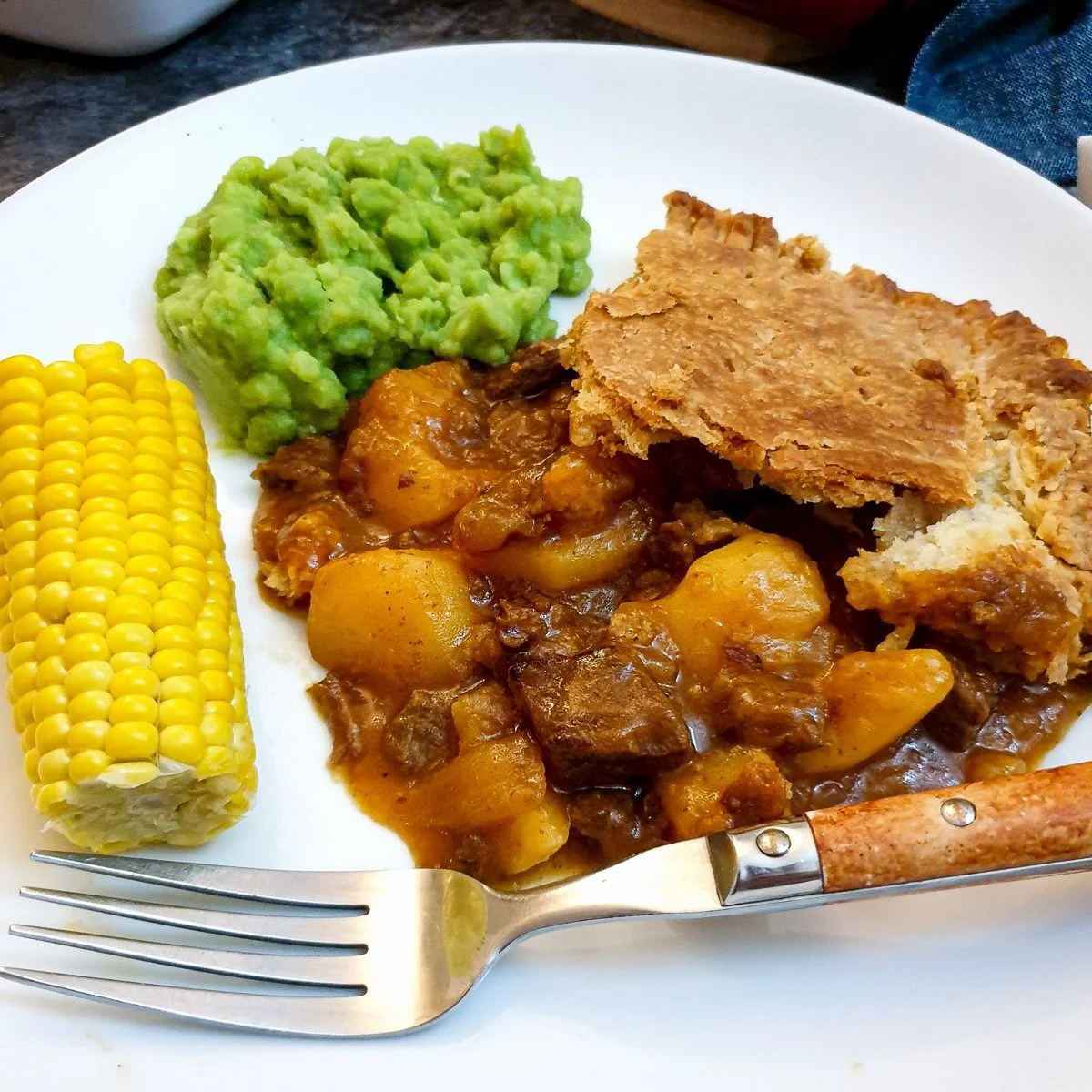
This traditional Yorkshire meat and potato pie combines tender steak, potatoes and thickened gravy beneath a soft, buttery suet pastry crust. It makes a warming supper, especially with mushy peas or vegetables on the side.
Ingredients
- 570 g (1¼ lb)stewing steak, cubed
- 680 g (1½ lb)potatoes, cubed
- 2 mediumonions, chopped
- 2 tbspWorcestershire sauce
- 2 tbsptomato purée
- 1 tbspDijon mustard
- 2beef stock cubes
- 475 ml (2 cups)boiling water
- ½ tsp, or to tastesalt
- 1–2 tbspsunflower oil, for browning the meat and onions
- 200 g (1½ cups)self-raising flour
- 100 g (½ cup)beef suet
- 60 g (2 oz)butter
- 60 ml (¼ cup)cold water
- ½ tspsalt
Instructions
- 1
Prepare the meat
Cut the steak into 2.5 cm cubes, trimming off and discarding any fat.
- 2
Chop the vegetables
Peel and roughly chop the onions into pieces about 2.5 cm across. Peel the potatoes, cube all but one, and grate the remaining potato; you will need about 240 ml (1 cup) grated potato to help thicken the stock.
- 3
Mix the stock
Dissolve the stock cubes in 475 ml (2 cups) boiling water. Stir in the Worcestershire sauce, tomato purée, Dijon mustard and salt.
- 4
Brown the steak
Heat the sunflower oil in a frying pan and brown the steak in batches. Transfer it to a pressure cooker or saucepan and set aside.
- 5
Soften the onions
Cook the onions in the same pan over a moderate heat for about 5 minutes, until beginning to soften and picking up the browned residue. Add them to the steak.
- 6
Cook the filling
Pour the prepared stock over the steak and onions, then stir in the grated potato. For a pressure cooker, cook on the highest setting for 30 minutes; for a saucepan, cover and simmer for 2 hours, checking occasionally and adding extra stock if it starts to boil dry.
- 7
Add the potatoes
Stir in the cubed potatoes. In a pressure cooker, cook for a further 8 minutes on the medium setting; in a saucepan, cover and cook for 15–20 minutes, until the potatoes are soft and the gravy has thickened. Taste and add more salt if needed.
- 8
Cool the filling
Transfer the meat and potato mixture to a large pie dish and leave it to cool.
- 9
Heat the oven
Preheat the oven to 200°C (400°F).
- 10
Make the pastry
Put the flour, salt, suet and butter in a large mixing bowl. Rub the butter and suet into the flour with your fingertips until it looks like coarse breadcrumbs; the suet will not break down fully, which is expected.
- 11
Bring dough together
Add enough cold water to form a soft dough, starting with about three-quarters of the water and adding more as needed. Cover the dough with cling film and chill it in the refrigerator for 30 minutes.
- 12
Cover the pie
Lightly flour the work surface and roll the pastry into a rectangle large enough to cover the dish. Lay it over the cooled filling; it can rest directly on top, where the gravy will soak into its underside as it bakes.
- 13
Seal the pastry
Press the pastry against the dish edges with a fork and trim away the excess. Prick the top with a fork and brush it lightly with milk.
- 14
Bake and serve
Bake for 25–30 minutes, until the pastry is golden brown. Remove from the oven and serve with mushy peas or your favourite vegetables.
What is traditional meat and potato pie?
Meat and potato pie is a hearty British pie, particularly associated with Yorkshire, made with beef, potatoes and gravy beneath a pastry top. This version uses suet pastry, a traditional style with a tender, soft bite.
Grated potato is stirred into the stock to help thicken the filling, while the pastry sits directly over the cooled mixture and absorbs some of its gravy as it bakes.
Nutrition and macros by portion
The nutrition label shows one serving as written: 758 calories, 43g protein, 83g carbs, 28g fat.
| Portion | Adjustment | kcal | Protein | Carbs | Fat |
|---|---|---|---|---|---|
| Lighter | Less pastry, more vegetables | 531 kcal | 30g | 58g | 20g |
| This serving | As written | 758 kcal | 43g | 83g | 28g |
| Hungry | Larger slice, extra peas | 1137 kcal | 65g | 124g | 42g |
The potatoes and flour provide most of the carbohydrates, while the steak supplies much of the protein. Suet, butter and the sunflower oil contribute most of the fat. Serve a moderate slice with plenty of mushy peas or vegetables to balance the rich pie.
Building a flavourful filling
Browned steak: cooking it in batches gives the meat room to colour rather than steam. The residue left in the pan adds flavour when the onions soften in it.
Stock and seasoning: Worcestershire sauce, tomato purée and Dijon mustard give the beef stock a savoury, tangy depth. Taste the finished filling before assembling and adjust the salt if needed.
Getting the potatoes right
Grated potato: this melts into the cooking liquid and helps give the gravy body. Keep the rest of the potatoes in chunks so they remain distinct in the filling.
Doneness: the chunks should be soft when pierced, and the gravy should look thickened before the filling goes into the pie dish. Cool the mixture before adding the pastry.
Making soft suet pastry
Rubbing in: work the butter and suet into the flour until it resembles coarse breadcrumbs. Small pieces of suet may remain; they do not need to disappear completely.
Adding water: start with about three-quarters of the stated amount and add the rest gradually until a soft dough forms. Chilling it for 30 minutes makes it easier to roll out.
Choosing the cooking method
Pressure cooker: the method cooks the steak for 30 minutes, then adds the potatoes for a further 8 minutes. Follow the cooker’s appropriate settings as described in the recipe.
Saucepan: allow 2 hours for the steak, then 15–20 minutes for the potatoes. Check the liquid while the meat simmers and top it up with extra stock if it begins to boil dry.
Serving the pie
Mushy peas are a classic partner for this filling, while other favourite vegetables also work well. Their freshness and lighter texture balance the rich pastry and gravy.
Let the filling cool before covering it so the pastry is easier to handle. The finished pie is ready when the top has turned golden brown after 25–30 minutes in the oven.
Recipe notes & tips
- Brown the steak in batches so it has space to colour in the pan.
- Use the same frying pan for the onions to collect the browned residue from the meat.
- Grate one potato finely enough to help it thicken the stock as it cooks.
- Add the cold water to the pastry gradually; the dough should be soft, not wet.
- Cool the filling before laying the pastry over it.
- Check that the pastry is golden before taking the pie from the oven.
Variations
- Add carrots: include chopped carrots with the cubed potatoes for extra vegetables in the filling.
- Use lamb: replace the stewing steak with cubed stewing lamb for a different savoury filling.
- Change the mustard: use another prepared mustard in place of Dijon for a slightly different flavour.
- Add herbs: stir chopped fresh thyme into the stock for an aromatic note.
- Serve with greens: swap mushy peas for steamed cabbage or green beans.
Common mistakes to avoid
- Crowding the pan: the steak may steam instead of browning; cook it in batches.
- Adding all the water at once: the pastry can become too wet; add it gradually until a soft dough forms.
- Skipping the grated potato: the gravy may not thicken in the same way; grate one potato into the stock mixture.
- Cooking uncovered on the hob: the liquid can boil away; keep the saucepan covered and top up with extra stock if needed.
- Adding pastry to hot filling: it is harder to handle; let the filling cool in the pie dish first.
- Underbaking the pastry: it may remain pale; bake until the top is golden, allowing 25–30 minutes.
How to store
Cool leftovers, cover or place them in an airtight container, and refrigerate for up to 3 days. Reheat until piping hot throughout, either in the oven or in a microwave; the pastry may soften after storage.
Frequently asked questions
Can I make this without a pressure cooker?
Yes. Cover the filling and simmer the steak in a saucepan for 2 hours, checking it occasionally and adding extra stock if it starts to boil dry. After adding the potatoes, cook for 15–20 minutes until soft.
Why grate one of the potatoes?
The grated potato cooks into the stock and helps thicken the gravy, while the cubed potatoes provide texture.
Does the suet have to disappear into the flour?
No. Rub the butter and suet into the flour until it resembles coarse breadcrumbs; small pieces of suet may remain.
Can I put the pastry over warm filling?
The recipe calls for the filling to cool first. This also makes it easier to lay and seal the pastry over the pie dish.
How do I know when the pie is baked?
The pastry should be golden brown after 25–30 minutes in the preheated oven.
What should I serve with meat and potato pie?
Mushy peas are suggested, or serve the pie with your favourite vegetables.
Cook it from the original
This recipe comes from foodleclub.com. Their page has the author’s own photos, notes and tips — the best place to cook it from.
Open the recipe on foodleclub.com