
Red lentil dal
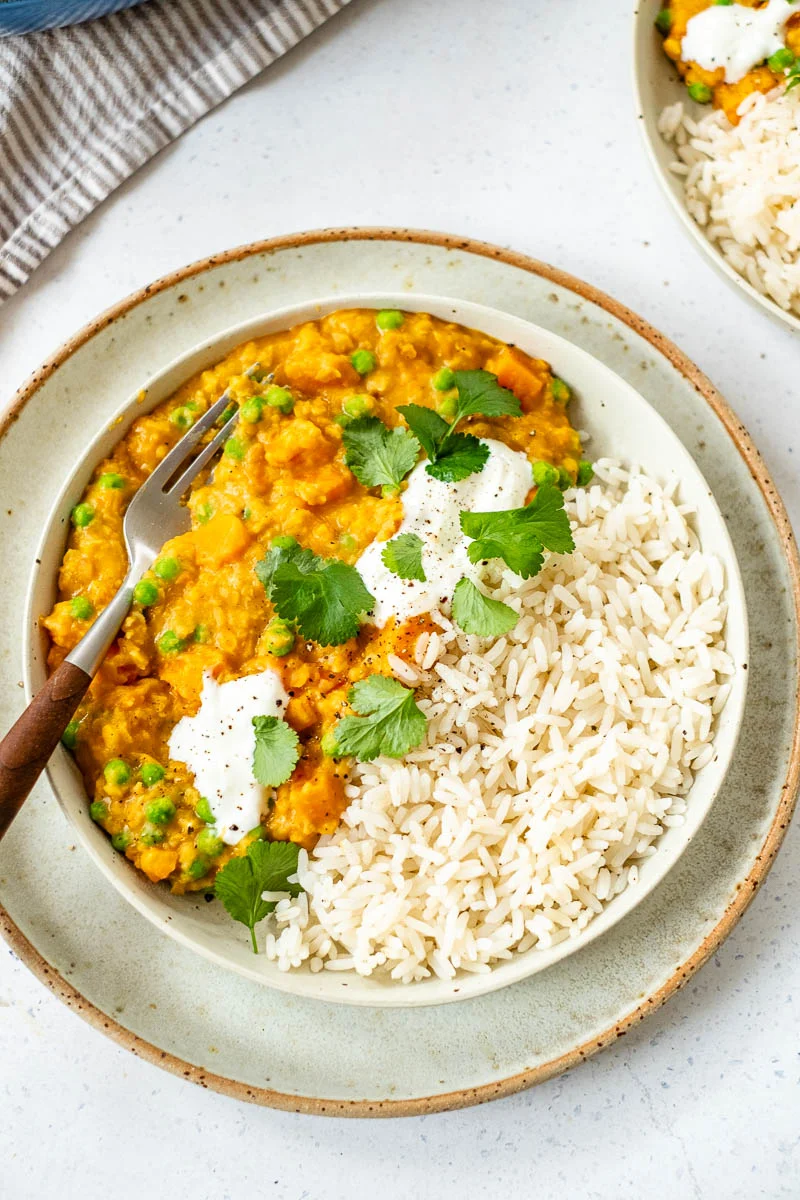
This red lentil dal combines soft lentils, sweet potato and carrots in a gently spiced coconut sauce. It is a comforting one-pot meal, with optional rice, naan, coriander and yoghurt for serving.
Ingredients
- 4carrots
- 1 largesweet potato
- 2 tablespoonsdahl curry paste*
- 1 can (400 ml)coconut milk
- 200 gred lentils
- 200 gfrozen peas
- to serverice
- to servenaan bread
- to servefresh coriander
- to serveyoghurt
- a splasholive oil
- 500 mlwater
- to tastesalt
- to tasteblack pepper
Instructions
- 1
Prepare the vegetables
Peel the carrots and sweet potato, then cut them into small dice. Warm a splash of olive oil in a casserole over medium heat and cook the vegetables for about 5 minutes; they do not need to be fully tender yet. Season with salt and pepper.
- 2
Add the curry
Stir in the curry paste and cook briefly, until its aroma comes through. Add the coconut milk, lentils and 500 ml water. Bring to a gentle simmer over low heat, stirring regularly.
- 3
Simmer the dal
Simmer for at least 20 minutes, until the lentils have split and the vegetables are tender. For a creamier finish, use a stick blender to purée about half of the curry.
- 4
Stir in peas
Add the frozen peas and cook for a few more minutes, until heated through. Taste and adjust the seasoning with salt and pepper.
- 5
Serve the curry
Serve the dal with rice and naan bread if you like, topped with fresh coriander and a little yoghurt.
What is red lentil dal?
Dal is a broad South Asian term for pulses and dishes made with them. This version takes the form of a gently spiced, spoonable curry built around red lentils.
Curry paste brings seasoning quickly, while coconut milk softens its heat and gives the lentils a creamy base. Carrot and sweet potato add sweetness and make the pot more substantial.
Nutrition and macros by portion
The nutrition label shows one serving as written: 420 calories, 17g protein, 57g carbs, 15g fat.
| Portion | Adjustment | kcal | Protein | Carbs | Fat |
|---|---|---|---|---|---|
| Lighter | Use light coconut milk | 294 kcal | 12g | 40g | 11g |
| This serving | As written | 420 kcal | 17g | 57g | 15g |
| Hungry | Add rice and naan | 630 kcal | 26g | 86g | 23g |
Red lentils provide much of the carbohydrate and protein, while coconut milk is the main source of fat. The vegetables and peas add carbohydrates and fibre; serve with a moderate portion of rice or naan and plenty of dal for a balanced plate.
Why red lentils work well
Red lentils cook relatively quickly and soften enough to thicken the sauce as they simmer. Rinse them first if they seem dusty, and stir the pot regularly so they cook evenly.
Build flavour with the paste
Curry paste: briefly frying it with the vegetables helps release its aroma before the liquid goes in. Keep the heat moderate and stir so the paste does not catch on the bottom of the pot.
Coconut milk: adding it with the water creates the simmering liquid and balances the paste's spices. Stir well if the tin has separated.
Check the texture
Vegetables: cut the carrots and sweet potato into small, similar-sized pieces so they soften at roughly the same pace. They should be tender by the time the lentils have split.
Blending: purée about half the curry for a thicker, smoother texture while leaving some lentils and vegetable pieces intact. Blend less or skip this step if you prefer a chunkier dal.
Allow time to simmer
The method calls for at least 20 minutes of gentle simmering after the lentils and liquids are added. Stir regularly, particularly near the base of the pot, as the lentils thicken the sauce.
Add the peas only near the end. They need just a few minutes to warm through and keep their colour.
Choose your accompaniments
Rice makes the dal a fuller meal, while naan is handy for scooping up the thick sauce. Both are optional, so choose one or serve the curry on its own.
Fresh coriander adds a bright finish, and a spoonful of yoghurt gives a cool contrast to the spiced coconut sauce.
Recipe notes & tips
- Dice the carrots and sweet potato small so they soften within the simmering time.
- Keep the curry at a gentle simmer rather than a rolling boil.
- Stir regularly as the lentils thicken the liquid.
- Taste the curry paste before adding extra seasoning, as pastes vary in saltiness.
- Blend only about half the curry if you want both a creamy sauce and some texture.
Variations
- Adjust the heat: use more or less curry paste to suit its strength and your preference.
- Use light coconut milk: swap it for the full-fat version for a less rich sauce.
- Add greens: stir in a handful of spinach near the end and cook until wilted.
- Make it chunkier: leave out the blending step for a more textured curry.
- Change the herbs: finish with chopped mint instead of coriander if preferred.
Common mistakes to avoid
- Large vegetable pieces: they may stay firm; cut the carrots and sweet potato into small, even dice.
- High heat: the thickening lentils can stick; keep the curry at a gentle simmer and stir regularly.
- Adding peas too early: they can lose their colour and texture; stir them in for only the final few minutes.
- Blending everything: the curry can lose its varied texture; purée only about half for a creamier but still substantial result.
- Under-seasoning: the lentils can taste flat; taste at the end and adjust with salt and pepper.
How to store
Cool leftovers promptly and refrigerate in a covered container for up to 3 days. Reheat gently in a saucepan, stirring often and adding a splash of water if the dal has thickened; heat until steaming throughout.
Frequently asked questions
Do I need to rinse the red lentils?
Rinsing is not specified in the method, but you can rinse them in a sieve if they look dusty. Drain them well before adding to the pot.
Can I make the dal without a stick blender?
Yes. The blending step is optional, so leave the curry as it is for a chunkier texture.
How do I know when the lentils are cooked?
They should have split and softened, and the vegetables should be tender. Simmer for at least 20 minutes, then continue a little longer if needed.
Can I use a different curry paste?
Yes, another curry paste can work, though the flavour and heat will vary. Taste the finished dal before adding more salt or pepper.
What can I serve with red lentil dal?
Rice and naan are suggested accompaniments. Fresh coriander and yoghurt make optional toppings.
Can I freeze the leftovers?
The dal can be frozen in a sealed, freezer-safe container. Thaw it in the fridge and reheat gently, stirring and loosening with a little water if necessary.
Cook it from the original
This recipe comes from kokerellen.be. Their page has the author’s own photos, notes and tips — the best place to cook it from.
Open the recipe on kokerellen.be