
Pavlova
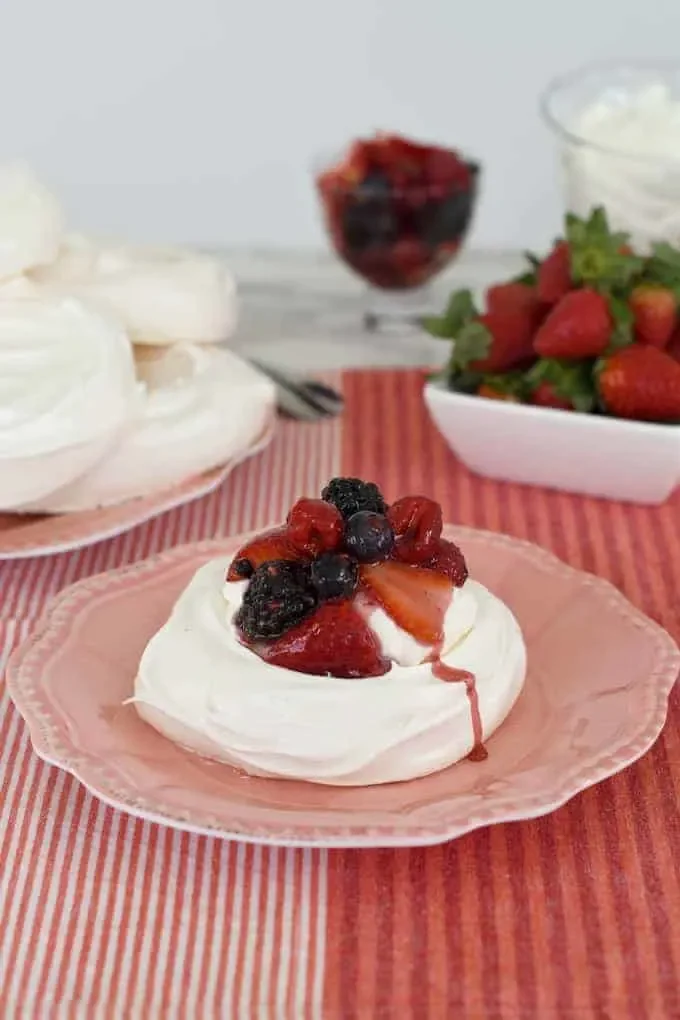
Pavlova is a crisp, pale meringue with a soft, marshmallow-like middle, ready to top with cream and berries or another sweet topping. This recipe makes one large pavlova or eight individual ones, with a slow bake and cool-down to help preserve its delicate texture.
Ingredients
- 6 largeegg whites, at room temperature
- 1.25 mltable salt
- 1vanilla bean, seeds scraped out
- 340 g (12 oz; 1½ cups)granulated sugar
- 7.5 mlwhite vinegar
- 7.5 mlcornflour
Instructions
- 1
Prepare the oven
Heat the oven to 120°C. Line a half-sheet pan with baking parchment.
- 2
Whip the meringue
In a large mixing bowl or the bowl of a stand mixer, whisk the 6 egg whites at medium speed until soft peaks form. Keep the mixer running and add the salt and vanilla seeds. Pour in the sugar in a slow, steady stream, then increase the speed to medium-high and whisk until stiff peaks form, about 8–10 minutes in total.
- 3
Add the stabilisers
Stop the mixer and add the white vinegar and cornflour. Whisk at medium speed until incorporated.
- 4
Shape the meringue
For one large pavlova, spoon the meringue into a single mound in the middle of the tray. For individual pavlovas, spoon 8 equal mounds onto two trays. Use the back of a spoon to smooth each mound and make a dip in the centre; leave the edges free-form or smooth them into a more symmetrical shape.
- 5
Bake and cool
Bake for about 1 hour, until the outside is dry and remains very pale. Gently lift an edge with a small spatula; it should come away easily from the parchment. Turn off the oven, prop the door open slightly and leave the meringue inside for at least 1 hour.
- 6
Fill and serve
Let the meringue cool completely before filling and serving. To store it, wrap the sheet pan; the meringue keeps for 4–5 days.
What is pavlova?
Pavlova is a meringue dessert associated with Australia and New Zealand, named after the Russian ballerina Anna Pavlova. Its appeal is the contrast between a delicate, crisp shell and a soft, marshmallow-like centre.
This version uses vanilla for fragrance, while a little vinegar and cornflour help give the meringue its characteristic interior. Shape it as one large nest or as eight individual portions.
Nutrition and macros by portion
The nutrition label shows one serving as written: 177 calories, 2g protein, 43g carbs, 0g fat.
| Portion | Adjustment | kcal | Protein | Carbs | Fat |
|---|---|---|---|---|---|
| Lighter | Use less cream topping | 124 kcal | 1g | 30g | 0g |
| This serving | As written | 177 kcal | 2g | 43g | 0g |
| Hungry | Serve a larger pavlova | 266 kcal | 3g | 65g | 0g |
The supplied nutrition per serving is 177 kcal, with 43 g carbohydrate, 2 g protein and 0.2 g fat. Sugar provides nearly all of the carbohydrate, while egg whites contribute most of the protein; serve with fresh fruit and choose a modest amount of cream if you want to balance the sweetness.
Building a stable meringue
Room-temperature whites: they are easier to whip to volume than cold ones, so let them come to room temperature before starting.
Steady sugar: add it gradually while the mixer runs, giving it time to blend into the whites rather than tipping it all in at once. Keep whisking until the peaks stand firmly when the whisk is lifted.
Adding vinegar and cornflour
Vinegar and cornflour: fold neither in by hand; add them after whipping and mix at medium speed just until incorporated. This brief final mixing helps distribute them through the foam without prolonged beating.
Vanilla: scrape the seeds from the bean and add them with the salt as directed. This spreads the flavour through the meringue before the sugar is fully incorporated.
Shaping the nests
The centre: make a shallow depression with the back of a spoon so there is room for a topping later. Avoid making the base too thin, as the meringue needs to hold its shape.
Individual portions: divide the mixture into 8 similar-sized mounds across two trays. A free-form finish is fine; smoothing the sides is optional.
Slow baking and cooling
Pale exterior: the pavlova is ready when its surface is dry but still very pale, after about 1 hour. Test gently at the edge; it should lift from the parchment without sticking.
Gradual cooling: leave it in the switched-off oven with the door propped open a crack for at least 1 hour, then cool completely before filling. This recipe gives a total time of 90 minutes, but the oven cool-down and full cooling may require additional time.
Topping and serving
Traditional finish: serve with cream and berries, or choose another sweet topping. Add it only once the meringue is completely cool.
For a balanced dessert plate, serve a pavlova portion alongside fresh fruit. Keep toppings separate until serving so the crisp shell is not sitting under them for long.
Recipe notes & tips
- Use a clean, dry mixer bowl so the egg whites can whip properly.
- Separate the eggs carefully, keeping the yolks out of the whites.
- Add the sugar in a slow, steady stream rather than all at once.
- Use two trays for the eight individual meringues, as directed.
- Wait until the meringue is completely cool before adding any topping.
Variations
- Berry topping: add fresh berries and cream just before serving.
- Passion fruit: spoon passion fruit pulp over the finished pavlova for a tart contrast.
- Citrus fruit: use segments of orange or mandarin as a bright topping.
- Vanilla cream: serve with lightly whipped cream flavoured with vanilla.
- Individual nests: shape 8 equal portions instead of making one large pavlova.
Common mistakes to avoid
- Adding sugar too quickly: pour it in gradually while the mixer runs so it can incorporate into the foam.
- Stopping at soft peaks: continue whipping after adding the sugar until the peaks are stiff.
- Over-shaping: smooth the meringue gently and avoid pressing the centre too thin.
- Baking for colour: look for a dry surface that is still very pale, not a browned exterior.
- Filling while warm: cool the meringue completely first to protect its texture.
How to store
The recipe advises wrapping the sheet pan and keeping the meringue for 4–5 days. Keep it unfilled until serving; once topped, serve promptly, as cream and fruit soften the shell.
Frequently asked questions
Can I make one large pavlova or individual ones?
Either shape works with this recipe. Make one mound for a large pavlova, or divide the mixture into 8 equal mounds and use two trays.
How do I know when the pavlova is baked?
The exterior should be dry and very pale after about 1 hour. A small spatula should lift an edge cleanly from the parchment.
Why does the recipe use vinegar and cornflour?
They are mixed into the whipped meringue to help create the pavlova's soft, marshmallow-like centre beneath its crisp exterior.
Can I prepare the meringue ahead?
Yes. The recipe says to wrap the sheet pan and store the meringue for 4–5 days. Keep it unfilled until you are ready to serve.
When should I add the topping?
Wait until the pavlova has cooled completely, then add cream, berries or another sweet topping shortly before serving.
Cook it from the original
This recipe comes from baking-sense.com. Their page has the author’s own photos, notes and tips — the best place to cook it from.
Open the recipe on baking-sense.com