
Meringues
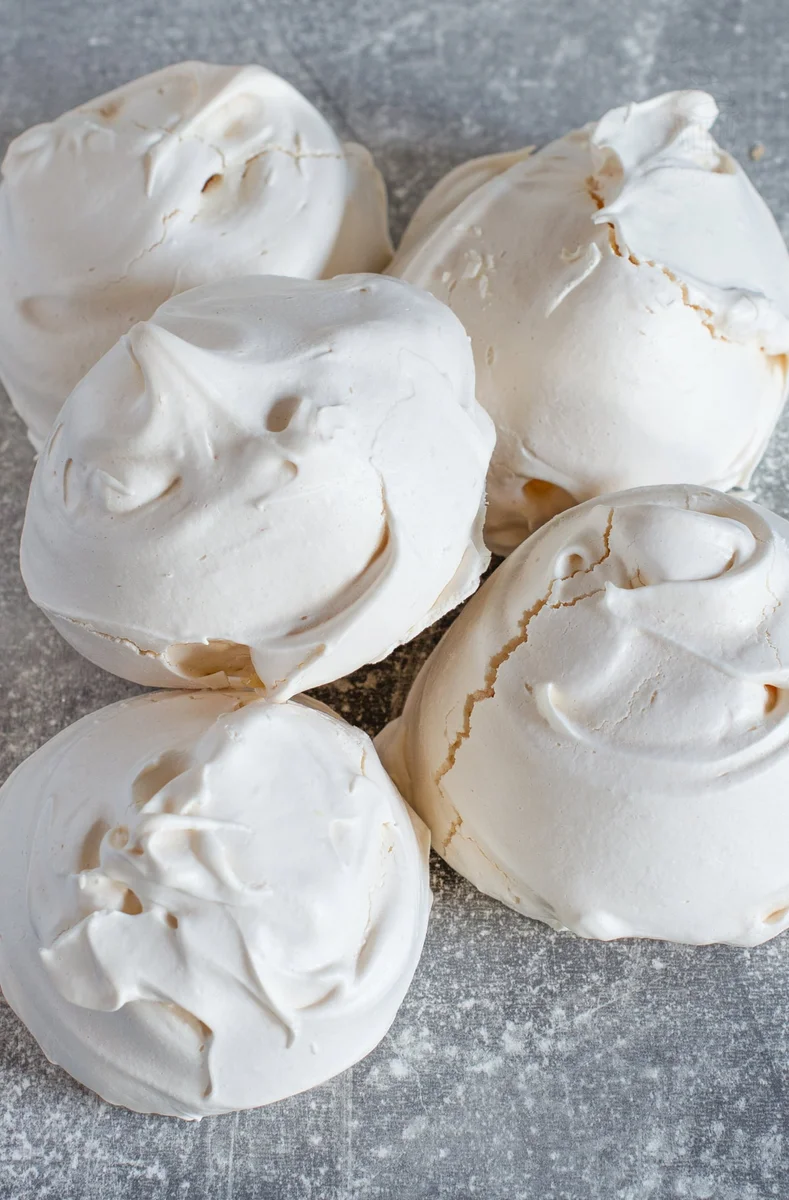
These classic British-style meringues are crisp on the outside with a soft, chewy centre. Made with just egg whites and caster sugar, they are handy for serving with cream and fruit or using in pavlova and Eton mess.
Ingredients
- 3free-range egg whites
- 150 gcaster sugar
Instructions
- 1
Prepare equipment
Before you begin, make sure all your equipment is clean and completely free of grease.
- 2
Heat the oven
Preheat the oven to 110°C, or 100°C for a fan-assisted oven, Gas Mark ¼ or 230°F. Line a baking tray with greaseproof paper and set it aside.
- 3
Whisk the whites
Whisk the egg whites in a clean bowl until they form soft peaks. An electric hand whisk gives a steady speed and is quicker, but you can whisk by hand.
- 4
Add the sugar
Keep whisking the egg whites and add the sugar a spoonful at a time, letting each spoonful mix in before adding the next.
- 5
Reach stiff peaks
As you add the sugar, the mixture should thicken and become glossy white. Once all the sugar is incorporated and the mixture holds stiff peaks, it is ready to shape.
- 6
Shape the meringues
Use a piping bag to make uniform meringues, or spoon the mixture into little mounds. The mixture makes about 4 large meringues, 6 medium ones or many small ones, depending on their size.
- 7
Bake slowly
Spoon or pipe the meringues on to the lined tray, leaving a little space between them. Bake in the preheated oven for 1.5–2 hours; smaller meringues will take less time.
- 8
Cool in the oven
When the baking time is up, switch off the oven and leave the meringues inside to cool before removing them. This gradual cooling helps prevent cracking from a sudden temperature change.
What are meringues?
Meringues are a simple confection made by whipping egg whites with sugar until the mixture is glossy and holds its shape, then baking it gently. Their precise origins are debated, but they have a long history in European baking and are a familiar part of British desserts.
This version uses only egg whites and caster sugar. Slow baking followed by cooling in the switched-off oven helps give the meringues a crisp shell and a softer centre.
Nutrition and macros by portion
The nutrition label shows one serving as written: 104 calories, 2g protein, 25g carbs, 0g fat.
| Portion | Adjustment | kcal | Protein | Carbs | Fat |
|---|---|---|---|---|---|
| Lighter | Serve with fresh fruit | 73 kcal | 1g | 18g | 0g |
| This serving | As written | 104 kcal | 2g | 25g | 0g |
| Hungry | Choose a larger meringue | 156 kcal | 3g | 38g | 0g |
The sugar supplies most of the carbohydrate, while the egg whites contribute the protein; there is very little fat in these meringues. For a more balanced plate, serve one with fresh fruit and a modest portion of cream or yoghurt.
Why clean equipment matters
Grease: even a little grease on the bowl or whisk can make it harder for the whites to whip properly. Start with clean, completely dry equipment, as the method specifies.
Egg whites: separate them carefully so no yolk gets into the whites. This keeps the mixture free of fat that could interfere with whipping.
Build the meringue gradually
Soft peaks: begin by whipping the whites until they form peaks that bend over when the whisk is lifted. This gives the foam a stable starting point for the sugar.
Caster sugar: add it a spoonful at a time while whisking, allowing each addition to mix in before adding another. The finished mixture should look glossy and hold stiff peaks.
Choose a shape and size
Piped meringues: a piping bag gives a more uniform shape, which can help the pieces bake at a similar rate.
Spoon-shaped meringues: spooning the mixture into little mounds is an easy alternative. The recipe makes about 4 large meringues, 6 medium ones or many small ones, and the size affects the baking time.
Read the doneness cues
Oven time: bake at 110°C, or 100°C for a fan-assisted oven, for 1.5–2 hours. Smaller meringues will bake more quickly, so use the time range as a guide for the size you have made.
Cooling: leave the meringues in the switched-off oven until cool. The gradual change in temperature helps reduce the risk of cracks.
Ways to serve them
Cream and fruit: serve the meringues alongside cream and fresh fruit for a simple dessert.
Desserts: crumble them into Eton mess or use them to top a pavlova. If you want to keep their crisp texture, add them to moist toppings shortly before serving.
Recipe notes & tips
- Use a bowl and whisk that are clean and completely free from grease.
- Add the sugar gradually, waiting for each spoonful to mix in.
- Aim for glossy mixture that holds stiff peaks before shaping.
- Make the meringues a similar size so they bake at a similar rate.
- Let the meringues cool in the switched-off oven before taking them out.
Variations
- Make smaller meringues: pipe or spoon smaller portions and check them earlier, as they bake more quickly.
- Make larger meringues: shape about 4 large meringues and allow for the longer end of the stated baking time.
- Serve with fruit: pair with fresh fruit and cream just before serving.
- Make Eton mess: break the cooled meringues into pieces and fold them into the dessert when ready to serve.
- Top a pavlova: use the meringues as a crisp topping alongside the other pavlova components.
Common mistakes to avoid
- Greasy equipment: the whites may not whip well; clean and dry the bowl and whisk thoroughly.
- Yolk in the whites: remove any yolk before whipping, as fat can make it harder to form a stable foam.
- Sugar added all at once: the mixture may not incorporate it evenly; add it a spoonful at a time.
- Meringues different sizes: they will bake at different rates; shape them as evenly as you can.
- Removing them while hot: a sudden temperature change can encourage cracking; let them cool in the switched-off oven.
How to store
Once completely cool, store the meringues in an airtight container in a cool, dry place. Keep them away from moisture, which can soften them; if they lose their crispness, they are best used in a dessert such as Eton mess.
Frequently asked questions
Can I whisk the egg whites by hand?
Yes. An electric hand whisk is quicker and maintains a steady speed, but the recipe can also be made with a hand whisk.
How do I know when the mixture is ready to shape?
It should be glossy and hold stiff peaks when the whisk is lifted. Add the sugar gradually to help it mix in properly.
How many meringues does this recipe make?
It makes about 4 large meringues, 6 medium ones or many small ones, depending on the size you shape.
How long should I bake them?
Bake for 1.5–2 hours at 110°C, or 100°C in a fan-assisted oven. Smaller meringues will take less time.
Why do the meringues need to cool in the oven?
The method uses gradual cooling to help prevent cracking caused by a sudden change in temperature.
Can I make them ahead?
Yes. Cool them fully and store them in an airtight container in a cool, dry place so they stay crisp.
Cook it from the original
This recipe comes from bakingwithgranny.co.uk. Their page has the author’s own photos, notes and tips — the best place to cook it from.
Open the recipe on bakingwithgranny.co.uk