
Homemade vol-au-vents
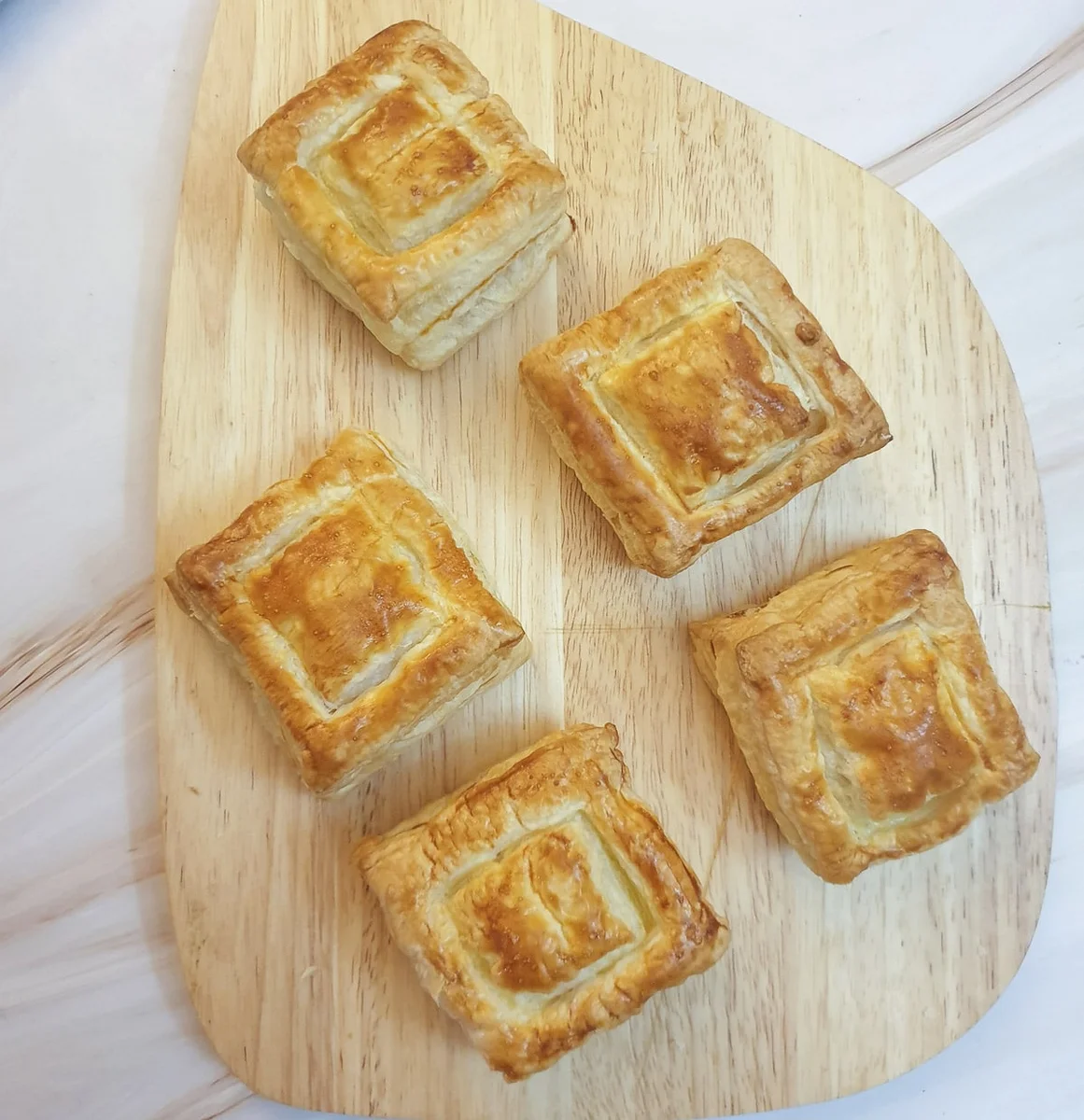
Homemade vol-au-vents are crisp, flaky pastry cases made from shop-bought puff pastry. Bake a batch ahead, then fill them with savoury or sweet favourites for an easy party canapé.
Ingredients
- 1 rollfrozen puff pastry, defrosted
- 1 smallegg
Instructions
- 1
Defrost pastry
Allow the puff pastry to defrost before using it.
- 2
Heat the oven
Preheat the oven to 190°C (375°F).
- 3
Prepare pastry
Unroll the pastry. If you have a block rather than a sheet, roll it into a rectangle roughly 24 × 36 cm.
- 4
Cut the squares
Cut the pastry into 24 equal squares.
- 5
Make the centres
Take 12 squares and cut a smaller square from the centre of each, leaving each cut-out piece in place.
- 6
Brush the bases
Lightly beat the egg to make an egg wash. Brush the edges of the 12 uncut squares, then place them on a lined baking sheet.
- 7
Layer the pastry
Place a square with a cut-out on top of each egg-washed square and brush the top with beaten egg. You should have 12 two-layer squares.
- 8
Bake until golden
Bake for approximately 15–20 minutes, until the pastry is well risen and golden.
- 9
Remove from oven
Take the baking tray out of the oven.
- 10
Lift out centres
Leave the vol-au-vents to cool, then carefully remove the centre square from each one. Keep these pieces to use as lids when filling.
- 11
Fill and serve
Fill the cases with your favourite fillings and serve.
What are vol-au-vents?
Vol-au-vents are small, hollow pastry cases, traditionally associated with French cooking and served with savoury fillings. Their name refers to their light, airy quality.
Shop-bought puff pastry makes this version straightforward: two layers rise in the oven to form a crisp shell, while the cut-out centre becomes a handy lid.
Nutrition and macros by portion
The nutrition label shows one serving as written: 116 calories, 2g protein, 10g carbs, 7g fat.
| Portion | Adjustment | kcal | Protein | Carbs | Fat |
|---|---|---|---|---|---|
| Lighter | Use lighter fillings | 81 kcal | 2g | 7g | 5g |
| This serving | As written | 116 kcal | 2g | 10g | 7g |
| Hungry | Serve more cases | 174 kcal | 3g | 15g | 11g |
The pastry provides most of the carbohydrates and fat, while the egg contributes a little protein and fat. Pair a couple of cases with a filling rich in vegetables or a salad, and choose a filling with a source of protein if you want a more substantial plate.
Choosing the pastry
Thawed pastry: let it defrost before unrolling so it is less likely to crack. Keep it cool and handle it gently, as warm puff pastry can become soft and difficult to cut neatly.
Sheet or block: either works for this recipe. If using a block, roll it to roughly 24 × 36 cm before cutting the 24 squares.
Cutting and layering
Even squares: aim for 24 pieces of similar size so the cases bake at a similar rate. Cut 12 of them again to make the frames, leaving each centre in place.
Egg wash: brush the edges of the uncut bases, then set the frames on top. Keep the wash on the surface rather than letting it run down the cut sides, where it can hinder the pastry's rise.
Getting a good rise
Hot oven: at 190°C, the pastry can puff and turn golden in around 15–20 minutes. Keep an eye on it towards the end, as ovens and pastry thickness can affect the timing.
Doneness: look for well-risen layers and an evenly golden surface. If the cases still look pale, give them a little more time rather than removing them before they have puffed.
Removing the centres
Cool first: allow the cases to cool before lifting out the centre pieces. They are delicate while hot, and cooling makes them easier to handle.
Save the lids: set the centre pieces aside as you work. Place them back on top after filling, or serve them alongside the cases.
Filling and serving
Fill just before serving where possible, especially with moist fillings, to help the pastry stay crisp. Spoon the filling into the hollow centre and finish with its pastry lid.
For a party spread, serve the cases with other small bites or a simple salad. Choose fillings that are ready to eat or fully cooked, since the method only bakes the pastry.
Recipe notes & tips
- Cut the pastry with a sharp knife or cutter for clean edges.
- Keep the pastry cool while you work so it is easier to handle.
- Line the baking sheet to make the cases easier to lift off.
- Brush the egg wash lightly and avoid letting it drip down the sides.
- Check the cases near the end of baking, as the timing can vary between ovens.
- Save every centre piece to use as a lid.
Variations
- Savoury filling: spoon in a creamy mushroom or chicken mixture just before serving.
- Seafood filling: use cooked prawns with a suitable sauce and serve promptly.
- Vegetable filling: add cooked, well-drained vegetables for a meat-free option.
- Sweet filling: fill cooled cases with pastry cream and fresh fruit.
- Herb finish: scatter chopped fresh herbs over a savoury filling before adding the lid.
Common mistakes to avoid
- Warm pastry: it can become sticky and hard to cut; chill it briefly if it softens.
- Uneven squares: pieces may bake at different rates; cut them as evenly as you can.
- Egg wash on cut sides: it can interfere with rising; brush only the top edges.
- Removing centres while hot: the cases may break; let them cool before lifting out the middles.
- Filling too early: moist filling can soften the pastry; fill close to serving time.
How to store
Store unfilled, cooled cases in an airtight container at room temperature and use within 1–2 days for the best texture. Re-crisp them in a moderate oven until warmed through, then cool slightly before filling; once filled, refrigerate promptly and eat within a day.
Frequently asked questions
Can I use puff pastry from a block?
Yes. Roll it into a rectangle roughly 24 × 36 cm, then cut it into 24 equal squares.
Can I make the cases ahead?
Yes, bake them ahead and store them unfilled. Re-crisp them briefly in the oven before filling if they have softened.
Why haven't my vol-au-vents risen?
Check that the oven was fully preheated and that egg wash has not run down the cut sides. Pastry that has become warm or been handled heavily may also rise less well.
Do I need to remove the centre pieces?
Yes, once the cases have cooled, carefully lift out the centres to make room for filling. Keep them to use as lids.
When should I fill them?
Fill them as close to serving as practical, particularly if the filling is moist, so the pastry stays crisp.
Can I use sweet fillings?
Yes. Let the cases cool completely first, then add a sweet filling such as pastry cream and fruit.
Cook it from the original
This recipe comes from foodleclub.com. Their page has the author’s own photos, notes and tips — the best place to cook it from.
Open the recipe on foodleclub.com