
Crispy Korean seafood pancake (Haemul pajeon) and dipping sauce
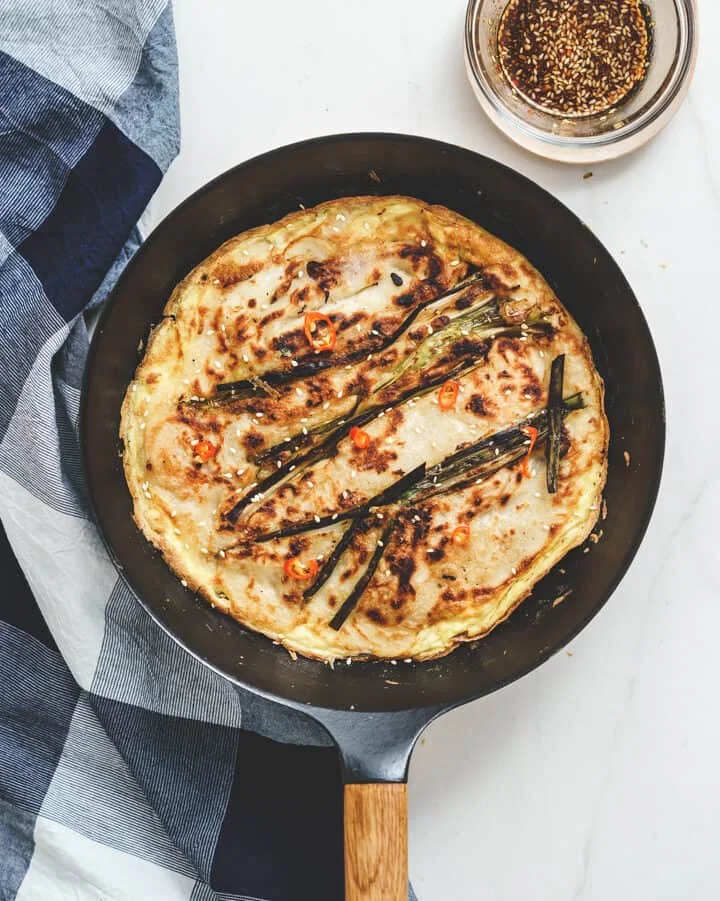
Haemul pajeon is a Korean seafood and spring onion pancake with a soft, chewy centre and crisp edges. This version uses a flour-and-rice-flour batter, pre-cooked seafood and a tangy, savoury dipping sauce.
Ingredients
- 150 gplain flour
- 20 grice flour
- ½ teaspoonsalt
- ½ teaspoonblack pepper
- ½ teaspoongarlic powder
- ½ teaspoonbaking powder
- 500 mlwater
- 2 tablespoonsrice wine
- 250 mlfish stock
- 1 cup eachcuttlefish and prawns, or other seafood of your choice
- 1 small bunch (optional)chives
- 7–8spring onions
- 1 tablespoonextra-virgin olive oil
- 1 teaspoonsesame oil
- 2eggs, beaten separately
- 2 tablespoonssoy sauce
- 4 teaspoonsvinegar
- 1 teaspoonsugar
- 20 g (about 4 cloves)garlic, grated to a paste
- 2 teaspoonswhite sesame seeds
- 1 teaspoonchilli powder
Instructions
- 1
Blanch the seafood
Bring 500 ml water and 2 tablespoons rice wine to the boil. Add the cuttlefish and prawns and blanch for about 30 seconds, then lift them out and drain.
- 2
Reserve the stock
Measure out 250 ml of the blanching liquid into another container and leave it to cool. Blanching the seafood first helps prevent it releasing excess moisture into the batter as the pancakes cook.
- 3
Mix the dry ingredients
Combine the plain flour and rice flour, then mix in the salt, black pepper, garlic powder and baking powder.
- 4
Prepare the greens
Halve the chives and spring onions, or cut them to suit the size of your pan. You can also cut them into pieces about 5 cm long.
- 5
Prepare the seafood
Cut the cuttlefish into strips about 1 cm wide, then peel the prawns.
- 6
Make the batter
Leave the reserved stock to cool for 5–10 minutes, then stir it into the dry ingredients. Aim for a consistency like pancake batter: it should fall slowly when lifted. Use the batter promptly to avoid developing gluten, then fold in the seafood.
- 7
Heat the pan
Heat a non-stick pan over a medium heat with 1 tablespoon olive oil. If using a regular pan, use a little more oil and make sure it is thoroughly heated to help prevent sticking.
- 8
Start each pancake
Cook the chives and spring onions briefly until fragrant. The mixture makes about three pancakes: ladle one-third into the pan in an S-shaped pattern, spreading it evenly. Work fairly quickly because a properly heated pan sets the batter fast. Pour half an egg over the surface and tilt the pan to fill any uneven gaps; a 24 cm pancake uses about one egg.
- 9
Cook the first side
Cook over a medium heat for about 4 minutes, until the surface is golden, then flip the pancake. A large, flexible spatula can make turning it easier. Drizzle sesame oil around the edge for extra crispness and aroma.
- 10
Finish the pancakes
After flipping, reduce the heat slightly if needed and cook for another 4–5 minutes, until golden. Transfer to a board, cut into a nine-square grid, and move to a plate. Serve hot or cold.
- 11
Make the sauce
Grate the garlic into a paste, then mix it with the soy sauce, vinegar, sugar, sesame seeds and chilli powder.
What is haemul pajeon?
Haemul pajeon is a Korean savoury pancake made with seafood and spring onions; pajeon refers to the spring onion pancake style, while haemul means seafood. It is commonly enjoyed as a shared dish, cut into pieces for dipping.
Here, rice flour joins plain flour for a tender, chewy middle and crisp edges. Briefly blanching the seafood keeps excess moisture out of the batter.
Nutrition and macros by portion
The nutrition label shows one serving as written: 420 calories, 25g protein, 49g carbs, 13g fat.
| Portion | Adjustment | kcal | Protein | Carbs | Fat |
|---|---|---|---|---|---|
| Lighter | Use less dipping sauce | 294 kcal | 18g | 34g | 9g |
| This serving | As written | 420 kcal | 25g | 49g | 13g |
| Hungry | Add another pancake | 630 kcal | 38g | 74g | 20g |
The flour and rice flour provide most of the carbohydrates, while the eggs and seafood contribute protein. The cooking oils and egg account for much of the fat, with soy sauce contributing a notable share of the sodium. Balance a serving with vegetables or a lightly dressed salad.
The flour and batter
Rice flour: mixed with plain flour, it contributes to the pancake’s characteristic texture. Stir the dry ingredients together before adding the stock so the seasoning is distributed evenly.
Consistency: the batter should resemble pancake batter and fall slowly from a spoon. Mix it only until combined and cook it soon after mixing, as the method advises.
Why blanch the seafood?
Quick blanch: the cuttlefish and prawns need only about 30 seconds in boiling water. Drain them well before adding them to the batter.
Reserved liquid: set aside 250 ml of the blanching water and let it cool for 5–10 minutes before mixing the batter. This gives the recipe its seafood stock without adding hot liquid to the flour.
Arrange the spring onions
Long pieces: halving the chives and spring onions lets you arrange them across the pan for the classic look. Cut them shorter if that suits your pan better.
Even layer: scatter the greens in the hot oiled pan, then pour the batter over them in an S-shaped pattern. Move promptly, as the batter can set quickly in a well-heated pan.
Getting a crisp, cooked pancake
Golden first side: cook for about 4 minutes over medium heat before turning. Look for a golden surface and use a broad spatula to support the pancake as you flip it.
Finish: drizzle sesame oil around the edge after flipping, then cook for another 4–5 minutes, lowering the heat slightly if necessary. The pancake should be golden on the second side too.
Egg and dipping sauce
Egg layer: pour half a beaten egg over each pancake and tilt the pan so it runs into gaps in the batter. The recipe makes about three pancakes, using roughly one egg per 24 cm pancake.
Tangy dip: stir the soy sauce, vinegar, sugar, grated garlic, sesame seeds and chilli powder together. Serve it alongside the cut pancake pieces so each bite can be dipped.
Serving and timing
This recipe takes about 35 minutes in total and makes three pancakes. Cut each one into nine squares once it has finished cooking.
Serve the pancakes hot for crisp edges, or enjoy them cold as the method suggests. A simple side of vegetables or a light soup can round out the meal.
Recipe notes & tips
- Drain the blanched seafood well before mixing it into the batter.
- Let the reserved stock cool for 5–10 minutes before adding it to the flour.
- Mix the batter just until combined and cook it soon after preparing it.
- Have a broad spatula ready before you begin frying.
- Tilt the pan after adding the egg so it fills gaps across the pancake.
- Cut the pancake into nine pieces while it is on a chopping board.
Variations
- Change the seafood: use other seafood you enjoy in place of the cuttlefish and prawns.
- Make it without chives: omit the optional chives and use the spring onions.
- Adjust the chilli: reduce or increase the chilli powder in the dipping sauce to suit your preference.
- Cut the greens shorter: slice the chives and spring onions into pieces about 5 cm long for easier arranging.
- Serve it cold: let the cooked pancake cool before serving, as well as enjoying it hot.
Common mistakes to avoid
- Wet seafood: excess liquid can throw off the batter; drain the blanched seafood thoroughly.
- Hot stock: it can make the flour harder to work with; let the reserved liquid cool for 5–10 minutes.
- Overmixed batter: working it too much can develop gluten; stir only until the ingredients are combined.
- Slow pouring: the batter sets quickly in a hot pan; pour it promptly in an S-shaped pattern.
- Early flipping: the pancake may not hold together; wait about 4 minutes and look for a golden surface.
- Sticking pan: a regular pan may need more oil and thorough preheating; take care before adding the batter.
How to store
Refrigerate leftover pancakes in a covered container and eat within 2 days. Reheat in a frying pan over a medium-low heat until warmed through; this helps restore some crispness.
Frequently asked questions
Can I use different seafood?
Yes. The recipe suggests using other seafood of your choice instead of cuttlefish and prawns. Blanch it briefly and drain it before mixing it into the batter.
Do I have to use chives?
No. Chives are marked as optional; you can make the pancakes with the spring onions alone.
How thick should the batter be?
It should be similar to pancake batter and fall slowly when lifted. If it seems too loose, check that the seafood was drained well and that the stock was measured to 250 ml.
How do I know when to flip the pancake?
Cook the first side for about 4 minutes over medium heat, until the surface is golden. Use a broad spatula to help turn it without breaking.
Can I make the pancakes ahead?
They can be cooked ahead and refrigerated for up to 2 days. Reheat them in a pan to bring back some crispness.
Can I serve haemul pajeon cold?
Yes. The recipe notes that the pancakes are enjoyable both hot and cold, with the dipping sauce served alongside.
Cook it from the original
This recipe comes from ciao.kitchen. Their page has the author’s own photos, notes and tips — the best place to cook it from.
Open the recipe on ciao.kitchen