
South African savoury tart (sout tert)
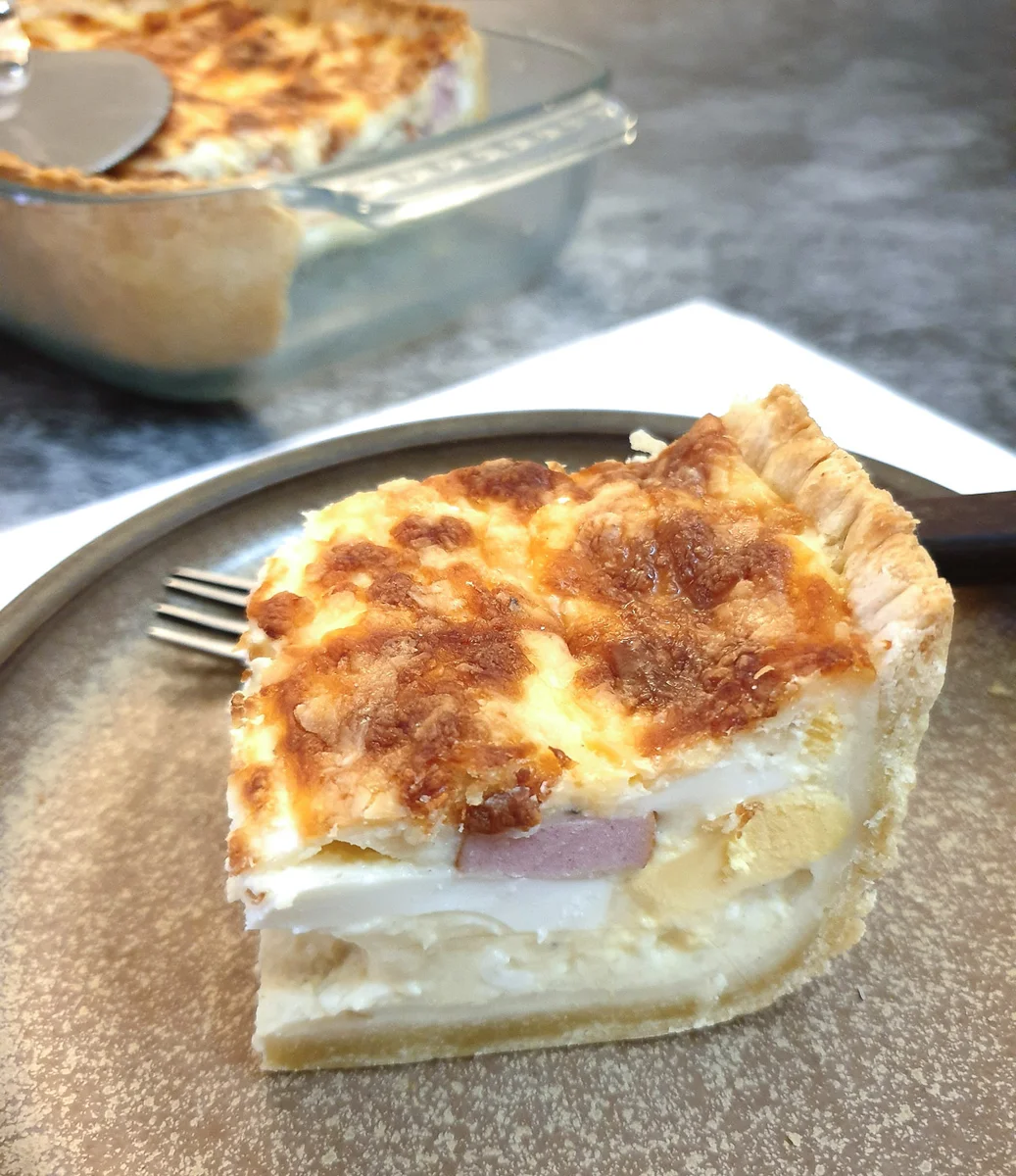
South African savoury tart, or sout tert, is a pastry case filled with sliced bockwurst, hard-boiled eggs and a creamy cheddar sauce. It makes a substantial lunch and can be prepared ahead for a gathering.
Ingredients
- 1 quantityshortcrust pastry, homemade or shop-bought
- 6 largehard-boiled eggs, peeled and sliced
- 6bockwurst sausages, sliced into thin rings
- 100 g (1 cup)cheddar cheese, grated
- 60 g (2 oz)butter
- 480 ml (2 cups)milk
- 16 g (2 tablespoons)cornflour
- to tastesalt and black pepper
Instructions
- 1
Heat the oven
Preheat the oven to 200°C (400°F).
- 2
Line the dish
Roll the pastry to 6 mm (¼ inch) thick and use it to line a greased 30 cm × 20 cm pie dish.
- 3
Start the sauce
Melt the butter in a saucepan, add the cornflour and stir until the mixture is smooth and free of lumps.
- 4
Thicken the sauce
Add the milk, salt and pepper. Bring to the boil, stirring continuously, and cook until the sauce thickens.
- 5
Melt in cheese
Lower the heat and add three-quarters of the cheese, keeping a little back to sprinkle on top. Stir until the cheese has melted.
- 6
Add the filling
Take the pan off the heat, add the sliced eggs and sausages, and stir to combine. Leave the mixture to cool.
- 7
Fill the pastry
Pour the cooled filling into the prepared pastry case.
- 8
Top with cheese
Sprinkle the reserved grated cheese over the filling.
- 9
Bake the tart
Bake in the preheated oven for 30 minutes, until the pastry is golden.
- 10
Cool before serving
Remove the tart from the oven and leave it to cool.
What is sout tert?
Sout tert is a South African savoury tart, with a name that means “salt tart”. This version combines sausage and hard-boiled egg in a cheese sauce, all enclosed in shortcrust pastry.
The creamy filling contrasts with the crisp pastry, while the eggs and bockwurst make each slice hearty enough for lunch.
Nutrition and macros by portion
The nutrition label shows one serving as written: 276 calories, 12g protein, 14g carbs, 19g fat.
| Portion | Adjustment | kcal | Protein | Carbs | Fat |
|---|---|---|---|---|---|
| Lighter | Smaller slice, extra salad | 193 kcal | 8g | 10g | 13g |
| This serving | As written | 276 kcal | 12g | 14g | 19g |
| Hungry | Larger slice | 414 kcal | 18g | 21g | 29g |
The pastry and cornflour provide most of the carbohydrates, while butter, cheddar and the pastry contribute much of the fat. Eggs, sausages, milk and cheese provide protein. Pair a slice with salad or vegetables for a more balanced plate.
The pastry case
Pastry thickness: Roll it evenly to about 6 mm so it lines the dish without leaving very thick edges. A greased 30 cm × 20 cm dish gives the filling a broad, shallow space to bake in.
Handling: If the pastry becomes soft while you line the dish, pause and chill it briefly before filling.
A smooth cheese sauce
Cornflour: Stir it into the melted butter until no dry pockets or lumps remain before adding the milk.
Milk: Add it while stirring, then keep stirring as the sauce comes to the boil and thickens. Lower the heat before adding the cheese so it can melt into the sauce without prolonged boiling.
Eggs and sausages
Eggs: Slice the hard-boiled eggs so they distribute through the filling rather than remaining in large pieces.
Bockwurst: Thin rings help the sausage spread evenly through the tart. Stir the filling gently once the eggs are added to keep the slices intact.
Cooling and baking
Cool the filling: Let it cool before pouring it into the pastry case, as directed. This also makes the filling easier to handle.
Doneness: Bake for 30 minutes at 200°C, looking for golden pastry and melted cheese on top. Allow the tart to cool after baking so it is easier to slice.
Serving the tart
Serve a slice warm or at room temperature for lunch. A simple green salad or lightly dressed vegetables make a fresh contrast to the rich pastry and cheese sauce.
For a gathering, let the tart cool before cutting it into portions so the filling has time to settle.
Recipe notes & tips
- Grate the cheddar before starting the sauce so it is ready to add.
- Stir continuously as the milk comes to the boil to help the sauce thicken smoothly.
- Reserve the topping cheese before adding the rest to the pan.
- Let the filling cool before adding it to the pastry case.
- Use a sharp knife to cut clean slices once the tart has cooled.
Variations
- Change the sausage: Use another cooked sausage in place of bockwurst, sliced into thin rings.
- Add herbs: Stir chopped parsley into the filling for a fresh note.
- Use another cheese: Replace the cheddar with a grated cheese that melts smoothly.
- Add spring onions: Mix sliced spring onions into the filling for extra savoury flavour.
Common mistakes to avoid
- Lumpy sauce: Stir the cornflour into the melted butter until smooth before adding the milk.
- Scorched sauce: Keep stirring as the milk heats and thickens.
- Overcooked cheese sauce: Lower the heat before adding the cheese and stir just until it melts.
- Warm filling in pastry: Let the filling cool before pouring it into the pastry case.
- Soft slices: Allow the baked tart to cool before cutting and serving.
How to store
Cool the tart, cover it and refrigerate for up to 3 days. Reheat portions in an oven until hot throughout; the pastry may soften after storage.
Frequently asked questions
Can I make the tart ahead?
You can prepare the filling ahead and refrigerate it once cooled. Bring it back to a cool, workable temperature before filling the pastry case and baking.
Can I use shop-bought pastry?
Yes. The recipe allows homemade or shop-bought shortcrust pastry; roll it to about 6 mm thick before lining the greased dish.
How do I know the sauce is thick enough?
It should visibly thicken as it comes to the boil while you stir continuously. Take it off the heat after adding and melting the cheese.
Can I serve sout tert cold?
Yes. It can be served warm or after cooling, and the cooled tart is easier to cut into neat slices.
What goes well with savoury tart?
Serve it with a green salad or lightly dressed vegetables to balance the rich pastry and filling.
Cook it from the original
This recipe comes from foodleclub.com. Their page has the author’s own photos, notes and tips — the best place to cook it from.
Open the recipe on foodleclub.com