
Cheese and Onion Quiche (with Caramelized Onion)
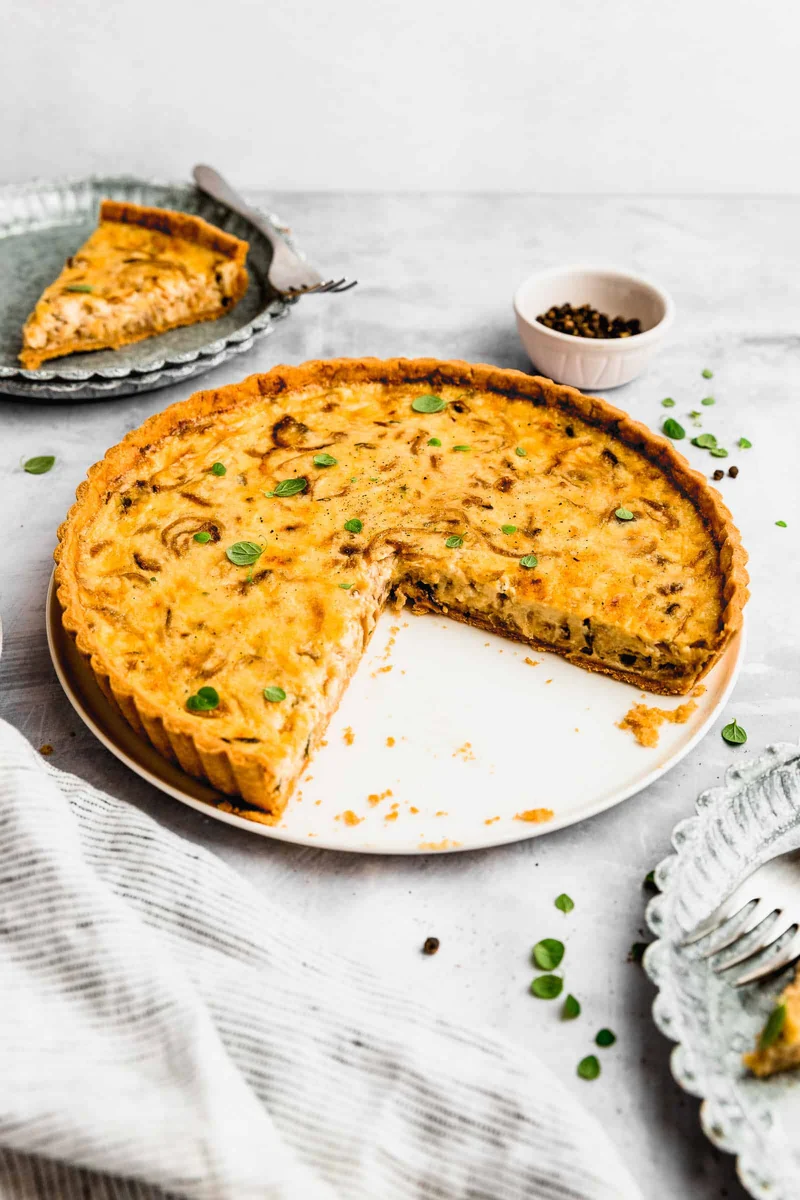
This French-inspired quiche pairs a crisp pastry shell with a soft, creamy cheese filling and slowly caramelised onions. It takes a little time, but the onions’ sweetness and the savoury Gruyère and Parmesan make it well suited to a leisurely lunch or dinner.
Ingredients
- 200 gplain flour
- 1 tspsalt
- 100 gunsalted butter, cold and cut into cubes
- 1egg
- 1 tbspwater
- 400 gwhite or red onion, or a mixture
- 2 tbspolive oil
- 8 sprigsfresh thyme, leaves only (about 1 tbsp), or oregano
- a pinchsalt
- 1 tsp (optional)sugar
- 1egg
- 1egg yolk
- 175 mlwhipping cream
- 125 mlmilk
- 50 gfreshly grated Gruyère
- 50 gfreshly grated Parmesan (or Grana Padano)
- 1 tspsalt
Instructions
- 1
Make the pastry
For the pastry, rub the flour, salt and cold butter together in a bowl until the mixture resembles wet sand, or pulse them in a food processor to the same texture. Add the egg and water, then mix by hand or process until a smooth dough forms. Cover and chill for 30 minutes.
- 2
Line the tin
Roll the dough to 2 mm thick on a lightly floured surface and fit it into the tin. Lift and press the pastry into the corners to make a neat angle. Freeze the lined tin for 15 minutes, then trim the pastry level with the rim.
- 3
Blind bake
Crumple a piece of baking paper, open it out and lay it over the pastry. Fill the shell to the top with baking beans and press them gently into the corners. Bake at 180°C for 20–30 minutes, until the edges are golden.
- 4
Finish the crust
Carefully lift out the baking beans using the paper and return the shell to the oven for about 5–10 minutes, until evenly golden. Leave it to cool to room temperature before adding the filling.
- 5
Cook the onions
Slice the onions thinly. Put them in a pan over low heat with the olive oil, thyme and a tiny pinch of salt. Cook slowly until soft and translucent, then continue cooking as they caramelise. If they colour unevenly or sugar sticks to the pan and looks likely to burn, add a little water and stir to loosen it; continue cooking as the water evaporates. Repeat as needed until the onions are light brown. Add the teaspoon of sugar and a little water, stir to coat the onions, then let the water evaporate completely. Set aside.
- 6
Mix the filling
Mix the cooked onions with the egg, egg yolk, cream, milk, Gruyère, Parmesan and 1 teaspoon of salt. Pour the mixture into the cooled pastry shell.
- 7
Bake the quiche
Bake at 140°C for about 35–45 minutes, until golden on top. Leave it to cool until almost room temperature before slicing so the filling can set.
What is cheese and onion quiche?
Quiche is a savoury French tart made with pastry and a baked egg-and-cream filling. This version combines cheese with onions cooked slowly until sweet and lightly browned.
The crisp, pre-baked shell helps support the soft filling, while Gruyère and Parmesan bring savoury depth. The lower oven temperature for the final bake is intended to keep the filling moist.
Nutrition and macros by portion
The nutrition label shows one serving as written: 400 calories, 12g protein, 23g carbs, 28g fat.
| Portion | Adjustment | kcal | Protein | Carbs | Fat |
|---|---|---|---|---|---|
| Lighter | Smaller slice, extra salad | 280 kcal | 8g | 16g | 20g |
| This serving | As written | 400 kcal | 12g | 23g | 28g |
| Hungry | Larger slice | 600 kcal | 18g | 35g | 42g |
The pastry flour supplies most of the carbohydrates, while butter, cream and olive oil contribute much of the fat. Eggs and cheese provide protein, with the cheese and added salt also contributing sodium. Pair a slice with salad or green vegetables for a more balanced plate.
A pastry that holds its shape
Cold butter: work it into the flour until the mixture looks like wet sand, with no large pieces remaining. Mix in the egg and water only until the dough comes together smoothly.
Chilling: rest the covered dough for 30 minutes before rolling. Once it is in the tin, freezing it for 15 minutes helps it stay in place during blind baking.
Take your time with the onions
Thin slices: cut the onions evenly so they soften and brown at a similar rate. A mandolin can help, but a knife works well too.
Low heat: let the onions soften before expecting them to caramelise. If sugar sticks or the colour becomes patchy, a little water helps loosen the pan; let it evaporate before continuing.
Look for gentle doneness cues
Pastry: blind bake until the edges are golden, then return the shell to the oven without the beans until it is evenly golden. Cool it before adding the filling.
Filling: bake at 140°C for 35–45 minutes, until the top is golden. Cooling the quiche until almost room temperature helps the egg filling set enough to slice neatly.
Why the two baking temperatures?
The pastry is baked at 180°C to colour and dry the shell before it is filled. The quiche then goes back into the oven at 140°C, a lower heat that helps the filling cook without making the already-baked pastry much darker.
Oven timings can vary, so use the stated golden colour as a cue as well as the time. Allow for the full cooling period before cutting.
What to serve alongside
A simple green salad with a sharp vinaigrette offers a fresh contrast to the rich pastry and creamy filling. Steamed or lightly dressed green vegetables also make a straightforward side.
For a larger meal, serve slices with a bowl of soup. Keep accompaniments lightly dressed so they do not compete with the caramelised onion and cheese.
Recipe notes & tips
- Keep the butter cold while making the pastry for a workable dough.
- Press the pastry firmly into the corners of the tin so the shell has an even shape.
- Use baking paper and baking beans to support the pastry during blind baking.
- Stir the onions now and then over low heat, adding a little water if the pan begins to catch.
- Grate the cheeses freshly so they mix evenly into the filling.
- Let the quiche cool until almost room temperature before slicing.
Variations
- Use oregano: swap it for the thyme leaves in the onion mixture.
- Mix the onions: combine white and red onions for a blend of flavours.
- Choose Grana Padano: use it in place of Parmesan as in the recipe.
- Skip the sugar: leave out the optional teaspoon and rely on the onions’ natural sugars.
- Change the cheese: replace the Gruyère with another firm, well-melting cheese.
Common mistakes to avoid
- Thick onion slices: they cook unevenly; slice them thinly so they soften and caramelise consistently.
- High heat for onions: they can brown before softening; cook them slowly over low heat.
- Skipping the chill: warm dough is harder to handle; rest it in the fridge for 30 minutes.
- Filling a warm shell: the pastry may lose its crispness; cool it to room temperature first.
- Cutting too soon: the filling may fall apart; wait until the quiche is almost at room temperature.
- Overbaking at high heat: the filling can become less moist; use 140°C for the final bake.
How to store
Refrigerate leftover quiche in a covered container and eat within 3 days. Reheat slices in a 160°C oven until warmed through, or serve them cold.
Frequently asked questions
Can I make the pastry by hand?
Yes. Rub the flour, salt and cold butter together with your fingers until the mixture resembles wet sand, then mix in the egg and water until a smooth dough forms.
Can I use red onions instead of white?
Yes. The recipe allows white onions, red onions or a mixture of both.
Why does the quiche bake at a lower temperature?
The recipe uses 140°C for the filled quiche so the pastry does not become much darker and the filling stays moist.
How do I know when the onions are caramelised?
They should be soft and light brown after cooking slowly. Add a little water if sugar sticks to the pan or the onions colour unevenly, then continue as it evaporates.
Why should I let the quiche cool before slicing?
Cooling gives the egg filling time to set, so the slices are less likely to fall apart.
Can I prepare the quiche ahead?
You can bake it ahead and refrigerate it once cooled. Reheat slices gently in the oven or serve them cold.
Cook it from the original
This recipe comes from cravingsjournal.com. Their page has the author’s own photos, notes and tips — the best place to cook it from.
Open the recipe on cravingsjournal.com