
Spatchcock Chicken
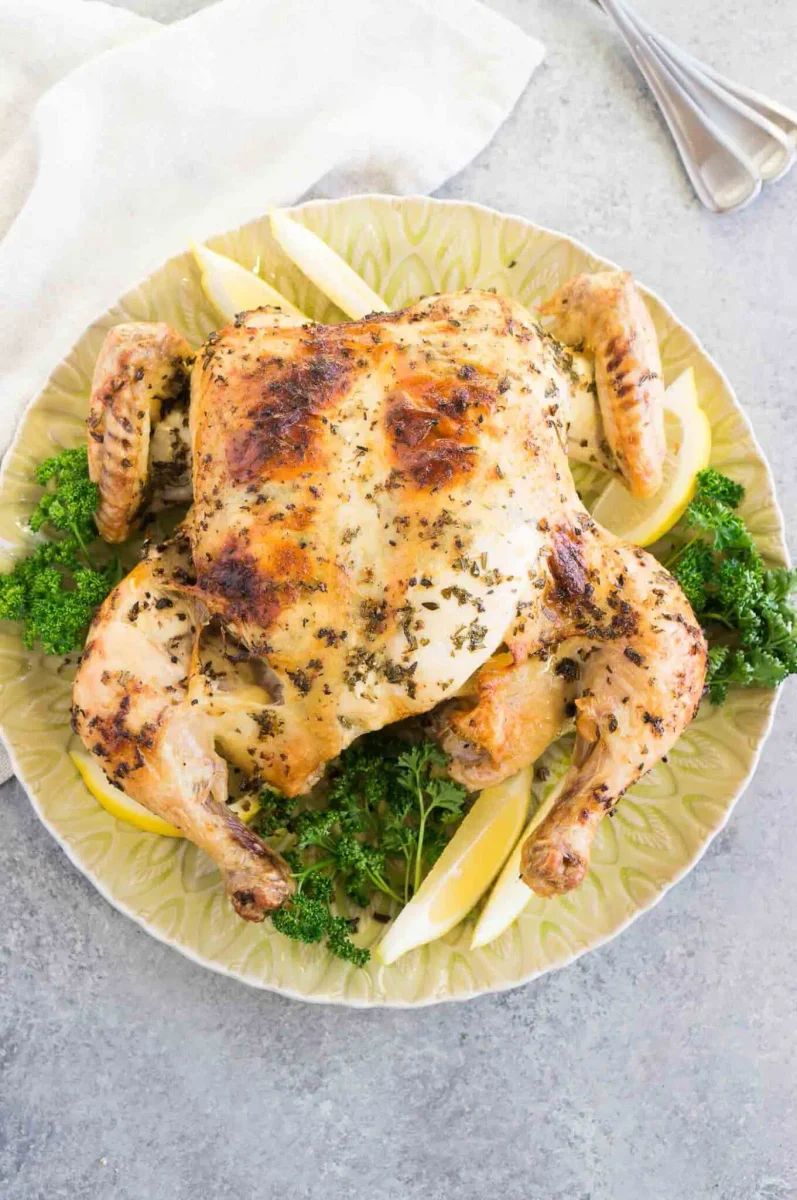
Spatchcock chicken is a whole bird flattened before roasting, with a lemon-and-herb butter rub for crisp, flavourful skin. It cooks evenly and makes a generous centrepiece for a family meal.
Ingredients
- 2.27 kg (5 lb)whole chicken, giblets removed
- 1 recipechicken brine (optional)
- 85 g (6 tablespoons)butter, softened
- 2.5 ml (½ teaspoon), or 5 ml (1 teaspoon) if not briningsalt
- 5 ml (1 teaspoon)pepper
- 15 ml (1 tablespoon)lemon juice
- 2.5 ml (½ teaspoon)lemon zest
- 10 ml (2 teaspoons)fresh parsley leaves, minced
- 5 ml (1 teaspoon)garlic, minced
- 5 ml (1 teaspoon)fresh thyme leaves, minced
- 5 ml (1 teaspoon)fresh rosemary leaves, minced
Instructions
- 1
Brine the chicken
If using brine, prepare it according to its recipe and brine the chicken in the refrigerator for 8 hours. Brining is optional, but recommended.
- 2
Dry the chicken
Take the chicken out of the brine, rinse it with cold water and pat it very dry with paper towels.
- 3
Heat the oven
Preheat the oven to 200°C (400°F) and line a baking sheet with foil.
- 4
Flatten the bird
With poultry or kitchen shears, cut out the backbone. Cut the cartilage over the breastbone from the inside, where the breasts meet near the neck, so the chicken can lie flat when turned over. Tuck the wings beneath the rib cage to help protect them as they cook.
- 5
Mix the butter
Combine the softened butter with the salt, pepper, parsley, garlic, thyme and rosemary.
- 6
Apply the rub
Use the back of a spoon to loosen the skin gently, then spread some of the butter mixture underneath it. Coat the outside of the chicken generously with the remaining mixture.
- 7
Roast the chicken
Set the flattened chicken on the baking sheet and roast for 40 minutes, or until a thermometer reads 74°C (165°F) in both the thigh and breast. Alternatively, place a probe thermometer in the thickest part of the breast or thigh.
- 8
Rest and carve
Take the chicken out of the oven, loosely cover it with foil and rest for 10 minutes. Carve and serve.
What is spatchcock chicken?
Spatchcocking means removing a chicken’s backbone and flattening the bird before cooking. It is a traditional preparation used in American home cooking because a flattened bird roasts more evenly than a whole bird left intact.
Here, softened butter flavoured with herbs coats the skin and goes beneath it. The brine is optional, while the flattened shape helps the chicken cook in the stated roasting time.
Nutrition and macros by portion
The nutrition label shows one serving as written: 494 calories, 34g protein, 1g carbs, 39g fat.
| Portion | Adjustment | kcal | Protein | Carbs | Fat |
|---|---|---|---|---|---|
| Lighter | Use less butter | 346 kcal | 24g | 1g | 27g |
| This serving | As written | 494 kcal | 34g | 1g | 39g |
| Hungry | Serve a larger portion | 741 kcal | 51g | 2g | 59g |
The chicken provides most of the protein, while the butter contributes most of the fat and saturated fat; the meat contains very little carbohydrate. Pair a portion with vegetables and a modest serving of potatoes or another starchy side for a more balanced plate.
The brine and chicken
Brining: the recipe recommends an 8-hour refrigerated brine, although it can be skipped. If you do not brine, use 1 teaspoon of salt rather than ½ teaspoon.
Drying: after rinsing, pat the chicken very dry with paper towels. This also helps the butter rub spread across the skin rather than slide off a wet surface.
Flattening the bird
Backbone: poultry shears or sturdy kitchen shears make it easier to cut through the ribs alongside the backbone. Work carefully and keep the bird steady on a secure surface.
Breastbone: cutting the cartilage from inside the bird helps it lie flat. Tucking the wings beneath the rib cage keeps their tips more protected during roasting.
Getting the butter under the skin
Under the skin: gently loosen it with the back of a spoon, taking care not to tear it, then work some butter mixture into the space. This puts the seasoned butter against the meat as well as on the outside.
Even coating: spread the rest over the skin, including the legs and wings. The butter should be soft enough to spread without pulling at the skin.
Roasting and checking doneness
Oven: roast at 200°C (400°F) for 40 minutes on a foil-lined baking sheet. The time is a guide; the chicken is ready when a thermometer reads 74°C (165°F) in both the thigh and breast.
Probe placement: insert the thermometer into the thickest part of the meat without letting it touch bone. If either area has not reached the target temperature, continue roasting and check again.
Resting and serving
Resting: loosely cover the cooked bird with foil and leave it for 10 minutes before carving. This gives the juices time to settle while you finish preparing the rest of the meal.
Sides: serve with roasted potatoes, vegetables or a crisp salad. A fresh, lightly dressed side balances the buttery chicken.
Recipe notes & tips
- If brining, allow the full 8 hours in the refrigerator before cooking.
- Pat the chicken thoroughly dry after rinsing.
- Use kitchen shears designed for poultry if available.
- Check both the breast and thigh for a reading of 74°C (165°F).
- Rest the chicken for 10 minutes before carving.
Variations
- Citrus twist: add extra lemon zest to the butter mixture.
- Sage version: replace some of the thyme with minced fresh sage.
- Paprika rub: mix a little paprika into the butter for a deeper colour and flavour.
- Garlic boost: increase the minced garlic for a stronger savoury note.
- No brine: skip the brining step and use the full 1 teaspoon of salt.
Common mistakes to avoid
- Skipping the drying: wet skin can make the butter harder to spread; pat the bird thoroughly dry.
- Tearing the skin: forcing a spoon underneath can rip it; loosen the skin gently.
- Leaving the bird uneven: incomplete flattening can affect even cooking; cut the breastbone cartilage and press the chicken flat.
- Guessing doneness: roasting time alone is not a reliable check; measure both breast and thigh.
- Carving straight away: cutting before resting can lose juices; wait 10 minutes under loose foil.
How to store
Refrigerate leftover chicken in a covered container within 2 hours and eat within 3–4 days. Reheat portions until steaming hot, or enjoy the cold meat in salads or sandwiches.
Frequently asked questions
Can I make this without brining the chicken?
Yes. Skip the brining step and use 1 teaspoon of salt in the butter mixture instead of ½ teaspoon.
How long does the chicken take to roast?
The recipe gives 40 minutes at 200°C (400°F). Check that both the thigh and breast have reached 74°C (165°F), as cooking time can vary.
Do I need poultry shears to spatchcock the chicken?
Poultry shears are recommended, but sturdy kitchen shears can also be used. Cut out the backbone and the cartilage over the breastbone so the bird can lie flat.
Where should I put the thermometer?
Check the thickest part of the breast and thigh, avoiding bone. The recipe calls for 74°C (165°F) in both areas.
Why rest the chicken before carving?
The recipe rests it for 10 minutes under loose foil before carving. This gives you time to finish the meal and helps keep the carved meat juicy.
Can I prepare the chicken ahead?
You can brine it in the refrigerator for 8 hours as described. The recipe does not specify other make-ahead steps; roast it shortly before serving for the intended texture.
Cook it from the original
This recipe comes from deliciousmeetshealthy.com. Their page has the author’s own photos, notes and tips — the best place to cook it from.
Open the recipe on deliciousmeetshealthy.com