
Bonito with onions
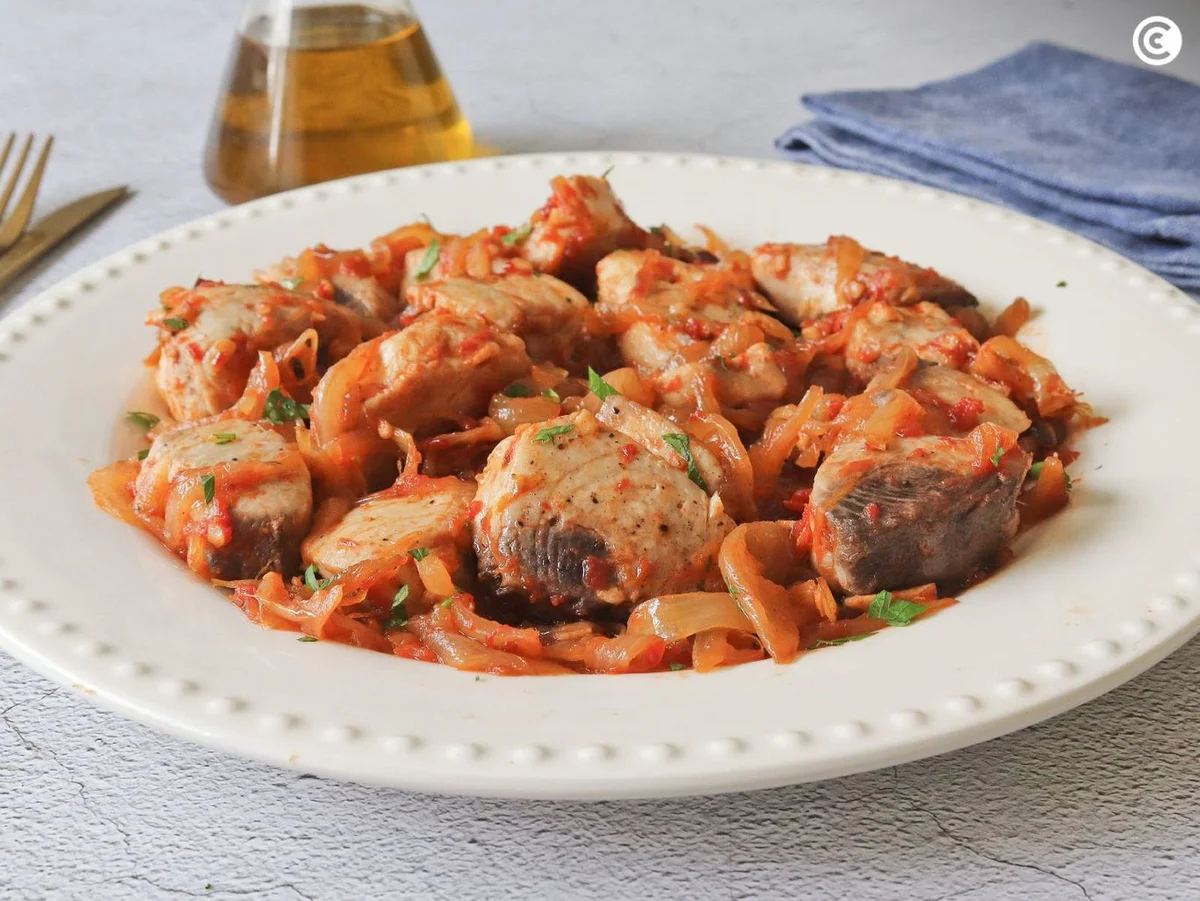
Bonito with onions is a Spanish fish dish with tender, gently caramelised onions and a rich wine-and-tomato sauce. Searing the fish first and adding it back at the end helps keep it juicy.
Ingredients
- 800 gbonito
- to tastesalt
- to tasteblack pepper
- 30 mlextra virgin olive oil
- 4 clovesgarlic
- 2bay leaves
- 500 gspring onions
- 200 mlwhite wine
- 1tomato
- 1 teaspoonsugar
- to tastefresh parsley
Instructions
- 1
Prepare the bonito
Remove the skin and bones from the 800 g bonito, then cut it into similar-sized, bite-sized chunks. Rinse under cold running water, pat thoroughly dry and season with salt and black pepper to taste.
- 2
Sear the fish
Heat 30 ml extra virgin olive oil in a frying pan over a high heat. Sear the bonito chunks for a few seconds on each side, until browned outside but still pink inside. Remove from the pan and set aside.
- 3
Cook the onions
Peel and finely chop 4 garlic cloves, and slice 500 g spring onions into strips. In the same pan, fry the garlic with 2 bay leaves. Once the garlic begins to colour, add the onions and a pinch of salt. Cook over a medium-low heat, stirring occasionally, until very soft, reduced and lightly caramelised. Pour in 200 ml white wine, raise the heat and let the alcohol evaporate for a few minutes.
- 4
Make the sauce
Wash and grate 1 ripe tomato. Stir it into the pan and cook until its excess liquid has evaporated and it has blended with the onions into a glossy, soft sauce.
- 5
Finish the bonito
Return the bonito chunks to the pan and mix them gently with the sauce. Cook everything together for 2–3 minutes, just until the fish is cooked through while remaining juicy.
- 6
Serve immediately
Serve the bonito with the onion sauce straight away, topped with a little chopped fresh parsley.
What is bonito with onions?
Bonito with onions, or bonito encebollado, is a Spanish home-style dish pairing firm, meaty fish with a generous bed of soft onions. Onion-based fish stews and braises are found in several coastal cooking traditions in Spain.
This version builds its sauce in the same pan used to sear the fish, adding garlic, bay, white wine and tomato. The bonito goes back in only at the end, so it has little time to overcook.
Nutrition and macros by portion
The nutrition label shows one serving as written: 480 calories, 46g protein, 23g carbs, 23g fat.
| Portion | Adjustment | kcal | Protein | Carbs | Fat |
|---|---|---|---|---|---|
| Lighter | Less oil, extra greens | 336 kcal | 32g | 16g | 16g |
| This serving | As written | 480 kcal | 46g | 23g | 23g |
| Hungry | Add potatoes or bread | 720 kcal | 69g | 35g | 35g |
The bonito provides most of the protein, while the onions, tomato, wine and sugar contribute most of the carbohydrates. Olive oil supplies much of the fat; serve the fish with vegetables or salad, and add a moderate portion of potatoes or bread if you want a more filling plate.
Choosing and preparing the fish
Bonito: choose a fresh piece with firm flesh and ask for it to be skinned and boned if you prefer not to do that at home. Cut the fish into chunks of similar size so they cook at roughly the same rate.
Drying: pat the rinsed pieces thoroughly dry before seasoning. A dry surface makes it easier to brown the fish quickly rather than steam it.
Building the onion sauce
Garlic and bay: let the garlic begin to turn golden in the oil, but take care not to let it darken too far, or the sauce can taste bitter.
Spring onions: cook them slowly until they are very soft and reduced. This patient stage gives the sauce its sweetness and body; rushing it leaves the onions firm and watery.
Getting the texture right
Searing: use a hot pan and keep the initial cooking brief, aiming for colour on the outside while the centres remain pink. The fish will cook further when returned to the sauce.
Sauce: after adding the grated tomato, let its watery liquid cook away until it clings to the onions. If the pan looks dry before the onions soften, lower the heat and stir more often.
Timing the final cook
Wine: once added, give it a few minutes over a higher heat so the alcohol can evaporate and the liquid can reduce. The onion mixture should remain moist rather than dry.
Bonito: return the chunks for just 2–3 minutes, as directed, and serve promptly. Smaller chunks may finish sooner, so check one rather than leaving the fish in the pan.
Serving ideas
Bread: serve with crusty bread to scoop up the onion, tomato and wine sauce.
Sides: boiled or roasted potatoes make a hearty accompaniment, while green beans or a crisp salad add a fresh contrast.
Recipe notes & tips
- Cut the bonito into evenly sized chunks so they cook at a similar pace.
- Dry the fish well before it goes into the hot oil.
- Keep the pan hot for the quick sear, but lower the heat while the onions soften.
- Stir the onions now and then so they soften evenly without catching.
- Taste the sauce before returning the fish and adjust the seasoning if needed.
- Serve as soon as the bonito is cooked to keep its texture tender.
Variations
- Add paprika: stir a little into the softened garlic for a warmer, smoky note.
- Use parsley generously: scatter extra chopped parsley over the dish just before serving.
- Try another firm fish: use a similar quantity of tuna if bonito is unavailable.
- Add a chilli: include a small chopped chilli with the garlic for gentle heat.
- Swap the wine: use fish stock for a milder sauce, adding it gradually as needed.
Common mistakes to avoid
- Crowding the pan: the fish may steam instead of sear; cook it in batches if needed.
- Overcooking the bonito: it can become dry; keep the final simmer to 2–3 minutes and check early.
- Rushing the onions: they will lack softness and sweetness; cook them patiently over medium-low heat.
- Burning the garlic: it can make the sauce bitter; add the onions as soon as the garlic starts to colour.
- Leaving the tomato watery: the sauce will be thin; cook until the excess liquid has reduced.
- Skipping the drying step: wet fish will not brown as readily; pat it thoroughly with kitchen paper.
How to store
Refrigerate leftovers in a covered container and eat within 1–2 days. Reheat gently in a covered pan over a low heat until hot, taking care not to cook the bonito for long; add a small splash of water if the sauce has thickened.
Frequently asked questions
Can I make this with frozen bonito?
Yes. Thaw it fully in the fridge, then pat it very dry before cutting and searing.
How do I know when the bonito is cooked?
The chunks should be opaque around the outside and just cooked in the centre. Check a piece, as cooking time varies with the size of the chunks.
Can I prepare the onion sauce ahead?
Yes. Make the sauce ahead and chill it, then reheat it gently and add the seared bonito just before serving.
What can I use instead of spring onions?
Use ordinary onions, sliced thinly, if spring onions are unavailable. They may take a little longer to soften.
Why is my sauce too thin?
It may need more time for the tomato and wine liquid to reduce. Simmer the sauce before returning the fish, stirring occasionally.
Can I freeze the leftovers?
You can freeze them in a sealed container, though the fish may become less tender after thawing. Thaw in the fridge and reheat gently.
Cook it from the original
This recipe comes from cocinatis.com. Their page has the author’s own photos, notes and tips — the best place to cook it from.
Open the recipe on cocinatis.com