
San Martiño chestnut cake
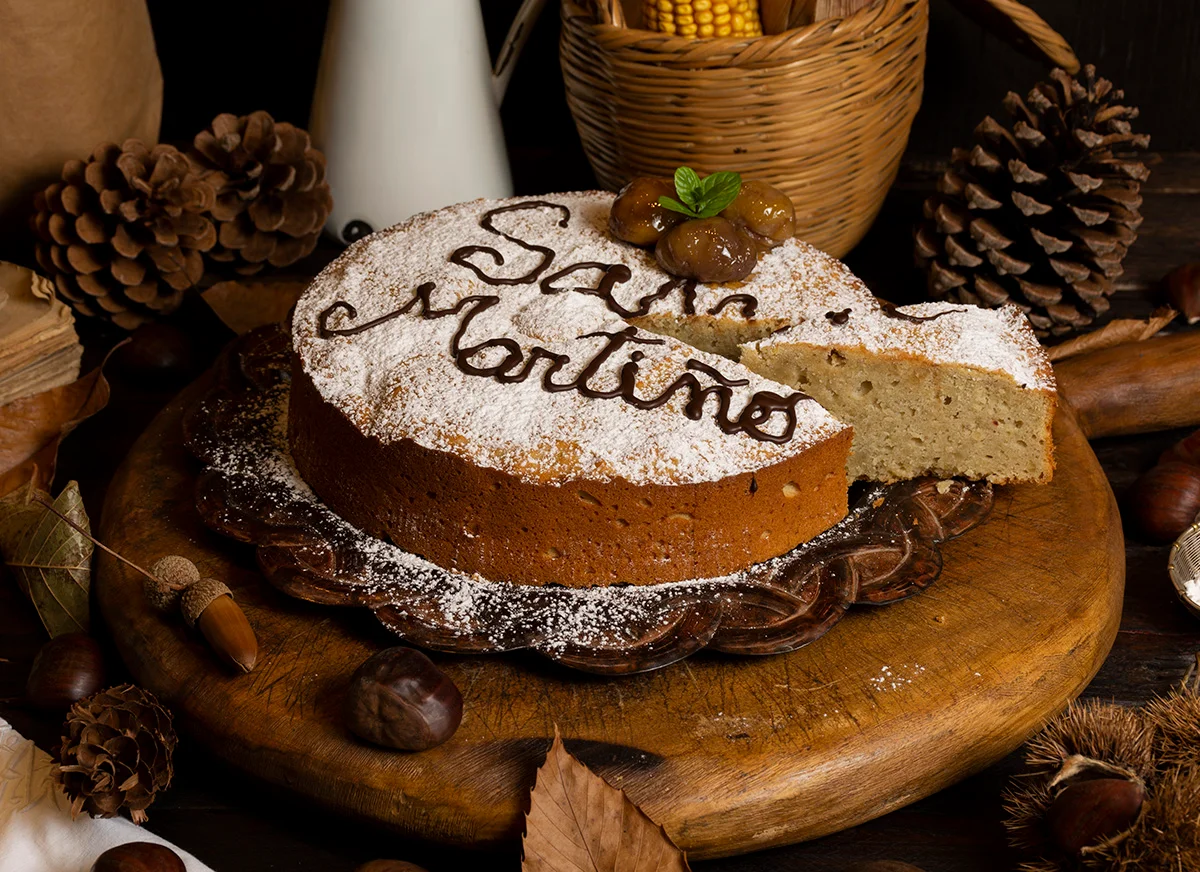
This Galician chestnut cake combines a chestnut-and-milk purée with ground almonds, butter and eggs for a rich cake with a tender, gently nutty crumb. It is traditionally associated with the Chestnut Festival in Ourense and is finished with icing sugar, chocolate lettering and chestnuts in syrup.
Ingredients
- 300 gmilk
- 350 gcooked, peeled chestnuts
- 160 gground almonds or almond flour
- 90 gplain flour
- 8 gbaking powder
- 150 gsoftened butter
- 200 g (150 g + 50 g)sugar
- 3 large (or 4 medium)eggs
- A pinchsalt
- To tasteicing sugar
- 50 gdark or milk cooking chocolate
- To tastechestnuts in syrup
Instructions
- 1
Cook the chestnuts
Choose either method. For the microwave method, make a small incision in each chestnut with a sharp knife to prevent it bursting. Put them in a microwave-safe bowl, cover with water and cling film, and cook at 800 W for about 20 minutes if they are large, or start with 16 minutes if they are smaller and check. Peel them while still hot. Alternatively, make an incision in each chestnut, put them in a pan and cover with cold water. Bring to a simmer over medium-low heat and cook for about 15 minutes; check one after 12–13 minutes to see if it peels easily. Take the pan off the heat but leave the chestnuts in the hot water. Remove only four or five at a time, let them cool just enough to handle, then peel them.
- 2
Make chestnut purée
When the chestnuts are cooked and tender, blend them with the milk to make a thick cream, adding a little more milk if needed. It does not have to be completely smooth; small pieces can remain. Leave the purée to cool slightly.
- 3
Prepare the oven
Heat the oven to 180°C, using top and bottom heat, and position the rack on the second level from the bottom.
- 4
Mix dry ingredients
Combine the plain flour, ground almonds and baking powder, then set the mixture aside.
- 5
Whisk egg whites
Separate the eggs, putting the yolks in one bowl. In another bowl, whisk the whites with a pinch of salt and 50 g of the sugar until firm peaks form. Set aside.
- 6
Make the batter
Put the remaining 150 g of sugar in a bowl with the softened butter and mix until smooth and evenly combined. Mix in the egg yolks, then the chestnut purée. Add the flour mixture in two batches, mixing each in fully before adding the next. Finally, fold in the beaten egg whites in two additions, using gentle movements to retain their air.
- 7
Bake the cake
Line the base of the cake tin with baking paper and grease its sides. Pour in the batter and level the surface with a spatula. Bake for 15 minutes at 180°C, then lower the temperature to 170°C and bake for a further 40 minutes, or until a skewer inserted into the cake comes out dry. Remove from the oven, wait 10 minutes, then turn the cake out onto a wire rack.
- 8
Decorate and serve
Once the cake is completely cool, dust it with icing sugar. Melt the chocolate in a bain-marie or in the microwave in 15-second bursts, put it in a piping bag or kitchen squeeze bottle, and write “San Martiño” on the cake. Serve with chestnuts in syrup.
What is San Martiño chestnut cake?
This cake is a Galician chestnut bake associated with the Chestnut Festival in Ourense, held around the feast of San Martiño. Chestnuts have a long place in the region’s cooking, and here they provide the cake’s distinctive flavour and substantial, moist texture.
Chestnut purée is combined with ground almonds and a little wheat flour, then lightened with whipped egg whites. The chocolate lettering and syrupy chestnuts make it a fitting centrepiece for a celebration.
Nutrition and macros by portion
The nutrition label shows one serving as written: 425 calories, 9g protein, 48g carbs, 23g fat.
| Portion | Adjustment | kcal | Protein | Carbs | Fat |
|---|---|---|---|---|---|
| Lighter | Smaller slice, less topping | 298 kcal | 6g | 34g | 16g |
| This serving | As written | 425 kcal | 9g | 48g | 23g |
| Hungry | Larger cake slice | 638 kcal | 13g | 72g | 35g |
Most of the carbohydrates come from the chestnuts, sugar and flour, while butter, almonds and egg yolks contribute much of the fat. Eggs and almonds provide some protein, with smaller amounts from the chestnuts and milk. Serve a slice with fresh fruit, or alongside a lighter meal, to balance the rich cake.
Preparing the chestnuts
Hot peeling: cooked chestnuts are much easier to peel while warm, so keep them in their cooking water and take out only four or five at a time. Work carefully, since the chestnuts and water will be hot.
Purée texture: blend the peeled chestnuts with the milk until you have a thick cream. A few small pieces are fine and add texture to the finished cake.
Keeping the batter light
Whipped whites: beat the egg whites with salt and 50 g of sugar until firm, then fold them into the batter in two additions. Gentle folding helps preserve the air that gives this dense, nut-rich mixture a softer crumb.
Staged mixing: add the dry ingredients in two batches and make sure each is incorporated before adding more. This helps avoid pockets of flour without requiring vigorous mixing.
Butter and almonds
Soft butter: it should be pliable enough to mix smoothly with the 150 g of sugar, but not melted. A smooth butter-and-sugar base makes it easier to blend in the yolks and chestnut purée.
Ground almonds: almonds add richness and a mild nutty flavour alongside the chestnuts. The plain flour and baking powder help the cake hold together and rise.
Checking when it is baked
Two-stage heat: bake for 15 minutes at 180°C, then reduce the oven to 170°C for another 40 minutes. Keep the tin on the rack’s second level from the bottom, as directed in the method.
Skewer test: insert a skewer into the cake; it is ready when it comes out dry. If it still carries wet batter, continue baking and check again.
Cooling and decorating
Set the crumb: leave the cake in its tin for 10 minutes after baking, then turn it onto a wire rack. Wait until it is completely cool before adding the icing sugar and chocolate.
Chocolate lettering: melt the chocolate gently, using 15-second bursts in the microwave if preferred, and pipe the words onto the surface. Serve with chestnuts in syrup for a traditional-style finish.
What to serve with it
The cake is rich enough to serve in modest slices, with the chestnuts in syrup alongside. A cup of coffee or unsweetened tea makes a simple accompaniment.
For a fuller dessert plate, add fresh fruit. Keep extra toppings light so the chestnut and almond flavours remain prominent.
Recipe notes & tips
- Make a small incision in every chestnut before cooking it, especially when using the microwave.
- Peel the chestnuts while they are still warm and remove only a few from the water at a time.
- Let the chestnut purée cool slightly before mixing it into the butter and egg mixture.
- Use a spatula and a light hand when folding in the egg whites.
- Check the cake with a skewer after the stated baking time, as ovens can vary.
- Wait until the cake is fully cool before dusting it with icing sugar or piping on the chocolate.
Variations
- Microwave chestnuts: cook the scored chestnuts covered with water and cling film at 800 W, checking from 16 minutes if they are small.
- Pan-cooked chestnuts: simmer the scored chestnuts in water for about 15 minutes and check one after 12–13 minutes.
- Smoother purée: blend the chestnuts and milk more thoroughly for an even texture throughout the cake.
- Chunkier purée: leave a few chestnut pieces in the cream for occasional bites of chestnut in the crumb.
- Chocolate finish: use a kitchen squeeze bottle or piping bag to write the cake’s name on top.
- Syrup topping: serve with chestnuts in syrup as directed, adding them alongside rather than mixing them into the batter.
Common mistakes to avoid
- Leaving chestnuts to cool: their skins become difficult to remove; keep them in the hot water and peel a few at a time.
- Skipping the chestnut incision: uncut chestnuts can burst during microwave cooking; score each one first.
- Using hot purée: it can soften the butter mixture; allow the purée to cool slightly before adding it.
- Overmixing the egg whites: vigorous stirring removes their air; fold them in gently in two additions.
- Decorating while warm: icing sugar can dissolve and chocolate can spread; wait until the cake is completely cool.
- Taking the cake out too soon: a skewer may show wet batter; continue baking at 170°C and check again.
How to store
Keep the cooled cake covered in an airtight container in the fridge for up to 4 days. Bring slices to room temperature before serving, or warm them briefly in a low oven; add the chestnuts in syrup when serving.
Frequently asked questions
Can I use ready-cooked, peeled chestnuts?
Yes. The ingredient list calls for 350 g of cooked, peeled chestnuts, so ready-prepared ones can be used directly. Blend them with the milk to make the thick purée.
Can I cook the chestnuts in a pan instead of a microwave?
Yes. Score them, cover with cold water and simmer over medium-low heat for about 15 minutes. Check one after 12–13 minutes, since size affects the cooking time.
How thick should the chestnut purée be?
It should be a thick cream, roughly like a chocolate spread. Add a little more milk only if needed, and do not worry if small chestnut pieces remain.
How can I tell when the cake is done?
After 15 minutes at 180°C and a further 40 minutes at 170°C, insert a skewer into the cake. It should come out dry rather than coated in wet batter.
Can I decorate the cake before it has cooled?
Wait until it is completely cool. Otherwise the icing sugar may dissolve and the melted chocolate may lose its lettering.
What can I use instead of a piping bag?
A kitchen squeeze bottle can be used for the melted chocolate. Melt it in a bain-marie or in 15-second microwave bursts before piping.
Cook it from the original
This recipe comes from lacocinadefrabisa.lavozdegalicia.es. Their page has the author’s own photos, notes and tips — the best place to cook it from.
Open the recipe on lacocinadefrabisa.lavozdegalicia.es