
Korean-Style Mushroom Stir-Fry
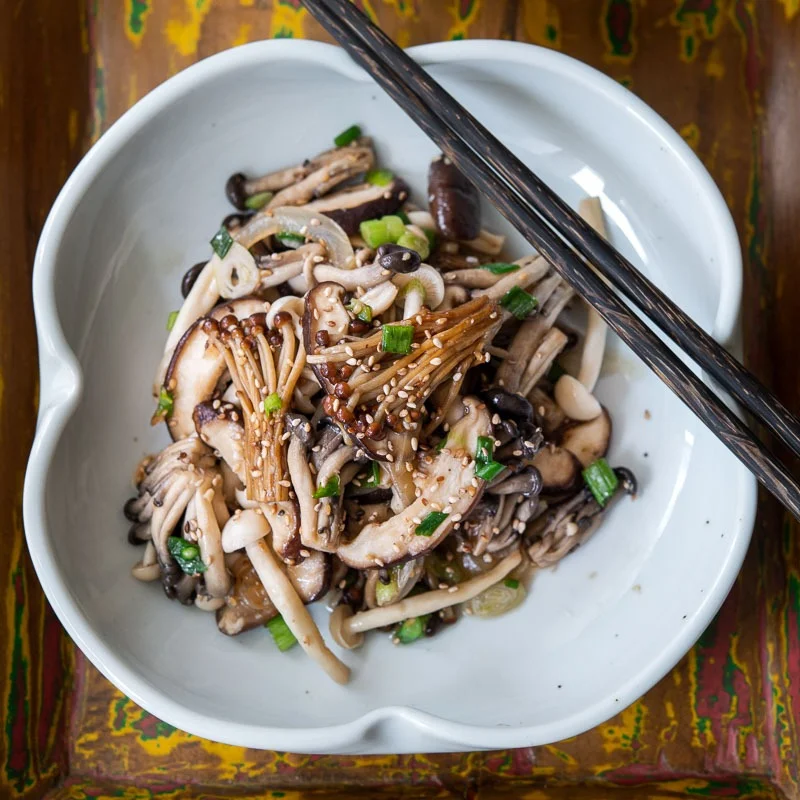
This Korean-style mushroom stir-fry combines shiitake, oyster and enoki mushrooms with soy and oyster sauces, then finishes with sesame oil and seeds. It cooks in about 10 minutes and works as a savoury side or a main served with rice.
Ingredients
- 1 tbsp (15 ml)oil
- 1/4onion, thinly sliced
- 1 tbsp (8 g)minced garlic
- 7 oz (200 g)shiitake mushrooms
- 7 oz (200 g)oyster mushrooms
- 12 oz (350 g)enoki mushrooms
- 1 tbsp (15 ml)soy sauce
- 1 tbsp (15 ml)oyster sauce
- 2spring onions, finely chopped
- 2 tsp (10 ml)sesame oil
- 1 tbsp (9 g)toasted sesame seeds
- to taste, if neededsalt and pepper
Instructions
- 1
Heat the oil
Set a pan over a medium-high heat and add the oil. When it is hot, add the sliced onion and minced garlic, then sauté until fragrant.
- 2
Cook the mushrooms
Add the shiitake, oyster and enoki mushrooms, followed by the soy sauce and oyster sauce. Stir to combine and coat everything in the sauce; cook for about 2 minutes, until the mushrooms begin to soften.
- 3
Finish and serve
Toss through the spring onions, sesame oil and toasted sesame seeds. Serve hot.
What is Korean-style mushroom stir-fry?
This is a quick, savoury stir-fry that brings together several types of mushrooms with soy and oyster sauces. It takes inspiration from Korean-style home cooking, while the mix of mushrooms gives this version a range of shapes and textures.
The brief cook and sesame finish keep the mushrooms at the centre of the dish. Serve it as a side or pair it with rice for a simple main.
Nutrition and macros by portion
The nutrition label shows one serving as written: 140 calories, 6g protein, 17g carbs, 7g fat.
| Portion | Adjustment | kcal | Protein | Carbs | Fat |
|---|---|---|---|---|---|
| Lighter | Use less cooking oil | 98 kcal | 4g | 12g | 5g |
| This serving | As written | 140 kcal | 6g | 17g | 7g |
| Hungry | Serve with extra rice | 210 kcal | 9g | 26g | 11g |
The mushrooms contribute some carbohydrates and protein, while the cooking oil and sesame oil provide most of the fat; the sauces add savoury seasoning. Serve a portion with rice and another vegetable or protein to make a more balanced plate.
Why use three types of mushrooms?
Shiitake: these bring a firm bite and a deeply savoury flavour to the pan.
Oyster and enoki: oyster mushrooms add a soft, tender texture, while enoki cook quickly and form fine strands. Together, the three varieties make each mouthful a little different.
Build the savoury base
Onion and garlic: start them in hot oil and cook just until aromatic, as directed. This gives the sauce a fragrant base without adding extra steps.
Sauces: soy sauce brings saltiness and oyster sauce adds richness. Stir them in with the mushrooms so they coat the mixture as it cooks.
Keep the mushrooms tender
The method cooks the mushrooms for about 2 minutes, just until they start to soften. Stir regularly so the sauce reaches the different varieties without leaving them cooking for longer than needed.
A hot pan helps the ingredients cook promptly. If the pan is crowded, the mushrooms may release liquid and soften rather than brown, so use a pan large enough to stir them comfortably.
Finish with sesame and spring onion
Stir in the spring onions, sesame oil and toasted sesame seeds at the end, just before serving. Their fresh, nutty notes round out the savoury sauce.
Taste before adding salt or pepper, since the sauces already contribute seasoning. Add either only if the finished dish needs it.
What to serve alongside it
Rice is a straightforward accompaniment and makes the mushrooms more substantial as a main. For a larger meal, serve them alongside other Korean-inspired dishes.
As a side, the stir-fry pairs well with simply cooked vegetables or a protein of your choice. Serve it hot while the mushrooms are tender.
Recipe notes & tips
- Prepare and slice the mushrooms before heating the pan, as the cooking stage is brief.
- Use a pan large enough to stir all three mushroom varieties without packing them tightly.
- Add the sauces with the mushrooms so they coat the ingredients as they begin to soften.
- Taste the finished stir-fry before adding salt, as soy and oyster sauces are already salty.
- Add the sesame oil and seeds at the end to preserve their flavour.
Variations
- Use mixed mushrooms: Replace one variety with another Asian-style mushroom of similar quantity.
- Add heat: Stir a little chilli into the pan with the sauces.
- Serve over rice: Spoon the hot mushrooms over cooked rice for a more filling meal.
- Add greens: Toss in a handful of leafy greens and cook until just wilted.
- Make it vegetarian: Use a vegetarian oyster-style sauce in place of oyster sauce.
Common mistakes to avoid
- Crowding the pan: the mushrooms can steam and release liquid; use a pan with room to stir them.
- Cooking the garlic too long: it can turn bitter; add it with the onion and sauté only until aromatic.
- Overcooking the mushrooms: they can lose their tender texture; stop when they begin to soften.
- Adding salt too soon: the sauces are already seasoned; taste the finished dish first.
- Adding sesame oil early: its flavour is best kept for the finish, so toss it through just before serving.
How to store
Refrigerate leftovers in an airtight container and use within 3 days. Reheat in a pan over a medium heat until hot, stirring gently; the mushrooms will be softer after storage.
Frequently asked questions
Can I use different mushrooms?
Yes. The recipe description allows shiitake, oyster or Asian-style mushrooms, so use a suitable mix if you cannot find all three varieties. The texture may differ depending on your choices.
Can I prepare the mushrooms ahead?
You can clean and prepare them ahead, then keep them refrigerated until cooking. For the best texture, stir-fry just before serving.
How do I keep the mushrooms from going soggy?
Use a roomy, hot pan and avoid crowding it. Cook only until the mushrooms start to soften, as the method directs.
Is this dish vegetarian?
As written, it contains oyster sauce, which may not be suitable for a vegetarian diet. Use a vegetarian oyster-style sauce if you want a vegetarian version.
What should I serve with it?
Serve it as a side or with rice as a main. You can also add another vegetable or a protein alongside it.
Cook it from the original
This recipe comes from beyondkimchee.com. Their page has the author’s own photos, notes and tips — the best place to cook it from.
Open the recipe on beyondkimchee.com