
Roasted Cauliflower with Tahini
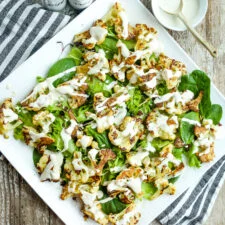
This Mediterranean-inspired side pairs deeply browned, tender cauliflower with a sharp, creamy tahini sauce. It is mostly hands-off in the oven, while the lemon and garlic bring a bright finish to the rich sauce.
Ingredients
- 1 largecauliflower
- 30 ml (2 tablespoons)avocado oil
- 1 teaspoonground cumin
- 1/4 teaspoonsalt
- 1/8 teaspoonblack pepper
- 60–120 ml (1/4–1/2 cup)tahini sauce (see ingredients below)
- 6 whole clovesgarlic, crushed
- 45 ml (3 tablespoons)lemon juice
- 60 g (1/4 cup)tahini
- 1/8 teaspooncumin
- 1/8 teaspoonsalt
- Pinchfreshly ground black pepper
- As neededcold water
Instructions
- 1
Heat the oven
Preheat the oven to 200°C (400°F).
- 2
Cut the cauliflower
Remove the cauliflower core and cut the head into large florets. Halve the florets or pieces to make flat sides.
- 3
Season the florets
Put the cauliflower in a bowl with the avocado oil, ground cumin, salt and black pepper. Toss thoroughly by hand so the pieces are evenly coated.
- 4
Roast the cauliflower
Arrange the cauliflower flat-side down on a rimmed baking sheet. Roast in the preheated oven for 40 minutes, without shaking or turning it.
- 5
Make the sauce
While the cauliflower roasts, prepare the tahini sauce.
- 6
Blend the garlic
Put the crushed garlic and lemon juice in a small blender and pulse just until combined.
- 7
Strain the mixture
Pass the garlic and lemon mixture through a fine-mesh sieve, pressing out as much liquid as possible.
- 8
Whisk the sauce
In a bowl, whisk the garlic-infused lemon juice with the tahini, cumin, salt and pepper until combined. The mixture will be very thick.
- 9
Thin with water
Whisk in cold water 1–2 teaspoons at a time until the sauce reaches the consistency you want.
- 10
Serve the cauliflower
Serve the cauliflower with the tahini sauce, either for dipping or drizzled over the florets. The sauce also works as a salad dressing.
- 11
Store extra sauce
If any tahini sauce remains, transfer it to an airtight container and refrigerate for 5–7 days for another use.
What is roasted cauliflower with tahini?
Tahini, a paste made from sesame seeds, is widely used across Mediterranean and Middle Eastern cooking. Here it turns into a creamy, tangy sauce that complements the sweetness and savoury browning of roasted cauliflower.
The method keeps the florets flat-side down and leaves them undisturbed, helping them brown against the baking sheet. Garlic-infused lemon juice gives the sauce brightness without adding pieces of raw garlic.
Nutrition and macros by portion
The nutrition label shows one serving as written: 216 calories, 7g protein, 17g carbs, 16g fat.
| Portion | Adjustment | kcal | Protein | Carbs | Fat |
|---|---|---|---|---|---|
| Lighter | Use less tahini sauce | 151 kcal | 5g | 12g | 11g |
| This serving | As written | 216 kcal | 7g | 17g | 16g |
| Hungry | Add a larger portion | 324 kcal | 11g | 25g | 24g |
The cauliflower contributes most of the carbohydrates, while the avocado oil and tahini provide most of the fat; tahini also contributes some protein. Balance the plate by serving a portion alongside a protein-rich main and another vegetable or salad.
Getting the cauliflower ready
Flat sides: Halve the florets or larger pieces so they sit securely against the baking sheet. This gives them more direct contact with the hot surface as they roast.
Even coating: Toss the pieces thoroughly with the oil and seasonings before arranging them on the tray. Try to spread them out rather than piling them together.
Why leave it undisturbed?
The method calls for roasting the cauliflower cut-side down for the full 40 minutes without shaking or turning it. Keeping that contact with the tray encourages browning on the flat sides.
Ovens and florets can vary, so check the cauliflower near the end of the roasting time. It should be tender when pierced and browned on the side against the tray.
Making smooth tahini sauce
Garlic and lemon: Pulse the crushed garlic with the lemon juice, then strain the mixture carefully. Pressing out as much liquid as possible carries the flavour into the sauce while leaving the garlic behind.
Cold water: Tahini thickens when mixed with the other ingredients, so add the water gradually while whisking. Stop when the sauce is loose enough to drizzle or dip into.
Timing and serving
The cauliflower roasts for 40 minutes, and the sauce can be made during that time. Have the sauce ready as the florets finish roasting so you can serve them warm.
Serve as a side dish, or add it to a grain bowl or a spread of salads and flatbreads. The tahini sauce can also dress a salad.
Choosing the sauce amount
The listed amount is 60–120 ml of tahini sauce, while the sauce ingredients make a batch to serve alongside the cauliflower. Start with a little for drizzling or dipping and add more to taste.
Any extra sauce can be stored separately in an airtight container in the fridge for 5–7 days, as specified in the recipe.
Recipe notes & tips
- Cut the florets into pieces with a flat side so they sit steadily on the tray.
- Toss the cauliflower well before roasting to distribute the oil and spices.
- Arrange the florets in a single layer with their cut sides facing down.
- Leave the cauliflower undisturbed for the full roasting time.
- Add cold water to the tahini sauce a teaspoon at a time to avoid thinning it too quickly.
- Make the sauce while the cauliflower is in the oven to keep the overall cooking time practical.
Variations
- More lemon: Add a little extra lemon juice for a sharper sauce.
- Herb finish: Scatter chopped fresh parsley over the cauliflower just before serving.
- Spice change: Replace the cumin in the cauliflower seasoning with ground coriander.
- Creamier sauce: Use the larger amount of tahini sauce for a more generous coating.
- Salad dressing: Thin leftover tahini sauce with cold water until it pours easily.
Common mistakes to avoid
- Turning too soon: Leave the cauliflower cut-side down for the full roast so it has time to brown.
- Crowding the tray: Spread the florets out in a single layer so they roast rather than steam.
- Uneven pieces: Cut larger florets in half to create flat sides and help them cook more evenly.
- Adding water all at once: Whisk it in 1–2 teaspoons at a time and stop at the desired consistency.
- Skipping the sieve: Strain the garlic and lemon mixture to keep the sauce smooth and use the infused liquid.
How to store
Store leftover tahini sauce in an airtight container in the fridge for 5–7 days. Refrigerate leftover cauliflower separately and use within 3–4 days; reheat in the oven until hot, as microwaving may soften its browned edges.
Frequently asked questions
Can I make the tahini sauce ahead?
Yes. Keep it in an airtight container in the fridge for 5–7 days. Whisk it before serving and add a little cold water if it has thickened.
Why is my tahini sauce very thick?
The mixture is expected to be very thick before water is added. Whisk in cold water 1–2 teaspoons at a time until it reaches your preferred consistency.
Should I turn the cauliflower while it roasts?
No. The method specifies roasting it cut-side down for 40 minutes without shaking or turning, which helps the flat sides brown.
How do I know when the cauliflower is done?
After 40 minutes, it should be tender when pierced and browned on the side touching the tray. If the pieces are particularly large, check their tenderness near the end of the cooking time.
Can I serve the tahini sauce another way?
Yes. Use it as a dip for the cauliflower or thin it with cold water to use as a salad dressing.
Cook it from the original
This recipe comes from happyhealthymama.com. Their page has the author’s own photos, notes and tips — the best place to cook it from.
Open the recipe on happyhealthymama.com