
Pescado en Papillote
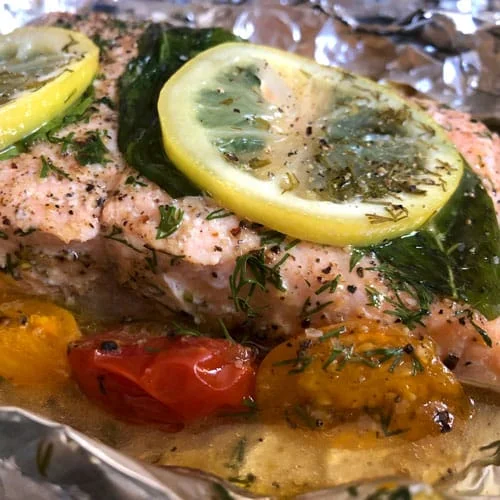
Pescado en papillote is fish baked in a sealed foil parcel with tomatoes, basil, lemon and dill. The parcels are quick to assemble and keep the fish moist while the herbs and citrus infuse it.
Ingredients
- A littleolive oil
- 2 fillets (or more)fish
- 8small tomatoes, such as cherry or pear, halved
- 6 leavesbasil
- To tastechopped dill
- To tastesalt and pepper
- 4 sliceslemon
Instructions
- 1
Prepare the foil
Lay two sheets of aluminium foil one on top of the other and drizzle a little olive oil over them.
- 2
Add the fish
Place a fish fillet on the foil.
- 3
Add the tomatoes
Arrange the halved tomatoes around the fish and season with salt and pepper.
- 4
Add the herbs
Lay the basil leaves over the fillet. Add a little olive oil, then the lemon slices and dill.
- 5
Seal the parcels
Fold the foil closed tightly so there are no gaps for steam to escape.
- 6
Bake the fish
Set the parcels on a baking tray and place in an oven preheated to 250 °C (400 °F). Cook for 11 minutes.
- 7
Open carefully
Use a knife to make an opening down the top of each parcel, taking care to avoid the hot steam.
- 8
Serve the parcels
Open the parcels fully to reveal the contents, then serve each one on a plate. Add chopped green herbs if you like.
What is pescado en papillote?
Papillote is a method of cooking food in a sealed parcel, traditionally made with paper, so it steams in its own moisture. This version uses foil and pairs fish with tomatoes, basil, lemon and dill.
The Caribbean-style combination is simple and bright: the tomatoes soften as they cook, while the citrus and herbs perfume the fish.
Nutrition and macros by portion
The nutrition label shows one serving as written: 210 calories, 28g protein, 6g carbs, 8g fat.
| Portion | Adjustment | kcal | Protein | Carbs | Fat |
|---|---|---|---|---|---|
| Lighter | Use less olive oil | 147 kcal | 20g | 4g | 6g |
| This serving | As written | 210 kcal | 28g | 6g | 8g |
| Hungry | Add another fish fillet | 315 kcal | 42g | 9g | 12g |
Most of the protein comes from the fish, while the tomatoes contribute a small amount of carbohydrate. The olive oil supplies most of the fat; serve the fish with a generous portion of vegetables and a measured serving of rice or potatoes for a balanced plate.
Choosing the fish and tomatoes
Fish: Use two fillets of similar thickness so they cook at roughly the same rate. The recipe does not specify a variety, so choose a firm or delicate fish you enjoy.
Tomatoes: Cherry or small pear tomatoes are suggested. Halve them so their juices can mingle with the fish inside the parcel.
Sealing the parcels
Foil: Use two sheets layered together, as directed, and leave enough room around the fish to fold the edges closed. Crimp the seams firmly to keep the steam inside.
Steam: Open the parcel carefully after baking; hot steam can escape as soon as the seal is broken.
Herbs, lemon and seasoning
Basil and dill: The basil leaves go over the fish, with chopped dill added before sealing. Their fresh flavours complement the tomatoes without needing a complicated sauce.
Seasoning: Salt and pepper are added to taste, and the lemon slices bring acidity as the fish cooks.
Timing and doneness
Oven: Heat the oven before assembling the parcels, then bake them for 11 minutes as stated in the recipe. The listed temperature is 250 °C (400 °F); those two figures do not match, so check your oven setting and use the temperature appropriate to your equipment.
Check: Cooking time can vary with the thickness of the fillets. The fish should be opaque and flake easily when tested at its thickest point.
How to serve it
Serve: The recipe suggests bringing each parcel to the plate and opening it there, or opening it fully before serving. A little extra chopped green herb can add colour.
Pairing: Serve with rice, potatoes or crusty bread to make use of the tomato and lemon juices, alongside a green salad or cooked vegetables.
Recipe notes & tips
- Pat the fish dry before placing it on the foil so the parcels do not start with excess water.
- Keep the fillets similar in thickness for more even cooking.
- Halve the tomatoes before assembling the parcels so they release their juices as they bake.
- Crimp every edge of the foil securely to trap steam.
- Let the parcels rest briefly before opening, then cut away from your face and hands.
- Check the thickest part of the fish before serving, especially if the fillets are larger than usual.
Variations
- Add garlic: Tuck a thinly sliced clove beside the fish for a savoury note.
- Use another herb: Swap the basil for parsley if that is what you have available.
- Add chilli: Include a little sliced fresh chilli for gentle heat.
- Change the citrus: Use lime slices in place of lemon for a different citrus flavour.
- Add vegetables: Include thin strips of courgette so they cook quickly in the parcel.
Common mistakes to avoid
- Loose foil seams: Steam can escape; fold and crimp the edges tightly.
- Overcooking the fish: Check it at 11 minutes and continue only if it is not yet opaque and flaky.
- Uneven fillets: Pieces of different thickness may cook at different rates; choose similar-sized portions.
- Opening too quickly: Hot steam can burn; make a small opening first and keep your face and hands clear.
- Using whole tomatoes: They release less juice during the short bake; halve them as directed.
How to store
Refrigerate leftover fish in a sealed container for up to 2 days. Reheat gently in a covered oven-safe dish until hot, or eat it cold; avoid prolonged reheating, which can dry out the fish.
Frequently asked questions
Can I use a different type of fish?
Yes. Choose fillets you like and adjust the cooking time for their thickness; the recipe does not name a specific variety.
Can I use baking paper instead of foil?
Yes, if it is suitable for your oven temperature and can be folded into a secure parcel. The method provided uses two sheets of foil.
Why is the oven temperature shown as both 250 °C and 400 °F?
Those temperatures are not equivalent: 400 °F is about 200 °C. The recipe lists both, so check your oven and choose the setting intended for your equipment.
How can I tell when the fish is cooked?
It should be opaque and flake easily when gently tested at its thickest point. If it needs more time, reseal the parcel and bake briefly longer.
Can I prepare the parcels ahead?
You can assemble them shortly before baking and keep them chilled in the meantime. For best texture, bake them just before serving.
Cook it from the original
This recipe comes from antojandoando.com. Their page has the author’s own photos, notes and tips — the best place to cook it from.
Open the recipe on antojandoando.com